Category: Public Policy

  • Harnessing Mobile Phone Data for Development: A New Perspective

    Harnessing Mobile Phone Data for Development: A New Perspective

    Mobile phone data (MPD) has emerged as a growing subject of public debate in Malaysia, driven largely by legitimate concerns surrounding privacy, surveillance and consent. High-profile data breaches in recent years have heightened public sensitivity, often overshadowing the broader societal value that MPD can offer when governed ethically, transparently and within existing legal frameworks. At its core, MPD refers to technical data generated when mobile devices interact with telecommunications networks, such as signal strength, duration of transmission and general mobility patterns. When anonymized and aggregated by licensed operators, this data cannot be traced back to individuals, nor does it reveal the content of calls, messages or online activity.

    Globally, responsibly managed MPD has demonstrated its value as a public policy tool. Aggregated mobility data was widely used during the COVID-19 pandemic to guide public health responses, while in other contexts it has supported urban planning, transport optimization, tourism management and emergency response. In Malaysia, similar applications could help identify underserved communities, improve transport efficiency, strengthen disaster preparedness and enhance tourism strategies. However, unlocking this potential depends heavily on public trust and confidence in how data is handled.

    Trust must precede technology. Public concern is less about whether MPD is useful, and more about who uses it, for what purpose, and under what safeguards. Transparency is therefore fundamental. Organizations collecting or processing MPD must clearly communicate the purpose, scope and protections in place before any data use occurs. Whether the goal is traffic management, rural development or tourism planning, openness, impact reporting and accountability are essential to reinforcing compliance with the Personal Data Protection Act (PDPA) and building public confidence.

    Associate Professor Ts Dato’ Dr Husin Bin Jazri.

    Consent within the MPD ecosystem is embedded in the contractual relationship between consumers and their service providers. Telecommunications companies, bound by PDPA obligations, act as custodians of subscriber data. Any sharing with third parties should involve only anonymized and aggregated datasets processed by the telcos themselves, ensuring that no personally identifiable information leaves their control. This approach helps maintain privacy while enabling data-driven insights for public benefit.

    Safeguards against misuse are equally critical. Even anonymized data carries risk if poorly managed, particularly through inference, where datasets are cross-referenced with other sources to enable re-identification. This underscores the need for strong anonymization combined with aggregation, strict access controls and responsible data stewardship. International best practices increasingly emphasize privacy-by-design, independent oversight and transparent governance as essential pillars of ethical data use.

    Balancing civic benefit with privacy requires consistent standards across all stakeholders. Public trust erodes when data protection laws appear to be applied unevenly. For Malaysia to gain public acceptance, the same transparency, accountability and ethical standards must apply to all entities, public and private alike. Independent oversight, such as a data privacy commission, would further strengthen confidence by ensuring impartial enforcement and protecting against selective application of rules.

    With strong safeguards, clear purpose and independent governance, MPD can evolve from a source of concern into a valuable national asset. Used responsibly, it can inform smarter investments, improve public services, support tourism growth and enhance long-term economic resilience, while respecting individual privacy. Malaysia’s digital ambitions and regional position present an opportunity to lead in ethical big data governance, demonstrating that technological progress and public trust can advance together.

  • Southeast Asia’s 2026 Outlook Influenced by Economic Stress, Policy Gaps, and Strengthening Mental Resilience

    Southeast Asia’s 2026 Outlook Influenced by Economic Stress, Policy Gaps, and Strengthening Mental Resilience

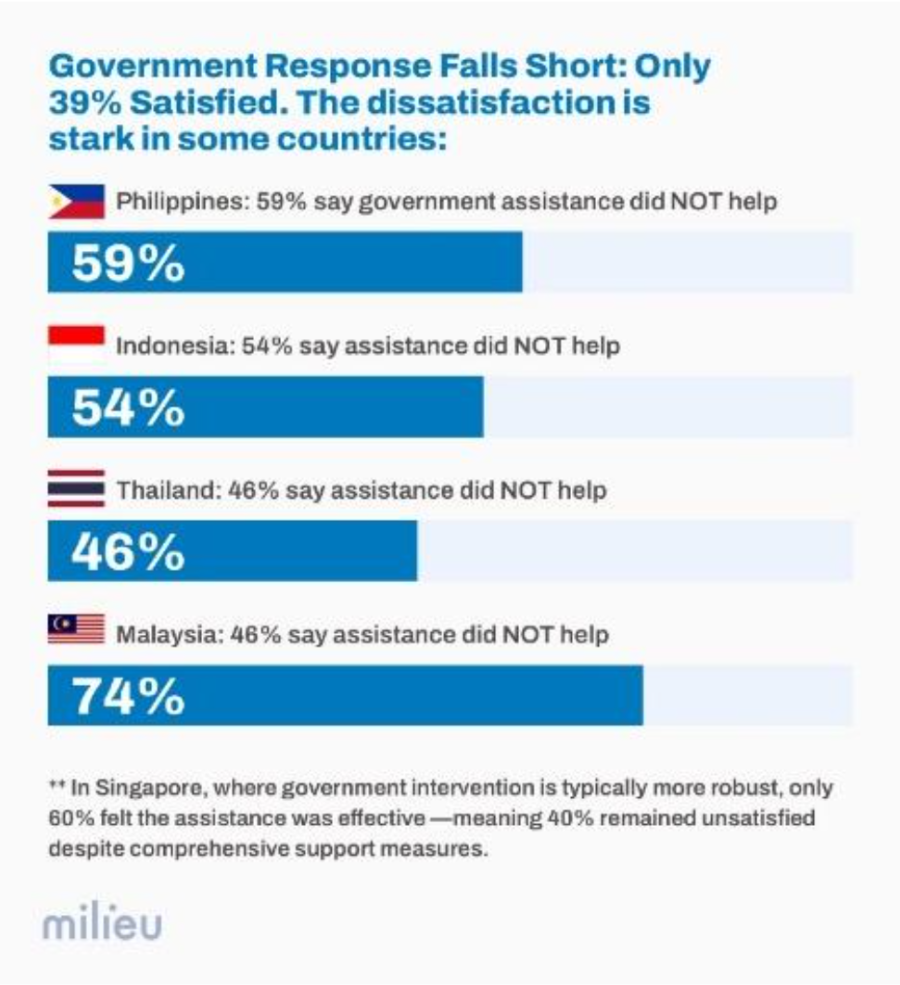
    Southeast Asia enters 2026 against a backdrop of sustained economic, employment, and health pressures, according to a recent survey by Milieu Insight. The study, which surveyed 3,000 respondents across Singapore, Thailand, Malaysia, Indonesia, Vietnam, and the Philippines, highlights the ongoing cost-of-living challenges that dominated 2025, with 75% of participants identifying affordability as a top concern. Singapore (86%) and Thailand (82%) led in terms of worry, while Malaysia (70%) and Vietnam (59%) reported relatively lower levels. Despite policy interventions, confidence in government support remained limited, with only 39% of respondents feeling that assistance effectively eased their cost pressures.

    The survey reveals a “triple crisis” of cost, employment, and health. Rising prices, job insecurity, and health anxieties compounded household stress, influencing spending priorities toward essentials like food, transportation, healthcare, and education. Urban and rapidly developing markets experienced further strain from housing affordability, notably in Singapore and Vietnam, where 47% and 43% of respondents respectively cited housing as a key concern. Employment insecurity remained high, particularly in Singapore (55%) and Indonesia (53%), reflecting broader anxieties about wage growth, automation, and labor market sustainability. Health costs further intensified stress, with 51% of Singaporeans identifying medical expenses as a national issue. Dissatisfaction with government interventions was particularly notable in the Philippines (59%) and Indonesia (54%), highlighting a persistent gap between policy intent and lived reality.

    Amid these challenges, mental resilience has emerged as a significant trend. Seven in ten Southeast Asians reported actively working to understand and improve their mental health in 2025, with Thailand (86%) and the Philippines (82%) leading engagement. Online resources, courses, and self-education played a key role, with 67% of respondents seeking out mental wellness tools. While mental health may not top national policy agendas, individuals are increasingly normalizing personal mental wellness as a strategy to cope with prolonged uncertainty. Sundip Chahal, CEO of Milieu Insight, noted that those who respond to this shift—governments, employers, and brands alike—will earn public trust, while inaction risks social and institutional disconnect.

    Looking ahead, Southeast Asia in 2026 faces a crossroads. Economic strain and policy gaps continue to challenge households, but the growing emphasis on personal resilience and mental well-being may redefine societal expectations and institutional trust. Organizations and policymakers that recognize and respond to these shifts are likely to play a pivotal role in shaping regional stability and public confidence in the years to come.

  • The RIA Framework Serves as a Wake-Up Call for Malaysia’s Retirement System

    The RIA Framework Serves as a Wake-Up Call for Malaysia’s Retirement System

    Malaysia’s retirement challenge is becoming increasingly difficult to ignore. Rising life expectancy, coupled with the steadily increasing cost of living, has exposed a growing mismatch between how Malaysians save for retirement and the economic realities they face after leaving the workforce. Alarmingly, one in four Malaysians depletes their Employees Provident Fund (EPF) savings within just five years of reaching withdrawal age, leaving many retirees financially vulnerable in their later years and dependent on family support or limited public assistance.

    Recognizing this widening gap, EPF has begun reshaping how retirement adequacy is defined and communicated. Central to this shift is the introduction of the Retirement Income Adequacy (RIA) framework, which reframes EPF savings not as a lump sum to be spent at retirement, but as a source of monthly income designed to last throughout old age. The framework encourages retirees to draw down their savings gradually over approximately 20 years, from age 60 to around 80, aligning withdrawals with average life expectancy and reducing the risk of outliving one’s savings.

    To make this concept more tangible, EPF introduced three retirement savings benchmarks. Basic Savings of RM390,000 is intended to cover essential living needs, while Adequate Savings of RM650,000 reflects a more comfortable and sustainable standard of living. Enhanced Savings of RM1.3 million supports a higher-quality retirement with greater financial security and flexibility. These benchmarks are not guarantees, but practical reference points that help members better understand what their savings can realistically support over time.

    Under EPF’s income-based withdrawal illustrations, retirees can see how disciplined monthly withdrawals, combined with continued dividend returns, may allow savings to last significantly longer than one-time withdrawals. For example, a retiree with RM390,000 could withdraw around RM1,625 per month initially, with the amount gradually increasing over time. Higher balances naturally translate into higher and more sustainable monthly income, reinforcing the benefits of structured drawdowns rather than early depletion.

    To further protect long-term adequacy, EPF has also revised its withdrawal policies for members with higher balances. Previously, savings above RM1 million could be accessed more freely. Under the new approach, this threshold will gradually increase and align with the Enhanced Savings level of RM1.3 million by 2028. The first RM1.3 million will be preserved to support long-term retirement income, while amounts above this level are treated as surplus and may be accessed more flexibly.

    EPF has also strengthened the Members Investment Scheme (MIS), allowing members whose savings exceed the Basic Savings level for their age to invest up to 30 per cent of the excess with EPF-approved fund managers. This offers disciplined savers greater diversification and potential returns, while still safeguarding a minimum level of retirement savings within EPF.

    International comparisons offer useful lessons. Singapore’s Central Provident Fund (CPF), for instance, automatically converts part of retirement savings into regular monthly payouts, significantly reducing the risk of retirees exhausting their funds. However, Malaysia cannot simply replicate this model wholesale. Many Malaysians retire with lower balances and still need flexibility to manage healthcare costs, debt obligations, or family responsibilities. A more realistic approach would be to make monthly payouts the default option, while allowing limited lump-sum withdrawals—especially for those with smaller savings. Behavioural evidence consistently shows that defaults strongly influence financial decisions.

    Another sensitive but increasingly relevant issue is EPF’s withdrawal age. As more Malaysians work until 60 or beyond, early withdrawals encourage spending retirement savings while individuals are still earning. Gradually raising the withdrawal age to at least 60 could keep savings invested longer and materially improve retirement outcomes. However, such changes must be implemented carefully, with exemptions for those in physically demanding jobs or facing health challenges, supported by clear communication and phased implementation.

    Retirement adequacy is even more challenging for gig workers and housewives, whose incomes are often irregular. While schemes such as i-Saraan Plus and i-Suri extend EPF coverage, participation remains voluntary. Mandatory contributions may seem appealing, but enforcement is difficult without affecting basic needs. For now, flexible contributions supported by incentives and matching mechanisms are more practical than strict compulsion.

    Ultimately, many of these reforms require amendments to the EPF Act, making political caution unavoidable. Retirement savings are deeply personal, and any policy perceived as restricting access may face resistance. Yet delaying reform carries long-term risks. Without meaningful change, more Malaysians will enter old age with inadequate income and limited support.

    Malaysia does not need radical overnight reform. What it needs is a fundamental shift in mindset. EPF should no longer be viewed as a retirement jackpot, but as a source of lifelong income. The RIA framework is an important first step. Whether Malaysia takes the next steps will determine whether future retirees age with dignity—or with financial anxiety.