Category: Construction & Infrastructure

  • Refurbishment in Malaysia: Why Maintaining Existing Assets Is the Smarter Way Forward

    Refurbishment in Malaysia: Why Maintaining Existing Assets Is the Smarter Way Forward

    Refurbishment is rapidly emerging as a critical strategy in shaping the future of Malaysia’s built environment, as the nation grapples with ageing infrastructure, underutilised properties, and a growing mismatch between supply and demand. For decades, the focus has largely been on new developments, but the consequences of neglecting existing assets are becoming increasingly apparent—ranging from maintenance failures to declining property values. With over 23,000 completed residential units remaining unsold as of early 2025, according to National Property Information Centre, the issue is no longer about building more, but about making better use of what already exists. Refurbishment offers a practical and cost-effective solution by revitalising structurally sound buildings, improving efficiency, and aligning them with modern needs such as hybrid workspaces, energy performance, and safety standards.

    Across the country, property owners and managers are beginning to prioritise refurbishment over redevelopment, recognising its ability to unlock existing value while minimising costs and disruption. From residential developments to commercial spaces and institutional buildings, refurbishment projects—such as façade repainting and waterproofing upgrades—are proving that ageing assets can be repositioned to meet current market demands. This shift is also supported by evolving national policies, including the upcoming Urban Renewal Bill 2025, which aims to streamline the redevelopment of ageing properties and make it easier for stakeholders to initiate collective upgrades. Incentives such as the Green Investment Tax Allowance (GITA), Green Technology Financing Scheme (GTFS), and certifications under the Green Building Index further reinforce refurbishment as a key pillar in maintaining asset value, safety, and sustainability.

    Delaying refurbishment, however, comes with significant long-term costs. Reactive maintenance often leads to more expensive repairs due to emergency interventions, structural deterioration, and operational disruptions. Issues like water ingress and waterproofing failures, if left unaddressed, can escalate into major structural damage requiring extensive rehabilitation. Early intervention through preventive refurbishment allows building owners to manage costs more effectively, avoid downtime, and maintain tenant confidence. Beyond direct expenses, overlooked maintenance can also impact property valuation, insurance considerations, and overall reputation—factors that are increasingly গুরুত্বপূর্ণ in a competitive real estate market.

    Sustainability is another compelling reason driving the refurbishment agenda. Buildings account for a substantial share of global energy consumption and carbon emissions, and older structures in Malaysia’s tropical climate are often energy-inefficient. Refurbishment provides a greener alternative to demolition and reconstruction by reducing waste, conserving materials, and lowering lifecycle emissions. Retrofitting buildings with energy-efficient systems can significantly cut carbon output while improving operational performance. Initiatives under the National Energy Transition Roadmap further highlight the government’s commitment to improving energy efficiency in existing buildings, making refurbishment an essential component of the country’s sustainability goals.

    As the construction and property sectors evolve, refurbishment is no longer a secondary consideration but a strategic necessity. By shifting from reactive maintenance to proactive asset management, stakeholders can extend building lifespans, enhance usability, and ensure long-term value. Integrated solutions, such as those offered through system-based approaches like Total Coating & Construction Solutions (TCCS), demonstrate how coordinated refurbishment efforts can deliver durable and climate-resilient outcomes. Ultimately, caring for what has already been built is not just a matter of maintenance—it is a smarter, more sustainable path forward for Malaysia’s urban and economic development.

    For further information about Nippon Paint’s TCCS offering, please visit https://professional.nipponpaint.com.my/

  • Nippon Paint projects that Malaysia’s construction sector will transition into a high-value phase beginning in 2026

    Malaysia’s construction industry is poised to enter a new phase of high-value growth in 2026, driven by the completion of major infrastructure projects, expanding industrial activity, and rising life-cycle demands from an ageing building stock, according to Nippon Paint Malaysia. Recent data from the Department of Statistics Malaysia shows that the value of construction work done rose by 12.9% year-on-year in the second quarter of 2025, reflecting strong momentum across infrastructure, commercial, and residential segments. Looking ahead, the sector is projected to sustain growth of approximately 6.1% in 2026, supported by continued capital expenditure and strategic direction under the 13th Malaysia Plan (2026–2030), signalling a clear shift toward more specialized and high-value construction activities.

    Nippon Paint Malaysia General Manager Tay Sze Tuck said the company expects steady industry growth next year as large-scale infrastructure projects reach critical milestones and industrial expansion gains pace. Mega developments such as the East Coast Rail Link (ECRL) and the Rapid Transit System (RTS) Link are progressing into advanced structural, finishing, and systems stages, where demand extends beyond basic civil works to specialized materials and integrated solutions. With Budget 2026 allocating RM81 billion for public development, there is increasing emphasis on materials that enhance durability, reduce long-term maintenance costs, and support Total Cost of Ownership (TCO) objectives, positioning infrastructure finishing as a key growth engine for the sector.

    Industrial expansion is also emerging as a major driver, particularly in manufacturing, warehousing, and cold-chain logistics, as Malaysia strengthens its role in regional supply chains and advanced manufacturing. Nippon Paint highlighted growing demand for high-performance, compliant building materials, especially in industrial flooring systems where hygiene, safety, and operational continuity are critical. As industrial standards rise, developers and operators are prioritizing certified, durable, and compatible systems that can withstand heavy usage, chemical exposure, and stringent cleanliness requirements.

    At the same time, refurbishment is set to become an increasingly important segment in 2026, as more than half of Malaysia’s commercial and residential buildings are now over 20 years old. Age-related issues such as water leakage, surface deterioration, corrosion, and structural defects are driving building owners to seek long-term, cost-effective solutions rather than short-term repairs. Nippon Paint’s Total Coating & Construction Solutions (TCCS) approach addresses this need by offering integrated refurbishment services, from diagnostics and surface preparation to compatible material systems and professional application, all supported by certified applicators and warranties.

    Looking ahead, Nippon Paint Malaysia expects 2026 to be a year of balanced and sustainable progress for the construction industry, underpinned by infrastructure completion, industrial growth, and refurbishment demand. The company reaffirmed its commitment to supporting developers, contractors, and property owners with end-to-end, high-performance solutions that enhance safety, durability, sustainability, and long-term performance, while contributing to the development of more resilient, energy-efficient, and future-ready buildings and infrastructure across Malaysia.

  • YTL Cement Group Expands Sustainability Credentials with Portfolio-Wide EPD Achievements

    YTL Cement Group Expands Sustainability Credentials with Portfolio-Wide EPD Achievements

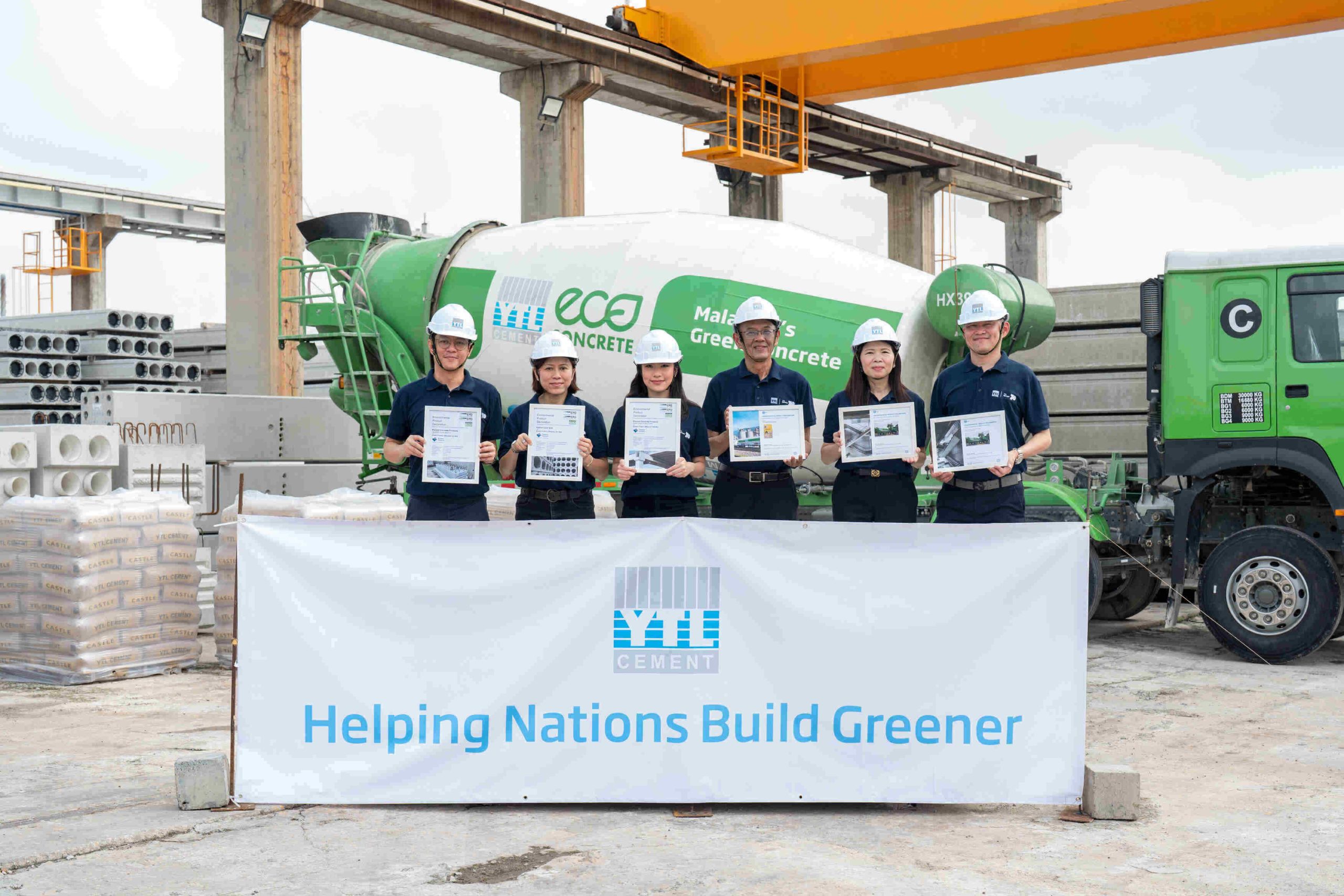
    YTL Cement Group (YTL Cement) has solidified its position as a sustainability leader in Malaysia by becoming the first cement and precast producer in the country to obtain Environmental Product Declarations (EPDs) across its ECOCem®, ECOConcrete™ and precast product ranges. This landmark achievement underscores the Group’s dedication to delivering sustainable, high-performance building solutions and accelerating the nation’s journey towards low-carbon construction. Widely recognized in global green building practices, an EPD is a third-party verified document that discloses a product’s environmental impact throughout its life cycle based on international standards such as ISO 14025 and the ISO 14040 series. These declarations play a crucial role in helping architects, contractors, and developers make informed choices that support sustainability goals and certification requirements.

    Among the newly certified products is Castle Cement, a Singapore Green Label certified cement formulated for bricklaying, screeding, and concreting. The certification also includes ECOConcrete™ Grade 40 and Grade 35, engineered to significantly reduce embodied carbon while maintaining strength, durability and performance. YTL Cement’s precast subsidiary, Eastern Pretech, has made history as well, becoming the first in Malaysia to obtain EPDs for precast concrete solutions including hollow core slabs, beams, planks, and double tee slabs. These certifications represent a major step forward for the Malaysian construction sector, setting new benchmarks for transparency, accountability, and environmental stewardship.

    This milestone builds on YTL Cement’s longstanding efforts to decarbonise the construction value chain. The Group pioneered Malaysia’s ECO range—which includes ECOCem®, ECOConcrete™, ECOSand™ and ECODrymix™—and continues to collaborate closely with CREAM, the research arm of CIDB Malaysia, to advance sustainable construction methodologies. Through its Construction Development Laboratory (CDL), YTL Cement drives innovation in low-carbon building materials, while its CDL Academy facilitates industry training and awareness. Together, these initiatives have already equipped more than 10,000 professionals and students with knowledge and skills in sustainability and construction innovation.

    Rachel Yeoh, Executive Director of YTL Cement, emphasised the significance of this achievement, stating that the EPD certifications mark a crucial step in the Group’s mission to deliver environmentally responsible construction solutions. “It underscores our commitment to innovation and efforts to provide low-carbon building materials and solutions that empower our customers to build more sustainably,” she said. By offering EPD-certified products, YTL Cement enhances transparency for customers and reinforces its long-term commitment to environmental responsibility. As Malaysia continues to pursue its carbon-neutral aspirations, the Group aims to further strengthen collaboration with regulators, industry bodies, and research partners to drive sustainable construction practices nationwide.