Category: Government & Policy

  • Malaysia to Host SEMICON Southeast Asia 2026, Uniting Global Leaders to Shape the Future of Semiconductors

    SEMICON Southeast Asia (SEMICON SEA) 2026, the region’s premier platform for the global semiconductor and electronics manufacturing supply chain, will return to the Malaysia International Trade and Exhibition Centre (MITEC) in Kuala Lumpur from 5 to 7 May. Registration is now open.

    The event highlights the growing strategic importance of Southeast Asia within the global semiconductor ecosystem, as the region continues to strengthen its role in advanced manufacturing and supply chain resilience. In Malaysia, the event is held in strategic partnership with the Ministry of Investment, Trade and Industry (MITI) and the Malaysian Investment Development Authority (MIDA), reflecting the country’s continued commitment to strengthening its position in the global semiconductor value chain.

    SEMICON SEA 2026, themed Transform Tomorrow, will focus on accelerating next-generation technologies while addressing current structural challenges. It is expected to gather more than 20,000 innovators, policymakers, and technology experts, fostering collaboration across the international semiconductor ecosystem while delivering insights into artificial intelligence, smart manufacturing, sustainability, workforce development, advanced packaging, supplier sourcing, and other key areas.

    The global semiconductor industry is projected to reach USD1 trillion in annual sales by 2026, driven by the rapid expansion of artificial intelligence infrastructure. Market analysts note that Southeast Asia has emerged as a significant growth engine for the industry, outperforming the broader market in recent years, supported by sustained expansion in manufacturing capacity, assembly, testing, and packaging activities, as well as deeper integration into global supply chains.

    According to Ajit Manocha, President and CEO of SEMI, the semiconductor industry is entering a new era defined by ecosystem-wide collaboration. He noted that SEMICON Southeast Asia reflects this shift through programmes designed to bridge innovation and execution, from design through manufacturing, and expressed SEMI’s anticipation of hosting the event in Malaysia, a long-established semiconductor hub.

    Linda Tan, President of SEMI Southeast Asia, said SEMICON Southeast Asia serves as a catalyst for collaboration and innovation by bringing together industry leaders, visionaries, and experts to address pressing challenges and explore emerging opportunities, enabling stakeholders to shape the future of the semiconductor industry.

    In Malaysia, the semiconductor industry is entering its next phase of growth from a position of strength. The electrical and electronics (E&E) sector secured RM28.5 billion in approved investments in 2025, reinforcing its role as a cornerstone of the national manufacturing economy and a trusted node in the global technology supply chain. SEMICON SEA 2026 comes at a time when Malaysia is moving beyond its established strengths in assembly and test towards higher-value activities, including design, advanced packaging, and innovation-driven manufacturing.

    According to Datuk Sikh Shamsul Ibrahim Sikh Abdul Majid, Chief Executive Officer of MIDA, the semiconductor industry is at an inflection point and Malaysia intends to be at the centre of its next phase. He noted that under the New Industrial Master Plan (NIMP) 2030, Malaysia is not only maintaining its position in the global semiconductor supply chain but actively reshaping it. He added that strong investment fundamentals, including RM28.5 billion in E&E investments in 2025, reflect continued global confidence in Malaysia, which the country is building upon through supply chain integration, local capability development, and high-value partnerships. MIDA, he said, is an active builder of the industry’s next chapter in Malaysia, working collaboratively to shape its future.

    SEMICON SEA 2026 will focus on several key pillars, including artificial intelligence and intelligent manufacturing, sustainability, talent development, advanced packaging and heterogeneous integration, and supplier sourcing. These areas aim to accelerate innovation, strengthen ecosystem linkages, and support the development of a future-ready workforce.

    MIDA will also lead several initiatives at the event, including a Supply Chain Integration & Capability Enhancement Forum to strengthen industry linkages and supplier capabilities, a Digital Twin & Smart Manufacturing Seminar for SMEs to enhance technological adoption, and the Handshake@SEMICON programme, which facilitates structured engagements between global industry leaders and Malaysian stakeholders to accelerate investment and partnerships. In addition, MIDA will contribute to workforce development discussions through SEMI’s TECH Zoomers programme at Universiti Kebangsaan Malaysia (UKM), focusing on talent trends and future skills in the semiconductor sector.

    SEMICON SEA 2026 is further supported by leading global industry sponsors, including GlobalFoundries, Lam Research, Micron, Sandisk Corporation, Tokyo Electron Limited, Applied Materials, Schneider Electric, SGS, Soitec, STATS ChipPAC, Advantest, ASE, KLA, Kulicke & Soffa, Siemens, and STMicroelectronics.

    Registration for SEMICON SEA 2026 is now open. For full programme and conference details, please visit the SEMICON SEA website.

  • Kerangka Dasar Kerajaan bagi Akta Pekerja Gig 2025

    Gabungan pertubuhan bukan kerajaan (NGO) yang mewakili pelbagai kumpulan dalam ekosistem ekonomi gig, termasuk pekerja dan pengguna, telah mengeluarkan kenyataan media bersama bagi menggesa kerajaan mempertimbangkan penangguhan pelaksanaan Akta Pekerja Gig 2025 (Akta 872). Walaupun langkah kerajaan memperkenalkan rangka perundangan khusus bagi sektor ini dilihat sebagai sesuatu yang positif, gabungan tersebut berpendapat bahawa masih terdapat beberapa aspek penting yang perlu dikaji dan diperhalusi sebelum akta ini dilaksanakan secara menyeluruh.

    Antara isu utama yang dibangkitkan ialah takrifan pekerja gig yang dilihat terlalu luas, sekali gus berpotensi mewujudkan persaingan yang tidak seimbang, terutamanya kepada pekerja tempatan. Selain itu, cadangan penubuhan Tribunal Pekerja Gig dan Majlis Perundingan Gig turut menimbulkan persoalan berkaitan keberkesanan, ketelusan serta bidang kuasa, khususnya jika ia bertindih dengan sistem sedia ada tanpa memberikan impak yang jelas.

    Selain itu, prosedur penyahaktifan akaun juga dilihat kurang sesuai dengan sifat industri gig yang memerlukan tindakan segera dan responsif. Dalam masa yang sama, peruntukan berkaitan hak berpersatuan dianggap tidak cukup kukuh kerana tidak menyediakan kuasa rundingan kolektif seperti yang dimiliki oleh kesatuan sekerja. Dari sudut ekonomi pula, pengiktirafan formal pekerja gig boleh menyebabkan mereka terdedah kepada kewajipan cukai tanpa disertai jaminan perlindungan pendapatan yang mencukupi.

    Gabungan NGO turut menyuarakan kebimbangan terhadap proses libat urus yang dianggap tidak menyeluruh dan kurang telus. Terdapat persepsi bahawa dasar ini dirangka secara tergesa-gesa tanpa penglibatan sebenar semua pihak berkepentingan, sekali gus berisiko menjadikan pekerja gig sebagai “ujian dasar”. Di samping itu, peningkatan premium insurans juga memberi tekanan tambahan kepada pekerja gig dan berkemungkinan memberi kesan kepada pengguna melalui kenaikan kos perkhidmatan.

    Secara keseluruhannya, gabungan ini menegaskan bahawa cadangan moratorium bukan bertujuan menolak usaha kerajaan, tetapi untuk memastikan akta ini dibangunkan dengan lebih menyeluruh, praktikal dan selari dengan keadaan sebenar industri. Dengan pendekatan yang lebih telus dan inklusif, akta ini berpotensi menjadi satu dasar yang benar-benar melindungi serta memperkasakan pekerja gig di Malaysia.

  • Sarawak Strengthens National Collaboration to Advance Impactful Business Events

    Sarawak Strengthens National Collaboration to Advance Impactful Business Events

    Sarawak is reinforcing its commitment to strengthening collaboration within Malaysia’s business events ecosystem as part of its long-term development agenda. The Ministry of Tourism, Creative Industry and Performing Arts Sarawak recently reaffirmed its support for business events organisers across the country, highlighting that stronger national partnerships will play a crucial role in achieving the goals outlined in Sarawak’s Post COVID-19 Development Strategy 2030 (PCDS 2030).

    The message was emphasised during Business Events Sarawak’s (BESarawak) Ramadan engagement session in Kuala Lumpur, which formed part of a broader initiative to deepen industry collaboration and strengthen ties with national stakeholders. The engagement series aims to expand future bid pipelines, foster stronger partnerships with event organisers across Malaysia and position business events as a strategic platform that drives long-term economic and social impact.

    The timing of the engagement is particularly significant as Sarawak enters the final phase of its development roadmap under PCDS 2030. As the state moves toward the final stretch of the strategy, collaboration with partners from across Malaysia will be essential in transforming strategic plans into tangible outcomes that benefit industries, communities and the broader national economy.

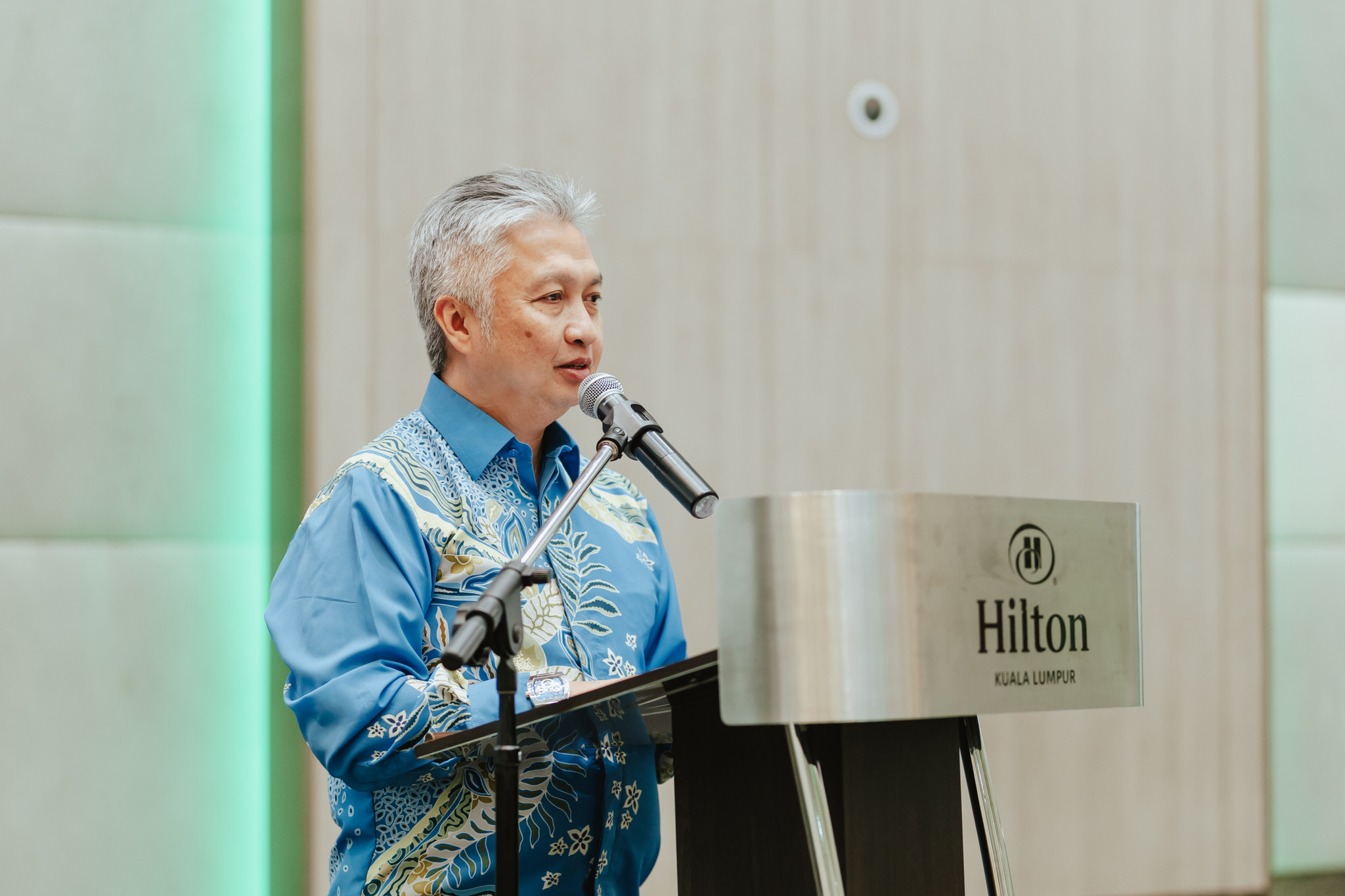
    Sarawak builds stronger ties with Malaysia’s industry, discussing on how to expand current collaborations to support PCDS 2030.

    Representing the Minister of Tourism, Creative Industry and Performing Arts Sarawak, Deputy Minister Datuk Snowdan Lawan emphasised that the ministry remains committed to supporting organisations interested in bringing impactful business events to Sarawak. He noted that through Business Events Sarawak, the state continues to provide strong support and resources to organisations across the country that seek to host conferences, exhibitions and other high-value business events in the region.

    According to Jason Tan Chin Foo, Acting Chief Executive Officer of BESarawak, collaboration has long been the foundation of Sarawak’s success as a business events destination. He explained that through its legacy impact initiatives and comprehensive support programmes for event organisers, BESarawak aims to strengthen industry contributions while fostering partnerships that create meaningful and lasting legacies for Sarawak, Malaysia and the wider region.

    Among the initiatives introduced is the Academic Mobility Programme, a newly launched platform designed to encourage universities to organise study tours and technical visits to Sarawak. The programme aims to strengthen the link between academic research and local development priorities by providing opportunities for students, researchers and academic institutions to engage directly with Sarawak’s industries, communities and development sectors.

    By bridging academia with industry, the initiative supports Sarawak’s broader vision of positioning itself as the “Legacy Capital of Business Events” in Malaysia and Borneo. The programme also reflects the state’s long-term strategy of ensuring that business events generate meaningful knowledge exchange, innovation and sustainable development outcomes beyond the events themselves.

    As Sarawak continues to strengthen its position in the regional business events landscape, collaboration with national partners will remain a key pillar in ensuring that the sector delivers lasting economic, social and intellectual impact for Malaysia.

  • Sarawak Government Formally Implements Legacy Impact Initiatives in Collaboration with BESA

    Sarawak Government Formally Implements Legacy Impact Initiatives in Collaboration with BESA

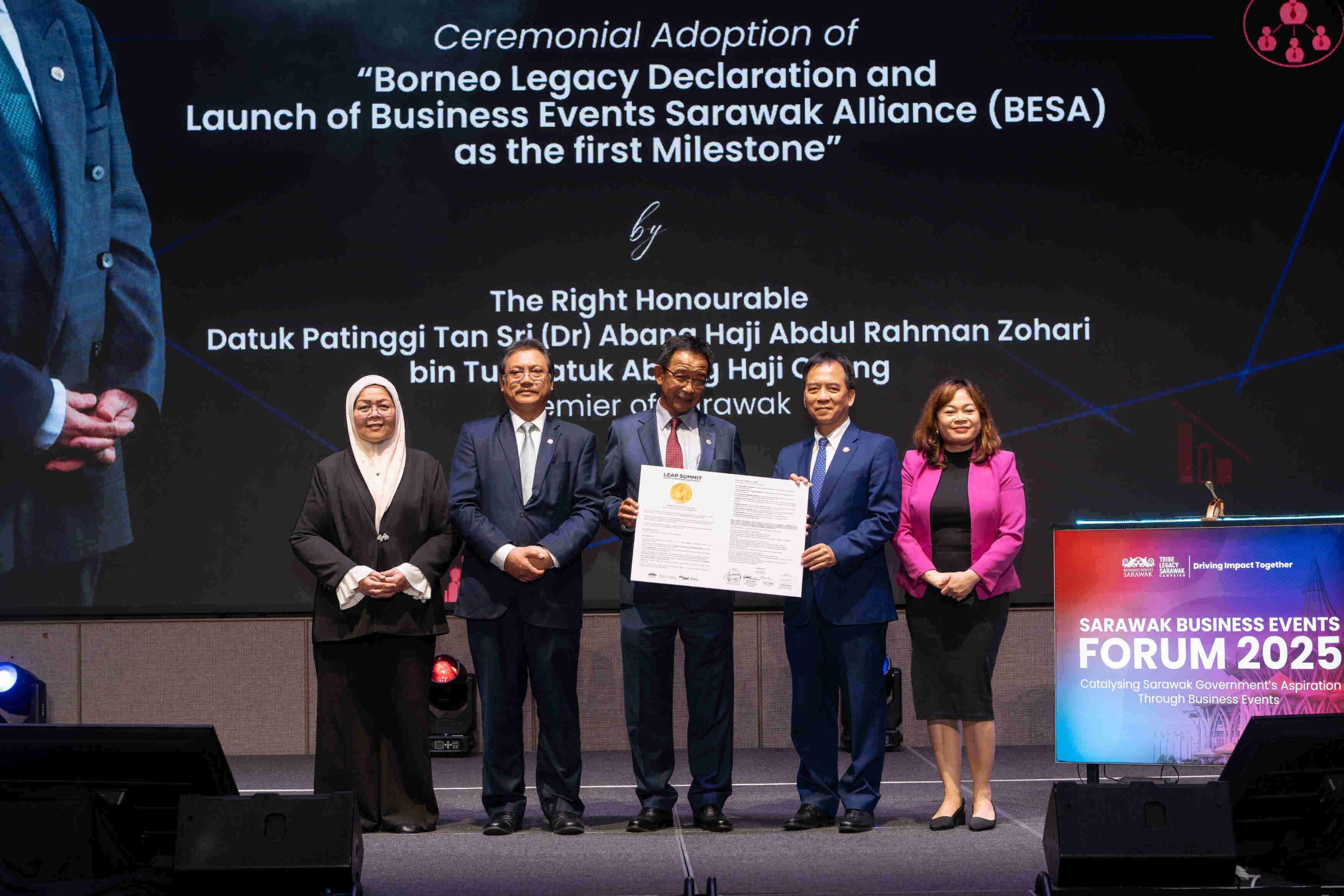
    The Sarawak government has taken a major step in strengthening the business events sector with the official adoption of the Borneo Legacy Declaration and the launch of the Business Events Sarawak Alliance (BESA) during the Sarawak Business Events Forum. This initiative positions business events as strategic tools for delivering long-term policy outcomes and sustainable development across the state. The Borneo Legacy Declaration, formed during the Legacy Event Advocacy Policy (LEAP) Summit in October 2025, unites 36 policymakers and industry leaders from countries including Malaysia, Australia, Korea, the Philippines, the UK, and the US to champion legacy-driven events that foster sustainable economic growth.

    BESA will serve as a collaborative platform connecting Sarawak’s government ministries with BESarawak to leverage business events for positive social, economic, and environmental outcomes aligned with the Post Covid-19 Development Strategy (PCDS) 2030. Starting in 2026, ministries will host and participate in national and international business events, prioritizing homegrown events through structured qualification processes. The platform also offers capacity-building programmes to enhance legacy impact advocacy among government agencies.

    The Honorable Dato Sri Abdul Karim Rahman Hamzah signs the Borneo Legacy Declaration.

    The Honorable Dato Sri Abdul Karim Rahman Hamzah, representing the Premier of Sarawak, highlighted the sector’s success, noting a 100% event bidding success rate and the growth of 72 homegrown events, including the Borneo International Water & Wastewater Exhibition & Conference and International Energy Week. Deputy State Secretary Datu Hii Chang Kee emphasized that the sector’s achievements result from strategic planning and a robust ecosystem, underscoring the importance of government-industry collaboration for future growth.

    Amelia Roziman, CEO of BESarawak, hailed the government’s adoption of a legacy impact strategy as a landmark move, reinforcing Sarawak’s focus on sustainable and inclusive development in line with the state’s 13th Malaysia Plan (2026–2030). This development plan prioritizes high-impact investments in infrastructure, renewable energy, digitalization, human capital, and rural development, alongside strengthening key sectors such as manufacturing, agriculture, tourism, and services, ensuring long-term prosperity for the state.