Category: Economy

  • Sesi Eksklusif ‘Unplugged’: ANSARA Malaysia Kumpulkan Golongan Teknokrat dan Profesional Bersama TPM

    Sesi Eksklusif ‘Unplugged’: ANSARA Malaysia Kumpulkan Golongan Teknokrat dan Profesional Bersama TPM

    Persatuan Bekas Pelajar MRSM Malaysia (ANSARA Malaysia) melalui Biro Profesional bakal menganjurkan majlis kemuncak Himpunan Gen MARA: Sesi Eksklusif Unplugged bersama Timbalan Perdana Menteri, Dato’ Seri Dr. Ahmad Zahid bin Hamidi pada 5 Mei 2026. Program berimpak tinggi yang dijadualkan berlangsung di Dewan Merdeka, Pusat Dagangan Dunia Kuala Lumpur (WTC KL) ini dianjurkan secara istimewa sempena Sambutan Ulang Tahun MARA yang ke-60. Majlis ini dijangka menghimpunkan ratusan tokoh teknokrat, pakar industri, dan usahawan profesional yang merupakan produk keberhasilan ekosistem MARA, merangkumi alumni MRSM, graduan institusi pendidikan MARA, serta penerima tajaan badan tersebut.

    Naib Presiden ANSARA Malaysia merangkap Ketua Biro Profesional, Ts. Abdul Razak Abdul Khalid selaku Pengarah Program menjelaskan bahawa penganjuran ini merupakan langkah proaktif dalam menyatukan modal insan mahir yang telah dibentuk melalui pelaburan strategik MARA. Beliau menekankan bahawa Gen MARA adalah aset strategik negara yang memegang peranan kritikal dalam pelbagai sektor profesional, maka himpunan ini bertujuan mengukuhkan jaringan kepakaran kolektif demi kemajuan negara. Solidariti ini juga menzahirkan sokongan padu komuniti profesional di bawah naungan ANSARA terhadap usaha kerajaan dalam memperkasa ekosistem pendidikan dan keusahawanan Bumiputera.

    Memilih format ‘Unplugged’, program ini menyediakan ruang kepada para profesional untuk berinteraksi secara terus dan santai dengan Timbalan Perdana Menteri bagi membincangkan agenda nasional. Majlis ini turut menyaksikan pelancaran Skuad ANSARA, iaitu badan sukarelawan rasmi yang berperanan sebagai tunjang sokongan utama dalam menggerakkan program kemanusiaan, teknikal, dan operasi persatuan. Selain itu, pra-pelancaran Karnival Sukan ANSARA 2027 juga akan diadakan sebagai manifestasi awal ke arah temasya dwi-tahunan yang bertujuan menyatukan ribuan alumni merentas generasi serta memperkukuh ukhuwah melalui gaya hidup sihat.

    Sebagai organisasi yang menaungi ratusan ribu alumni, ANSARA Malaysia komited memastikan graduan MARA tidak bergerak secara silo dengan bertindak sebagai saluran strategik bagi golongan pakar memberikan input kepada kepimpinan negara. Ts. Abdul Razak menambah bahawa ANSARA mahu membuktikan pelaburan kerajaan melalui MARA telah membuahkan hasil yang lestari dan mereka sedia berkhidmat sebagai rakan strategik kerajaan. Melalui inisiatif ini, ekosistem MARA diharapkan terus diperkukuh bagi menghadapi cabaran masa hadapan demi membina masa depan Malaysia yang lebih gemilang.

    Orang ramai dan ahli profesional yang berminat dijemput hadir memandangkan tiket masuk bagi program ini adalah PERCUMA. Bagi memastikan penyelarasan tempat duduk, para peserta diminta untuk melakukan RSVP segera melalui pautan bit.ly/rsvpunpluggedtpm. Selain itu, pendaftaran manual secara berkumpulan juga disediakan melalui pautan bit.ly/borangdaftar-unpluggedtpm yang perlu diemelkan semula kepada pihak sekretariat di sekretariat@myansara.org.

  • From Scale to Trust: Strengthening Malaysia’s Digital Payments EcosystemBy Tee Kean Kang, Chief Executive Officer of Paydibs

    Malaysia’s digital payments ecosystem is expanding at an unprecedented pace, but scale alone does not define strength. In 2025, the country recorded 18.4 billion e-payment transactions, reflecting a 25 per cent year-on-year increase, with each Malaysian conducting an average of 538 digital transactions. DuitNow QR volumes have also doubled to three billion, supported by close to three million merchant touchpoints nationwide.

    While these figures reflect strong adoption, they also raise a more pressing question for the industry: whether trust is keeping pace as digital transactions become increasingly embedded in daily life. Reported fraud losses reached RM2.8 billion in 2025, highlighting the growing risks within an increasingly digital ecosystem. In the first quarter of the year alone, online fraud cases rose to 12,110, with total losses amounting to RM573 million. Although digital payments continue to scale rapidly, these figures point to a parallel reality in which confidence in the system is being tested in real time. This marks a clear inflection point, where the focus must shift from driving adoption at scale to strengthening trust and assurance at every stage of the transaction journey.

    Trust in payments is often discussed in abstract terms, but for businesses on the ground it is grounded in three core elements: visibility, control, and protection. Visibility ensures merchants can track transactions in real time, control provides certainty over fund settlements and supports cash flow management, while protection offers reassurance that businesses are safeguarded when unexpected issues arise. When any of these elements are weakened, trust can quickly erode, particularly for smaller businesses operating on tight margins.

    In practice, most payment failures do not occur at scale but at the edges of the system, where processes are fragmented and operational gaps are more likely to appear. For micro, small and medium enterprises (MSMEs), a delayed settlement or disputed transaction is not a minor inconvenience but a disruption to daily operations.

    Bank Negara Malaysia has already recognised this shift in focus. The priority is no longer solely on expanding digital payments, but also on preserving trust within the ecosystem. Frameworks such as the Shared Electronic Fraud and Theft policy establish shared accountability between financial institutions and users, while infrastructure enhancements such as RENTAS+ and the adoption of ISO 20022 standards improve transparency and resilience across the payment system. However, regulation alone is not sufficient to build trust; it must be reinforced through consistent, real-world experiences at the merchant level.

    Malaysia’s 1.2 million MSMEs sit at the centre of this transition. Unlike large enterprises, they often operate without extensive financial systems or dedicated risk management teams. Their exposure is immediate, and their tolerance for disruption is low. For these businesses, trust is not defined by policy or technical standards, but by whether payments are received as expected, whether transactions are transparent, and whether digitalisation simplifies rather than complicates operations. This is where the industry must move beyond enabling access and focus on delivering assurance.

    From an operational perspective, addressing this gap requires rethinking the purpose of payment infrastructure. Direct connectivity to national payment rails is not merely a technical enhancement; it removes intermediary layers, enabling faster access to funds and greater visibility over cash flow. This is not just about speed, but about certainty, which is essential for business stability.

    Similarly, consolidating multiple payment methods into a single platform or device goes beyond convenience. It reduces fragmentation, lowers operational risk, and ensures consistency in transaction outcomes. Unified terminals that support QR, card, and alternative payment methods within a single controlled environment reflect this approach. These are deliberate design choices aligned with how merchants operate, rather than how payment systems have traditionally been structured.

    Trust must also extend beyond transactions to address broader business risks. Many MSMEs remain underinsured, often due to the complexity or perceived disconnect between traditional insurance products and day-to-day operations. Embedding protection directly into payment infrastructure provides a more practical solution, where coverage such as business interruption, liability, and asset protection becomes part of the tools merchants already use. By integrating these safeguards into the payment experience, barriers to adoption can be reduced while businesses are better protected against unforeseen disruptions. This reflects a broader shift in fintech, where value is created not only through functionality, but through relevance and integration into real business needs.

    Paydibs, for example, has partnered with Great Eastern General Insurance to embed business protection directly into its payment terminals. Coverage for fire and flood damage, cash-in-transit loss, employer liability, and business disruption is bundled with the terminal merchants already use to accept digital payments. The principle is clear: businesses should not have to choose between digital growth and operational protection, as both should be built in by design.

    Eighteen billion transactions in a single year is a significant milestone, and Malaysia has clearly demonstrated its ability to achieve digital payment scale. Bank Negara Malaysia’s priorities for 2026, which emphasise stronger fraud prevention, cross-sector collaboration, and inclusive adoption, further reinforce trust as a foundational pillar for continued progress.

    In this environment, differentiation will no longer be defined by transaction volume or processing speed alone. It will be shaped by the ability to deliver systems that are resilient, transparent, and purpose-built to support businesses through both growth and uncertainty. Digitalisation accelerates when businesses have confidence in the systems they rely on, and that confidence is earned through consistent performance, clear visibility, and meaningful protection.

  • Nestlé Malaysia Goes Fully Local with 100% Homegrown Chillies for MAGGI

    Nestlé Malaysia Goes Fully Local with 100% Homegrown Chillies for MAGGI

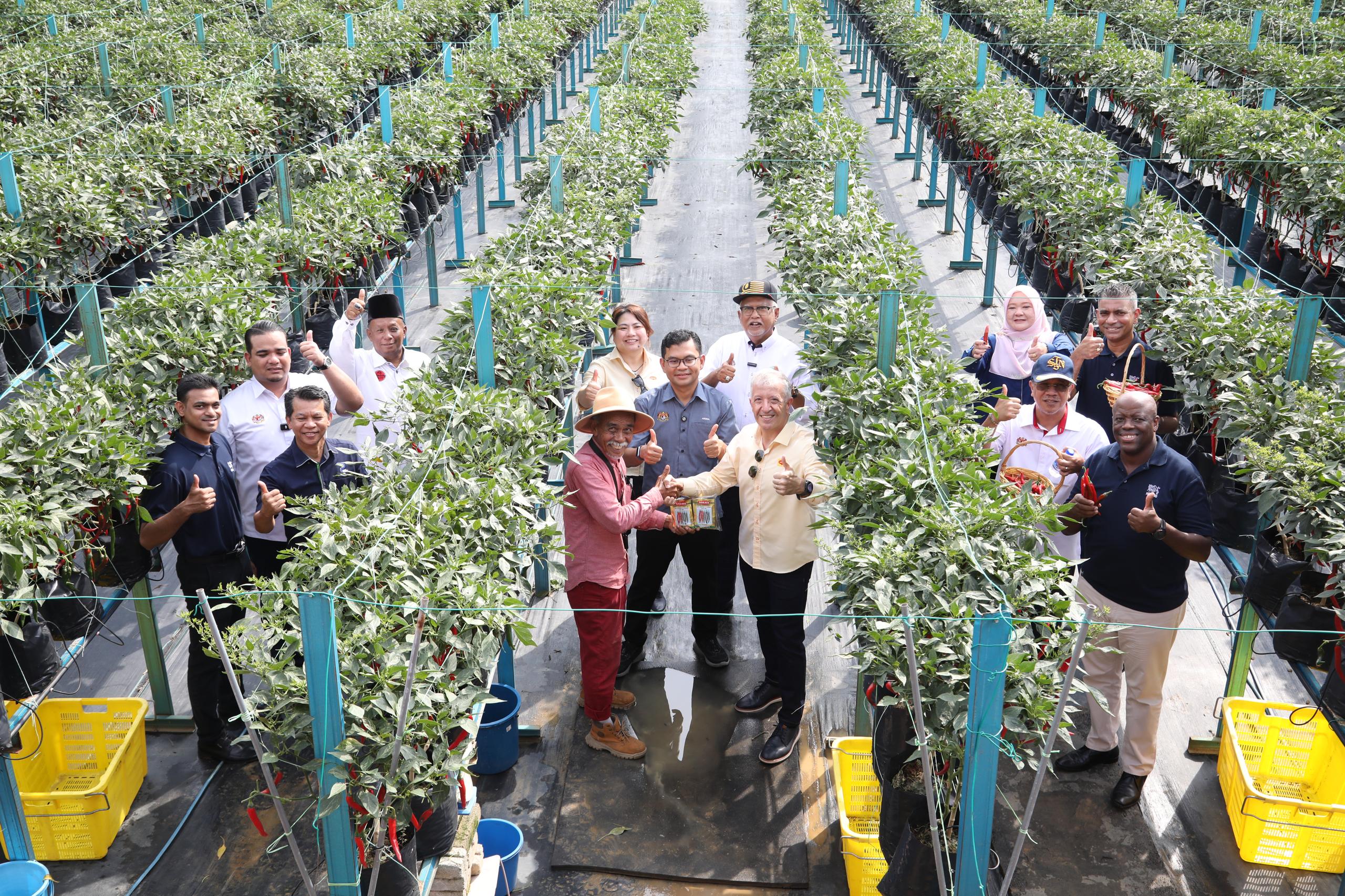
    Nestlé Malaysia has officially achieved a landmark milestone in its sustainability journey, announcing that 100% of the fresh chillies used in the production of its iconic MAGGI Chilli Sauce are now sourced entirely from local Malaysian farmers.

    This achievement was highlighted during an official working visit by the Minister of Economy, YB Tuan Haji Akmal Nasrullah Bin Haji Mohd Nasir, to the IPRINTAN Putrajaya Project. The visit showcased the success of well-structured farmer partnerships in strengthening national food security while simultaneously providing sustainable livelihoods for B40 communities.

    A Milestone in Self-Sufficiency and Economic Empowerment

    The project is powered by the Nestlé Chilli Club (NCC), a contract farming program established in 1995. Today, the initiative supports farmers across 12 strategic sites in Kelantan, Selangor, Putrajaya, and Johor, spanning 146 acres of farmland.

    During the briefing, the Minister was updated on the high-yield farming initiative’s socio-economic impact. Key highlights include:

    • Income Security: Participating farmers in the IPRINTAN Putrajaya project now earn an average monthly income of approximately RM3,000.
    • Economic Contribution: The current 2026 cycle (the project’s fifth) has yielded over 200 tonnes of chillies, with an estimated market value of RM1.5 million.
    • Traceability: By sourcing directly, Nestlé ensures a fully traceable and high-quality supply chain for its locally produced MAGGI products.

    Building a Resilient Food System

    Mr. Juan Aranols, Chief Executive Officer of Nestlé Malaysia, emphasized that the company’s “Creating Shared Value” (CSV) approach is the driving force behind these partnerships.

    “Supporting the livelihoods of local farmers is integral to both our value chain and the nation’s food security agenda. Long-term partnerships with farming communities and government stakeholders, such as our collaboration with IPRINTAN, reflect our shared responsibility to build a more resilient and self-sufficient food system while empowering B40 households,” said Aranols.

    Expansion and Regenerative Agriculture

    Nestlé Malaysia provides participating farmers with specialized training in eco-friendly regenerative agricultural practices. This modern approach focuses on soil health and farm productivity, ensuring sustainable yields for generations to come.

    Originally established in Kelantan in partnership with Pertubuhan Peladang Kawasan (PPK) Bukit Awang, the program expanded to Selangor in 2021 via PPK Kuala Langat. In 2025, the initiative advanced further with a specialized greenhouse project in collaboration with Chin Siam Chiap (CSS) Johor, ensuring a stable, year-round supply of fresh chillies.

    Broader Impact: The Farmer Connect Programme

    The success of the Nestlé Chilli Club is a cornerstone of the broader Farmer Connect initiative. This program supports hundreds of farmers across various commodities nationwide:

    • Kedah and Perlis: Sustainable rice cultivation and agronomy support.
    • Sabah and Sarawak: Responsible cocoa sourcing in collaboration with the Malaysian Cocoa Board.
    • Kelantan and Kedah: Dedicated coffee farming programs in Gua Musang and surrounding areas.

    By integrating locally grown ingredients directly into its manufacturing value chain, Nestlé Malaysia continues to provide consistent market access and long-term capacity building for Malaysian smallholders, paving the way for a more sustainable and food-secure future.

  • Diesel Surge Hits Tourism Transport Hard – Industry Urges Targeted Support and Short-Term Fare Adjustment

    KUALA LUMPUR, 1 APRIL 2026 – The Malaysian Association of Tour and Travel Agents is urging the Malaysian government to implement targeted measures to cushion the impact of rising diesel prices on tourism transport operators. Based on recent industry data, a significant proportion of operators consume thousands of litres of diesel monthly, making them particularly vulnerable to fuel price fluctuations.

    To address the issue, MATTA has proposed a targeted subsidy of up to 3,500 litres per month for each licensed tour vehicle, alongside a temporary fuel surcharge mechanism. The surcharge would be applied transparently and proportionately, ensuring compliance with regulations while maintaining consumer trust. Industry leaders stress that these measures are crucial not only for business survival but also for preserving the integrity and reliability of Malaysia’s tourism supply chain during this challenging period.

  • Di Sebalik Kenaikan Tarif, Pengilang Klang Catat Penjimatan Besar Melalui Solar

    default

    Kenaikan tarif elektrik Malaysia sekitar 14% kepada 45.62 sen/kWj di bawah Tempoh Kawal Selia 4 (RP4), bersama pelaksanaan cukai karbon dalam Belanjawan 2026, meningkatkan tekanan kos terhadap sektor perindustrian, khususnya pengilang berintensif tenaga.

    Sebagai langkah proaktif, sebuah syarikat kejuruteraan di Klang beralih kepada penggunaan tenaga solar. EFS Group telah memasang sistem solar bumbung berkapasiti 403 kWp untuk Cheng Hua Engineering Works Sdn Bhd di fasiliti mereka. Dalam bulan pertama operasi, sistem ini berjaya mengurangkan hampir 50% bil elektrik serta menampung sekitar 30% keperluan tenaga. Secara tahunan, ia dianggarkan menjana 362,280 kWj tenaga bersih dan mengurangkan kira-kira 400 tan metrik pelepasan karbon.

    Ketua Pegawai Eksekutif EFS Group, Darren Tan, menyatakan bahawa pengurusan tenaga kini menjadi faktor penting dalam meningkatkan kecekapan kos dan daya tahan kewangan syarikat, sejajar dengan pelaksanaan RP4 dan mekanisme AFA yang menjadikan tarif lebih dinamik.

    Dalam masa sama, pengilang turut berdepan cabaran dasar seperti cukai karbon dan tekanan eksport melalui mekanisme CBAM Kesatuan Eropah, yang menuntut komitmen penyahkarbonan yang lebih jelas. Cheng Hua Engineering telah menggunakan tenaga solar sejak 2014 di bawah skim FiT. Perluasan terkini melalui skim SelCo, yang dibiayai sepenuhnya oleh syarikat, mencerminkan keyakinan terhadap solar sebagai pelaburan jangka panjang.

    Menurut Ketua Pegawai Eksekutifnya, Lim Chee Keong, penggunaan solar meningkatkan kecekapan tenaga sambil menyokong peralihan ke arah ekonomi rendah karbon. Selari dengan sasaran NETR, langkah ini turut memperkukuh daya saing jangka panjang pengilang di Malaysia.

  • Kerangka Dasar Kerajaan bagi Akta Pekerja Gig 2025

    Gabungan pertubuhan bukan kerajaan (NGO) yang mewakili pelbagai kumpulan dalam ekosistem ekonomi gig, termasuk pekerja dan pengguna, telah mengeluarkan kenyataan media bersama bagi menggesa kerajaan mempertimbangkan penangguhan pelaksanaan Akta Pekerja Gig 2025 (Akta 872). Walaupun langkah kerajaan memperkenalkan rangka perundangan khusus bagi sektor ini dilihat sebagai sesuatu yang positif, gabungan tersebut berpendapat bahawa masih terdapat beberapa aspek penting yang perlu dikaji dan diperhalusi sebelum akta ini dilaksanakan secara menyeluruh.

    Antara isu utama yang dibangkitkan ialah takrifan pekerja gig yang dilihat terlalu luas, sekali gus berpotensi mewujudkan persaingan yang tidak seimbang, terutamanya kepada pekerja tempatan. Selain itu, cadangan penubuhan Tribunal Pekerja Gig dan Majlis Perundingan Gig turut menimbulkan persoalan berkaitan keberkesanan, ketelusan serta bidang kuasa, khususnya jika ia bertindih dengan sistem sedia ada tanpa memberikan impak yang jelas.

    Selain itu, prosedur penyahaktifan akaun juga dilihat kurang sesuai dengan sifat industri gig yang memerlukan tindakan segera dan responsif. Dalam masa yang sama, peruntukan berkaitan hak berpersatuan dianggap tidak cukup kukuh kerana tidak menyediakan kuasa rundingan kolektif seperti yang dimiliki oleh kesatuan sekerja. Dari sudut ekonomi pula, pengiktirafan formal pekerja gig boleh menyebabkan mereka terdedah kepada kewajipan cukai tanpa disertai jaminan perlindungan pendapatan yang mencukupi.

    Gabungan NGO turut menyuarakan kebimbangan terhadap proses libat urus yang dianggap tidak menyeluruh dan kurang telus. Terdapat persepsi bahawa dasar ini dirangka secara tergesa-gesa tanpa penglibatan sebenar semua pihak berkepentingan, sekali gus berisiko menjadikan pekerja gig sebagai “ujian dasar”. Di samping itu, peningkatan premium insurans juga memberi tekanan tambahan kepada pekerja gig dan berkemungkinan memberi kesan kepada pengguna melalui kenaikan kos perkhidmatan.

    Secara keseluruhannya, gabungan ini menegaskan bahawa cadangan moratorium bukan bertujuan menolak usaha kerajaan, tetapi untuk memastikan akta ini dibangunkan dengan lebih menyeluruh, praktikal dan selari dengan keadaan sebenar industri. Dengan pendekatan yang lebih telus dan inklusif, akta ini berpotensi menjadi satu dasar yang benar-benar melindungi serta memperkasakan pekerja gig di Malaysia.

  • Penang’s Business Events Sector Generates RM1.91 Billion Economic Impact in 2025, Advancing Penang 2030 Vision

    Penang’s Business Events Sector Generates RM1.91 Billion Economic Impact in 2025, Advancing Penang 2030 Vision

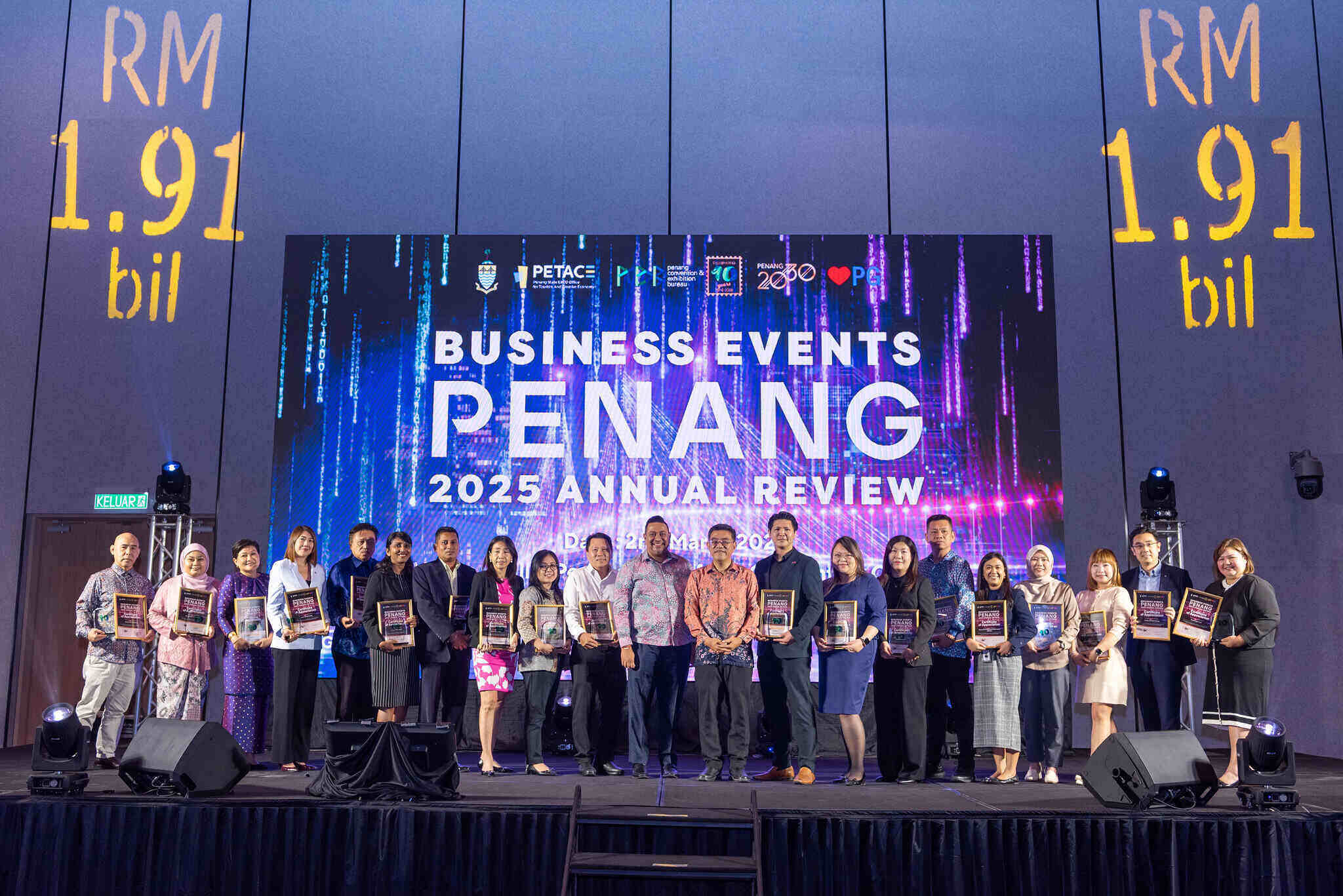
    Penang Convention & Exhibition Bureau (PCEB) has announced a landmark performance for Business Events Penang in 2025, underscoring the state’s growing reputation as a premier destination for high-value conferences, conventions, and corporate events. The sector recorded strong growth across key performance indicators, further strengthening Penang’s position in the regional and international business events landscape while contributing significantly to the state’s long-term development strategy under the Penang 2030 Vision.

    According to the bureau, Penang hosted a total of 3,391 business events in 2025, representing a remarkable 64.7% increase compared to 2,059 events in 2024. The number of delegates also rose significantly to 451,198, reflecting a 47.8% growth, while total room nights reached 824,505, marking an increase of 47.6% year-on-year. These achievements collectively generated an estimated Economic Event Impact (EEI) of RM1.91 billion, highlighting the important role of business events in driving tourism revenue, hospitality demand, and broader economic activity across the state.

    The strong performance was supported by ongoing infrastructure expansion and improved connectivity. Over the past year, Penang added more than 2,000 new hotel rooms, while expanded direct flight connectivity has made the destination more accessible for both regional and international delegates. These developments have enhanced Penang’s ability to host large-scale meetings, incentives, conferences, and exhibitions (MICE), further elevating its competitiveness as a business events hub in Asia.

    Penang State Exco for Tourism and Creative Economy, Wong Hon Wai, said the results demonstrate that business events play a crucial role in driving the state’s economic growth. He noted that the sector aligns closely with Penang’s long-term aspirations under the Penang 2030 agenda, which focuses on sustainable economic development and innovation. According to him, emerging industries such as advanced manufacturing, artificial intelligence, and marine-related sectors present strong opportunities to attract more high-value international events that align with Penang’s economic priorities.

    Meanwhile, Ashwin Gunasekeran emphasised that PCEB continues to adopt a strategic and data-driven approach to strengthen the state’s business events ecosystem. By leveraging market intelligence, global industry best practices, and collaborative partnerships, the bureau aims to help stakeholders transform opportunities into measurable outcomes that benefit Penang’s wider tourism and business landscape.

    Looking ahead, Penang remains committed to attracting high-impact, strategic business events that deliver both immediate economic benefits and long-term value for the community. Central to this effort is the Penang Inspiring Meetings campaign, an initiative designed to position the destination as more than just a venue for events. The campaign focuses on creating meaningful and transformative experiences that connect people, ideas, and culture, while reinforcing Penang’s standing within the global business events community.

  • Silver Jubilee Gala Marks 25 Years of Innovation, Recognises Adam Ham’s ASEAN Impact

    Silver Jubilee Gala Marks 25 Years of Innovation, Recognises Adam Ham’s ASEAN Impact

    It was a night of glamour, gratitude, and creative energy as some of Malaysia’s biggest names from the entertainment and media world gathered to celebrate a man whose influence continues to shape the nation’s creative landscape, Adam Ham. The grand gala marked not only Ham’s 25th year of championing Malaysia’s creative economy but also his 50th birthday, making the evening a double celebration of legacy and life. The star-studded event was both heartfelt and dynamic, mirroring Ham’s own journey as one of the country’s most connected and passionate creative figures.

    Held jointly at Laut and The Fishermen’s Club in Mont Kiara Meridin, the celebration brought together more than 300 distinguished guests, including VIPs, celebrities, industry leaders, and members of the media. Themed “Nightmare on Adam’s Street,” the event radiated a bold sense of personality and playfulness, with lively performances, music, and an atmosphere of camaraderie that underscored Ham’s long-standing role as a connector across diverse communities. The evening was officially graced by Dato’ Sri Arthur Joseph Kurup, Deputy Minister of Agriculture and Food Security, and held under the patronage of Dato’ Kamil Othman, former chairman of the National Film Development Corporation Malaysia (FINAS).

    A highlight of the night was Ham’s special recognition by ASEAN Records as the region’s most connected entrepreneur in the creative media and entertainment sectors across Southeast Asia. The official record title, “Largest Collection of Creative Media & Entertainment Contacts in a Single Mobile Directory by One Individual,” aptly reflected his extraordinary ability to build and sustain relationships across borders.

    The event also saw the presence of beloved stars including Diana Danielle, Ruhainies, Elizabeth Tan, and Amelia Henderson, who joined Ham for a shared birthday celebration that added a personal touch to the festivities. Supported by more than 70 corporate sponsors and partners such as Gintell, Vivo, OneCare Wellness, VitaHealth, and Kinohimitsu, the evening was a showcase of unity between the creative and corporate worlds, a synergy that Ham has long advocated for throughout his career.

    In his speech, Dato’ Sri Arthur Joseph Kurup commended Ham for his resilience and vision, saying that Adam represents the kind of creative adaptability that Malaysia is proud of. Even in the toughest times, he found ways to keep the industry moving and people employed. His work embodies the spirit of innovation that drives Malaysia’s creative economy forward.

    Adam Ham’s journey began in 2000 with a firm belief in what he calls “Clevonomic opportunities,” creative ventures designed to create real value and global impact for Malaysian talent. After graduating from Western Michigan University, he began his career at the Ministry of Science, Technology and Innovation, managing innovation funds before joining the Malaysia Digital Economy Corporation, then known as the Multimedia Development Corporation. Under the mentorship of Dato’ Kamil Othman, Ham played a key role in promoting iconic Malaysian titles such as Upin & Ipin, Bola Kampung, Pontianak Harum Sundal Malam, and Legenda Budak Setan at major international festivals, securing co-productions, distribution deals, and putting Malaysia on the global map as a filming destination.

    His subsequent tenure at FINAS further solidified his reputation as a creative economy specialist. There, he worked tirelessly to elevate Malaysian films and music at international markets and festivals including NATPE Budapest, formerly known as DISCOP, Sundance, the American Film Market, Marché du Film in Cannes, the Busan International Film Festival, and the MIDEM Music Festival. In 2011, Ham took a bold leap by founding the Global Creative & Media Agency, a platform dedicated to connecting Malaysia’s creative industries with global partners and audiences.

    When the pandemic brought the global entertainment industry to a halt, Ham once again proved his adaptability by pivoting towards new opportunities. Rather than waiting for international events to return, he bridged the gap between entertainment and retail, pairing celebrities with brands for commercials, endorsements, and live campaigns that helped sustain both industries during an uncertain period. His deep-rooted commitment to Malaysia and its creative community remained at the heart of everything he did, driving him to build connections that would uplift others and foster shared success.

    Reflecting on his evolution, Dato’ Kamil Othman shared that he had watched Adam grow from a young industry executive into a regional connector who never stops building bridges. His passion for linking Malaysia with the world has opened doors for countless creators and entrepreneurs. He truly understands that the creative industry is about people, relationships, and shared growth.

    The ASEAN Records recognition is a testament to Ham’s network, which now exceeds 25,000 contacts across the region. Speaking about the honour, Ham said that working across government and private sectors taught him that relationships and trust are everything. Malaysia’s creative community has always been about lifting each other up, and that is what keeps him going.

    As he looks toward the future, Adam Ham remains steadfast in his mission to expand regional collaborations, strengthen Malaysia’s creative footprint, and inspire the next generation of industry leaders. His goal is to keep building regional connections, expand creative reach, and leave behind a legacy that empowers others to dream bigger.

    The grand celebration was more than just an acknowledgment of a career. It was a tribute to two and a half decades of vision, resilience, and relentless pursuit of excellence. Through every milestone and challenge, Adam Ham continues to embody the spirit of Malaysia’s creative evolution, a testament to how one individual’s passion can unite an entire industry and inspire a nation.

  • FELDA Tegas Teruskan Rundingan Strategik Bersama Kerajaan Negeri Terengganu

    Lembaga Kemajuan Tanah Persekutuan (FELDA) menegaskan komitmennya untuk meneruskan rundingan bersama Kerajaan Negeri Terengganu berhubung isu yang sedang dibincangkan antara kedua-dua pihak. Menurut FELDA, perkara ini telah dibawa ke meja rundingan secara rasmi dalam beberapa siri pertemuan yang sedang berjalan.

    Dalam setiap sesi perbincangan, FELDA menekankan bahawa sebarang cadangan melibatkan perkongsian keuntungan atau penstrukturan semula pegangan aset hanya akan diputuskan selepas dibentangkan dan mendapat kelulusan rasmi daripada pihak berautoriti, selaras dengan proses serta tatacara yang telah ditetapkan.

    Pada mesyuarat terkini yang diadakan pada 2 Oktober 2025, FELDA dan Kerajaan Negeri Terengganu telah mencapai persetujuan untuk memberikan tempoh selama 40 hari bagi mencari penyelesaian terbaik. Tempoh ini bertujuan memastikan semua pandangan dan kepentingan dapat diambil kira sebelum sebarang keputusan dimuktamadkan. FELDA menjelaskan bahawa proses rundingan ini masih berjalan dengan baik dan konstruktif, sekali gus menolak tanggapan bahawa rundingan telah terhenti.

    FELDA percaya bahawa perbincangan yang berterusan amat penting bagi merapatkan jurang perbezaan pandangan antara kedua-dua pihak. Pendekatan ini diharap dapat membawa kepada satu penyelesaian yang seimbang dan menyeluruh, demi kepentingan semua pihak yang terlibat.

    Dalam masa yang sama, FELDA menegaskan bahawa pihaknya kekal komited untuk menyelesaikan isu ini dengan penuh tanggungjawab serta profesionalisme. Setiap langkah diambil dengan mempertimbangkan hak dan kepentingan Kerajaan Negeri Terengganu, sambil memastikan kebajikan peneroka serta kelestarian ekosistem perladangan terus terpelihara.

    FELDA yakin bahawa melalui pendekatan berhemah, saling menghormati, dan berpaksikan nilai-nilai MADANI, penyelesaian yang adil dan mampan dapat dicapai demi kesejahteraan bersama antara FELDA, Kerajaan Negeri Terengganu, dan warga peneroka seluruhnya.

  • Budget 2026: Building Stability, Powering Malaysia’s Property Renaissance

    Budget 2026: Building Stability, Powering Malaysia’s Property Renaissance

    Budget 2026 marks a return to steady and confidence-driven policymaking for Malaysia. In a time shaped by global economic headwinds and domestic cost-of-living challenges, the government’s commitment to fiscal discipline and targeted support provides much-needed reassurance. With a projected GDP growth of between 4.0 and 4.5 percent for 2026 and savings of approximately RM15.5 billion annually from subsidy rationalisation, the government has created fiscal space to focus on welfare, infrastructure, and housing programmes that directly benefit Malaysians.

    Stability in this context is not passive—it acts as an active catalyst that rebuilds confidence and sustains long-term growth. While Budget 2026 may not appear expansionary, its substance is stabilising. This environment of stability lays the foundation to restore market confidence, encouraging developers and homebuyers alike to make deliberate and sustainable decisions for the future.

    A key aspect of Budget 2026 lies in laying the groundwork for sustainable urban growth. The government’s allocation of RM6.09 billion to the Ministry of Housing and Local Government (KPKT) reaffirms its commitment to enhancing urban livability and community wellbeing. From this, RM143 million has been set aside for the maintenance of stratified housing, including lift replacements, while RM672 million will go towards the People’s Residency Programme (PRR) and Rumah Mesra Rakyat (RMR), benefiting more than 33,000 residents nationwide. Additional investments such as RM60 million for the construction and repair of public markets and stalls, and RM55 million for drainage upgrades within local authority areas, further strengthen community infrastructure and improve the overall quality of life in urban spaces.

    Malaysia’s housing policy is clearly evolving beyond mere quantity targets. The focus is shifting towards ensuring that homes and neighbourhoods are well-maintained, connected, and dignified. This marks an important transition towards a more mature and resilient housing ecosystem—one that balances affordability with livability and long-term sustainability.

    For homebuyers, Budget 2026 brings forward measures that offer both accessibility and assurance. The extension of the full stamp duty exemption for first-time buyers purchasing properties valued up to RM500,000 until December 2027 provides much-needed clarity and confidence, especially for those planning long-term commitments. Furthermore, the expansion of the Housing Credit Guarantee Scheme (SJKP) by an additional RM10 billion, bringing the total to RM20 billion, is expected to benefit another 80,000 Malaysians who may not qualify for traditional financing. These initiatives lower entry barriers to homeownership and empower more young and lower-income households to take their first step onto the property ladder.

    Such inclusive measures deserve recognition for promoting accessibility and confidence among aspiring homeowners. They align with the broader mission of helping Malaysians make informed and empowered property decisions. On the developers’ side, the introduction of a 10 percent special tax deduction, capped at RM10 million, for the conversion of commercial buildings into residential units is a progressive policy move. This incentive not only encourages adaptive reuse and urban sustainability but also helps address supply imbalances in key city centres such as Kuala Lumpur, Johor Bahru, and Penang. It reflects a pragmatic approach to urban regeneration and supports developers in diversifying their projects to meet shifting market demands.

    Confidence, in essence, must flow both ways across the housing ecosystem. Homebuyers seek assurance to plan and invest with certainty, while developers depend on consistent policies and incentives to innovate and expand responsibly. Budget 2026 strikes this balance effectively, setting the stage for renewed confidence that can drive sustainable recovery in the property sector.

    Overall, Budget 2026 reflects a phase of maturity and fiscal discipline in Malaysia’s economic management. By prioritising stability over rapid expansion, the government is choosing to rebuild trust through focused and practical initiatives. This balanced approach not only strengthens market confidence but also reinforces the foundation for long-term growth in the property sector. As market sentiment continues to improve, Malaysia’s next phase of property growth will depend on how effectively policy direction, urban planning, and market behaviour align.

    Affordability will remain a key concern, but it is stability and trust that will shape the country’s housing evolution in the years to come. Through continued property insights and market data, PropertyGuru and iProperty remain committed to supporting policymakers, developers, and home seekers alike, ensuring that today’s stability becomes the springboard for Malaysia’s next era of sustainable property growth.