Category: Economy

  • Kuala Lumpur Strengthens Global Standing as Malaysia Rises in ICCA 2024 Rankings

    Kuala Lumpur Strengthens Global Standing as Malaysia Rises in ICCA 2024 Rankings

    Malaysia has once again proven its strength as a destination for international business events, with notable gains in the latest International Congress and Convention Association (ICCA) 2024 rankings. The country rose two positions to 31st in the global country standings, while Kuala Lumpur surged six spots to 26th in the city rankings, marking a significant milestone for the nation’s business events industry.

    In 2024, Malaysia hosted 129 international association meetings, affirming its place among the top 10 destinations in the Asia Pacific region. Kuala Lumpur, the country’s capital and business events hub, hosted 78 of those meetings, supported by world-class venues like the Kuala Lumpur Convention Centre (the Centre), which continues to lead the way in innovation, infrastructure and service delivery.

    According to John Burke, General Manager of the Centre, Malaysia’s rising reputation stems from a combination of strong fundamentals and unique strengths. These include seamless global connectivity, visa-free access for 175 countries, an experienced supply chain, English language proficiency, a favourable exchange rate and the country’s rich heritage and biodiversity, which appeal to international organisers and delegates alike.

    Central to this success is the Centre’s longstanding collaboration with the Malaysia Convention & Exhibition Bureau (MyCEB), a government agency under the Ministry of Tourism, Arts and Culture. Through joint participation at global trade shows and strategic marketing initiatives, the partnership plays a crucial role in boosting Malaysia’s visibility and appeal to international event organisers.

    In the first half of 2025, the Centre joined MyCEB’s delegations at AIME 2025 in Melbourne and IMEX Frankfurt, key global platforms for business event professionals. It will also participate in upcoming events such as The Meetings Show in London and IBTM in Barcelona to continue promoting Malaysia as a top-tier destination.

    Sustainability has emerged as a central focus for the Centre, in line with global trends and expectations. The Centre has embraced green power through Malaysia’s Green Electricity Tariff (GET) and achieved 100% food waste circularity via composting in 2024. These steps support its larger goal to reduce Scope 1 and 2 emissions by 25%, guided by the Net Zero Carbon Events (NZCE) framework. The Centre is also on track to attain ISO 20121 certification for sustainable event management.

    As delegate expectations evolve, the Centre continues to invest in technology and flexible spaces to meet diverse client needs. Its recently upgraded facilities feature state-of-the-art audio-visual systems, hybrid event capabilities and a new shared workspace concept designed to help delegates stay productive between sessions.

    Strategically located in the iconic KLCC precinct beneath the Petronas Twin Towers, the Centre offers 34,000 square metres of purpose-built event space and is backed by a comprehensive suite of ISO certifications. These include ISO 22000 for food safety, ISO 14001 for environmental management, ISO 37001 for anti-bribery, and ISO 41001 for facility management, underscoring its commitment to quality and global standards.

    With business events projected to contribute RM42.12 billion to Malaysia’s economy by 2030, the Centre sees every event as an opportunity to drive national growth and community impact. It remains steadfast in its role as a catalyst for Malaysia’s economic and cultural development through world-class business events.

    For more information and the latest updates, visit the Centre’s Newsroom at www.klccconventioncentre.com or follow them on social media via Facebook, LinkedIn, Twitter and Instagram.

  • LIM SEONG HAI CAPITAL CATAT PRESTASI KEWANGAN MANTAP DALAM SUKU KEDUA TAHUN KEWANGAN 2025

    LIM SEONG HAI CAPITAL CATAT PRESTASI KEWANGAN MANTAP DALAM SUKU KEDUA TAHUN KEWANGAN 2025

    Lim Seong Hai Capital Berhad (“LSH Capital” atau “Kumpulan”) mengumumkan prestasi kewangannya bagi suku kedua berakhir 31 Mac 2025 (2QFY25), yang memperlihatkan pertumbuhan keuntungan yang kukuh disokong oleh pengurusan kos berkesan dan pelaksanaan strategi perniagaan yang mantap.

    Bagi suku ini, Kumpulan mencatatkan jumlah pendapatan sebanyak RM106.6 juta dengan keuntungan kasar (GP) berjumlah RM43.5 juta dan keuntungan selepas cukai (PAT) sebanyak RM21.7 juta. Ini bersamaan dengan margin GP sebanyak 40.8% dan margin PAT sebanyak 20.4%. Secara perbandingan tahun ke tahun (YoY), GP menunjukkan peningkatan 41.9% walaupun berlaku penurunan dalam pendapatan, manakala PAT melonjak sebanyak 39.8% berbanding tempoh sama tahun lalu. Keuntungan sesaham turut meningkat kepada 2.99 sen berbanding 2.25 sen pada 2QFY24.

    Prestasi cemerlang ini didorong oleh sumbangan signifikan daripada segmen Pembangunan Hartanah, terutamanya melalui kemajuan projek LSH Segar di Cheras, Kuala Lumpur. Selain itu, segmen Pembinaan turut mencatat kemajuan ketara menerusi projek infrastruktur di Gemas serta kerja tanah di Transkrian dan Tangkak.

    Sebagai sebahagian daripada strategi kepelbagaian jangka panjang, anak syarikat milik 70% LSH Capital, LSH Service Master Sdn Bhd (LSHSM), telah memulakan operasi pengurusan Menara Kuala Lumpur secara rasmi pada 1 April 2025. Konsesi selama 20 tahun ini menandakan langkah penting bagi Kumpulan dalam menjana pendapatan berulang melalui perkhidmatan pengurusan fasiliti, sekali gus menyumbang kepada usaha memulihkan mercu tanda negara.

    Pengerusi Bukan Eksekutif LSH Capital, Tan Sri Datuk Seri Lim Keng Cheng berkata, “Pencapaian memberangsangkan pada suku ini mencerminkan keberkesanan rangka kerja kolaborasi BEST kami serta ketahanan model perniagaan bersepadu LSH Capital. Permulaan projek Menara KL memperkukuh lagi aliran pendapatan berulang kami, dengan lebih banyak peluang pertumbuhan di segmen ini.”

    Tambah beliau, “Kami kini giat meneroka peluang dalam pemilikan konsesi infrastruktur di bawah inisiatif Pembangunan Wilayah Bersepadu Selatan Selangor (IDRISS). Sasaran kami bukan sekadar membina, tetapi turut memiliki dan mengurus aset untuk pertumbuhan mapan jangka panjang.”

    Sebagai komitmen berterusan kepada pemegang saham, LSH Capital turut mengisytiharkan dividen interim sebanyak 0.78 sen sesaham bagi tempoh tersebut.

  • NES PERKASA EKSPANSI GLOBAL MELALUI KERJASAMA STRATEGIK BERSAMA SKINROCK AG DARI SWITZERLAND

    NES PERKASA EKSPANSI GLOBAL MELALUI KERJASAMA STRATEGIK BERSAMA SKINROCK AG DARI SWITZERLAND

    NES Security Door Marketing Sdn. Bhd. (NES), peneraju tempatan dalam pengeluaran pintu keselamatan berkualiti tinggi, terus memperkukuh posisi industrinya menerusi kerjasama strategik bersama syarikat teknologi venir batu semula jadi dari Switzerland, Skinrock AG. Kolaborasi ini dimeterai dalam satu majlis bersejarah sempena pelancaran kilang baharu NES di Klang.

    Majlis menandatangani Memorandum Persefahaman (MoU) itu disaksikan oleh Timbalan Ketua Setiausaha (Industri), Kementerian Pelaburan, Perdagangan dan Industri (MITI), Datuk Hanafi Sakri. Dalam ucapannya, beliau menyifatkan kolaborasi ini sebagai satu pencapaian penting dalam memperkukuh daya saing sektor pembuatan Malaysia, terutamanya dalam menghasilkan produk bernilai tinggi berasaskan inovasi dan estetika.

    Kolaborasi bersama Skinrock syarikat yang terkenal di peringkat antarabangsa sebagai pencipta venir batu semula jadi fleksibel akan membolehkan NES memperkenalkan rangkaian pintu keselamatan premium yang bukan sahaja kukuh dari segi struktur, malah unggul dari segi rekaan dan keunikan bahan.

    Menurut pengasas Skinrock, Uelli Stiffler, pihaknya optimis dengan potensi kerjasama ini. “Kami teruja untuk menembusi pasaran Asia Tenggara dengan NES. Ini bukan sekadar peluang pasaran, tetapi satu langkah strategik memperluas aplikasi teknologi kami dalam industri binaan dan keselamatan rantau ini,” katanya.

    Kilang baharu NES dijangka meningkatkan kapasiti pengeluaran daripada 800 kepada 2,000 unit sebulan. Langkah ini selaras dengan hala tuju syarikat untuk memperkukuh eksport, khususnya ke pasaran sasaran seperti Taiwan, Filipina dan Australia pada tahun ini, sebelum berkembang ke Amerika Utara, Asia Selatan dan Timur Tengah menjelang 2027.

    Tahun lalu, industri pembuatan Malaysia mencatatkan nilai jualan RM1.9 trilion, dengan eksport menyumbang lebih 70% daripada jumlah tersebut. NES menyasarkan pertumbuhan tahunan sebanyak 20% dan menjangkakan pendapatan eksport mencecah RM45 juta menjelang 2027.

    “Kami sedang membina lebih daripada sekadar produk. Kami mahu membina jenama bertaraf dunia,” kata pengasas NES, Dato’ Sri Dom Tee. “Perjanjian ini menjadi asas kepada impian kami untuk disenaraikan secara awam pada tahun 2028 dengan sasaran penilaian pasaran RM400 juta.”

    Sebagai inisiatif awal, NES akan memperkenalkan siri eksklusif ‘NES x Skinrock’ – koleksi pintu keselamatan berasaskan venir batu semula jadi, termasuk edisi terhad kolaborasi dengan artis dan pereka tempatan serta antarabangsa melalui rangkaian ‘Master Craft’s Artist’.

    Kerjasama ini membuktikan bahawa inovasi rentas negara boleh membuahkan produk berkelas dunia apabila digabungkan dengan kekuatan pembuatan tempatan. NES kini bersedia untuk melangkah lebih jauh dalam arena global dengan identiti Malaysia yang kukuh.

    Maklumat lanjut: https://nessecuritydoor.com.my

  • Uganda Pearl of Africa Business Forum and Expo 2025 Concludes with Calls for Stronger Collaboration, Investment, and Sustainable Growth

    Uganda Pearl of Africa Business Forum and Expo 2025 Concludes with Calls for Stronger Collaboration, Investment, and Sustainable Growth

    The Uganda Pearl of Africa Business Forum and Expo 2025, held at the Renaissance Hotel in Kuala Lumpur, wrapped up successfully, underscoring Uganda’s steady yet cautious economic growth across key sectors. As one of Africa’s fastest-growing economies, Uganda used this platform to present itself as an attractive destination for investment and collaboration, beginning with Malaysia.

    The inaugural two-day event attracted participation from government officials, industry leaders, business chambers, and investors from both countries, culminating in a firm commitment to enhance bilateral trade ties and sustainable economic partnerships between Malaysia and Uganda.

    A high-profile ministerial delegation from Uganda, led by Minister of Finance and Economic Development, Hon. Matia Kasaija, was present, accompanied by Hon. Ruth Nankabirwa Ssentamu, Minister of Energy and Mineral Development; Hon. Frank Tumwebaze, Minister of Agriculture, Animal Industry and Fisheries; and Hon. Henry Oryem Okello, State Minister for Foreign Affairs (International Affairs).

    The gala dinner, officiated by Malaysia’s Agriculture and Food Security Minister Datuk Seri Mohamad Sabu, celebrated the growing friendship and trade relationship between the two nations. In his speech, Mohamad remarked: “We are honored to host this important event, which lays the groundwork for deeper economic engagement, stronger people-to-people connections, and continued collaboration.” “Let us go beyond the USD358.13 million in trade recorded last year and build on our shared strengths.”

    Minister Kasaija reinforced the forum’s message with a powerful call to action, urging businesses to take a firsthand look at Uganda’s potential: “Come and see Uganda for yourself. Seeing is believing. Africa is often misunderstood, but Uganda is peaceful, vibrant, and rapidly growing. We are here to show the truth,” Kasaija stated.

    At the opening ceremony, Malaysia was represented by Datuk Muhtar Hashim, Executive Director of the Chemical Industries Council of Malaysia, who highlighted Uganda’s parallels with Malaysia’s early industrial journey. “Uganda reminds us of Malaysia’s own path from raw resources to value-added industries. There are vast opportunities, especially in renewable and sustainable sectors,” he said.

    Uganda’s High Commissioner to Malaysia, Her Excellency Dr. Betty Oyella Bigombe, a key advocate of the forum, stressed that with the right framework and collaboration, the two countries could achieve great things in shared industries.

    The forum showcased Uganda’s rapidly developing sectors, such as agriculture, agro-processing, mining, manufacturing, and energy. A key focus was the country’s commitment to sustainability and regulatory reform. Hon. Ruth Nankabirwa shared updates on Uganda’s oil industry, including the start of oil drilling, refinery development plans, and new exploration blocks expected to be announced soon. Additionally, Uganda is opening its energy sector to private sector participation, especially in solar, geothermal, and nuclear energy. “We are moving forward with one of the best regulatory frameworks in Africa,” Nankabirwa remarked.

    In agriculture, Uganda highlighted its potential in high-demand commodities like vanilla, coffee, cocoa, bananas, and palm oil, positioning itself as an ideal trade partner for Malaysia’s agribusiness sector.

    Datuk Irwin Cheong, Co-founder of the World-One Business Federation and key organizer of the forum, closed the gala dinner with a note of appreciation: “This forum and expo are a celebration of not just shared opportunities, but shared purpose. We hope the conversations started here will lead to lasting collaborations that bear fruit.”

    The event featured Government-to-Government (G2G) and Business-to-Business (B2B) sessions, with significant meetings held with Deputy Minister of Investment, Trade and Industry (MITI) Liew Chin Tong and the Malaysian Investment Development Authority (MIDA), as well as key industry players from both countries.

    Additionally, discussions on logistics and connectivity enhancements took center stage, including plans for direct flight routes and improved regional access.

    With strong political will, active business engagement, and a spirit of mutual respect, the Uganda Pearl of Africa Business Forum and Expo 2025 has solidified its role as a catalyst for deeper bilateral collaboration and a renewed focus on East Africa’s emerging economic potential.

  • MDEC Strengthens ASEAN Digital Ties with Launch of DEX Connex Philippines 2025

    MDEC Strengthens ASEAN Digital Ties with Launch of DEX Connex Philippines 2025

    Malaysia Digital Economy Corporation (MDEC) has officially launched DEX CONNEX Philippines 2025, marking the beginning of a new chapter in Malaysia’s regional digital expansion strategy. This two-day initiative, held in Manila, brings together 49 Malaysian tech companies and 43 Filipino partners, setting the stage for enhanced digital trade and innovation within ASEAN. Organised under MDEC’s flagship Digital Exports (DEX) Programme, the event reinforces Malaysia’s commitment to fostering high-impact, cross-border collaborations. By facilitating market access and connecting industry leaders, DEX CONNEX continues to accelerate the global outreach of Malaysia’s digital ecosystem. The Philippines marks the first stop for this year’s DEX CONNEX programme.

    One of the key highlights of the launch was the signing of 14 Memorandums of Understanding (MoUs), symbolising strong bilateral interest in digital innovation. A major milestone was the MoU between MDEC and DBP Data Centre Incorporated (DCI), signalling a strategic collaboration to develop digital infrastructure and services. MDEC CEO, Anuar Fariz Fadzil, and Michielson L. Luakian, President and CEO of DCI, signed the MoU in the presence of key stakeholders from both countries. This partnership will focus on knowledge-sharing, innovative ICT solutions, and joint commercial ventures across Malaysia and the Philippines. The MoUs collectively reflect a strong commitment to digital transformation in the region.

    In his opening speech, Anuar emphasised Malaysia’s ambition to become a regional digital powerhouse through meaningful partnerships. “DEX CONNEX is not just a platform—it is a bridge for innovation and opportunity between nations,” he said. He further stressed the importance of inclusive and sustainable growth, highlighting that collaborative frameworks are essential to unlock ASEAN’s digital potential. “Together, we can elevate our regional tech capabilities and empower local digital champions to thrive in international markets,” Anuar added. His remarks underscored MDEC’s broader mission to drive impactful, long-term economic outcomes.

    The Malaysian Ambassador to the Philippines, Dato’ Abdul Malik Melvin Castelino, praised the initiative and reaffirmed Malaysia’s leadership as ASEAN Chair in 2025. He said that digital connectivity, innovation, and inclusivity remain top priorities for regional cooperation. “Platforms like DEX CONNEX are critical in scaling innovation across borders, enabling our enterprises to grow together,” he said. He also acknowledged the role of public-private partnerships in shaping a stronger, unified ASEAN digital economy. The Ambassador’s presence reflected strong diplomatic support for MDEC’s initiatives abroad.

    The 14 MoUs signed during the programme involved notable tech players from both Malaysia and the Philippines. Among the key collaborations are Easystore Commerce with BilisBenta Corporation and LBC Express, IX Telecom with Eastern Telecommunications Philippines and RISE, and Enginemailer with KreativExpo Inc.. Other signings included GoFluence, ReSkills EdTech, FieldEx, and FinHero, with each partnership tailored towards knowledge exchange and business scalability. These alliances are expected to generate over RM150 million in business engagements, demonstrating strong regional demand for Malaysian tech solutions.

    Beyond just business development, DEX CONNEX Philippines 2025 also aims to foster a sustainable digital innovation ecosystem. Curated business matching sessions and knowledge-sharing forums will continue throughout the second day of the event. This structure allows participants to explore real-time commercial opportunities, co-develop products, and understand local market dynamics. It also helps identify long-term strategic synergies between Malaysian digital exporters and Filipino stakeholders. The inclusive approach ensures that small and medium tech players also benefit from international exposure.

    This year’s edition of DEX CONNEX builds on past successes in Indonesia, Thailand, Vietnam, and previously in the Philippines. Since its inception, the programme has connected more than 180 companies and unlocked over US$271.35 million (RM1.196 billion) in regional commercial opportunities. MDEC’s ongoing efforts demonstrate a strong focus on export acceleration and high-impact digital diplomacy. By maintaining strong engagement with foreign governments and local industry bodies, MDEC is helping Malaysian companies scale faster and smarter. This reflects Malaysia’s vision for a globally competitive digital economy.

    DEX CONNEX Philippines 2025 is made possible through collaboration with the Embassy of Malaysia in Manila, MATRADE Manila, DBP Data Centre Incorporated, and local industry enablers. The programme exemplifies a united effort to support regional tech ecosystems through strategic cooperation and innovation. As DEX CONNEX continues to expand its ASEAN footprint, the programme remains a key pillar of Malaysia’s digital export strategy. MDEC’s leadership ensures that Malaysian digital talents and businesses stay competitive in global markets. The initiative continues on 24 April with more opportunities for collaboration and impact.

  • Pelancaran PMS Damar Berkat: Peneroka Bangkit Menjana Ekonomi Sendiri

    Pelancaran PMS Damar Berkat: Peneroka Bangkit Menjana Ekonomi Sendiri

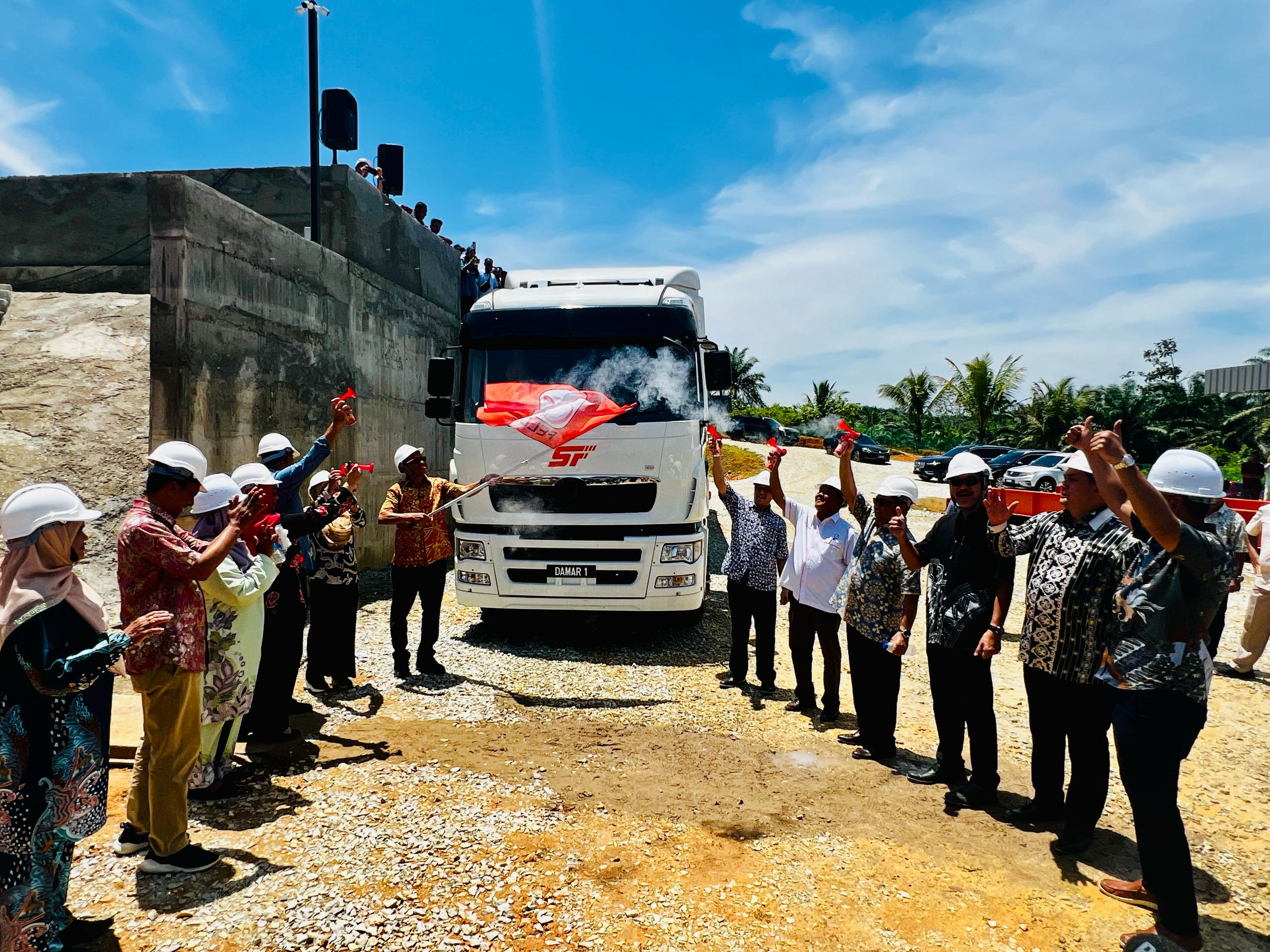
    Lembaga Kemajuan Tanah Persekutuan (FELDA) terus memperkukuh peranannya dalam memperkasa golongan peneroka apabila melancarkan inisiatif strategik baharu, Pusat Mengumpul Sawit (PMS) Lestari Felda Bukit Damar, yang kini diberi nafas baharu dengan nama PMS Damar Berkat. Pelancaran rasmi telah disempurnakan oleh YBhg Dato’ Sri Ahmad Shabery Cheek, Pengerusi FELDA.

    PMS Damar Berkat diperkenalkan sebagai langkah pembaharuan dalam menangani isu ketirisan hasil sawit yang selama ini membebankan peneroka. Inisiatif ini juga memberi penekanan kepada pengurusan rantaian nilai pengeluaran sawit secara lebih telus, sistematik dan mampan. Ketika ini, hasil ladang peneroka diurus melalui dua kaedah utama – sama ada oleh FELDA atau FELDA Plantation Management Sdn Bhd, serta pengurusan mandiri oleh peneroka sendiri.

    Walau bagaimanapun, kewujudan orang tengah dalam proses jual beli telah mengakibatkan ketirisan hasil yang dianggarkan mencecah sehingga RM200 juta setahun. Bagi mengatasi isu ini, model baharu PMS melantik Koperasi Permodalan FELDA (KPF) sebagai ‘super dealer’ yang bertanggungjawab membeli, mengumpul dan menghantar terus hasil sawit ke kilang.

    Pendekatan ini bukan sahaja meningkatkan kecekapan pengurusan hasil, malah turut menjamin kualiti, menambah pendapatan bersih peneroka serta membuka peluang kepada mereka untuk menikmati pulangan tambahan melalui dividen KPF. Inisiatif ini membuktikan komitmen FELDA terhadap konsep “dari peneroka, untuk peneroka”, di mana setiap manfaat kembali semula kepada komuniti peneroka sendiri.

    Dalam ucapannya, Dato’ Sri Ahmad Shabery Cheek berkata, “FELDA kini telah mewujudkan satu sistem yang telus dan efisien untuk menyelesaikan masalah masa lalu, dan yang lebih penting, memudahkan kehidupan para peneroka pada masa hadapan.”

    Selari dengan aspirasi negara menuju pembangunan mampan, pelaksanaan PMS Damar Berkat turut mengambil kira faktor kelestarian alam sekitar. Dengan sokongan terhadap penggunaan kenderaan elektrik (EV) dalam proses pengumpulan hasil, FELDA menyasarkan pengurangan pelepasan karbon dan membuka ruang kepada penerokaan peluang perniagaan karbon pada masa hadapan – seiring matlamat net zero carbon menjelang tahun 2050.

    Malaysia yang kini mengeluarkan lebih 18 juta metrik tan minyak sawit dengan nilai eksport sekitar 15 juta metrik tan setiap tahun, melihat inisiatif seperti PMS Damar Berkat sebagai pemangkin penting dalam memperkukuh industri. Malah, syarikat milik FELDA, FGV Holdings Berhad, sahaja menyumbang sekitar 2.8 juta metrik tan kepada jumlah keseluruhan tersebut.

    Dengan pelancaran PMS Damar Berkat, FELDA menandakan permulaan era baharu dalam pengurusan hasil sawit peneroka secara moden dan bersepadu. Inisiatif ini bukan sahaja memperkukuh kedudukan peneroka dalam rantaian industri sawit negara, malah mencerminkan usaha berterusan FELDA dalam mendepani cabaran masa hadapan dengan pendekatan yang lestari dan berdaya saing.

  • Analisis Terkini: Kesan Banjir 2024 kepada Malaysia

    Analisis Terkini: Kesan Banjir 2024 kepada Malaysia

    Laporan Khas Impak Banjir di Malaysia 2024 yang diterbitkan oleh Jabatan Perangkaan Malaysia (DOSM) bertujuan untuk menilai kesan kerosakan dan kerugian akibat banjir yang melanda negara sepanjang tahun 2024. Kajian ini melibatkan semua negeri yang terjejas, terutamanya di Pantai Timur dan Selatan, dengan menggunakan data yang diperoleh melalui soal selidik, temu bual bersemuka, serta kerjasama dengan agensi kerajaan. Jumlah kerugian keseluruhan dianggarkan RM933.4 juta, meningkat berbanding RM755.4 juta pada tahun 2023. Kerugian terbesar berlaku pada sektor kediaman (RM372.2 juta), diikuti dengan kerosakan pada aset awam dan infrastruktur (RM303.4 juta) serta sektor pertanian (RM185.2 juta).

    Kelantan, Terengganu, dan Kedah merupakan negeri yang paling terjejas, dengan Kelantan mencatatkan kerugian terbesar dalam kediaman iaitu RM139 juta. Impak besar turut dirasai oleh sektor premis perniagaan dan kenderaan di negeri-negeri ini. Kajian mendapati bahawa 65% mangsa banjir menerima bantuan dalam masa 48 jam, dan lebih daripada 45% mangsa sudah membuat persediaan dengan menyimpan stok keperluan. Namun, 25% mangsa tidak bersedia menghadapi bencana, meningkatkan risiko kesukaran selepas kejadian banjir.

    Laporan ini menekankan pentingnya usaha memperbaiki sistem pertahanan banjir dan memperkukuh infrastruktur untuk meningkatkan kesiapsiagaan dan memastikan kestabilan ekonomi negara pada masa hadapan.

    Semua data ini boleh diakses melalui portal OpenDOSM NextGen di https://open.dosm.gov.my, bagi memudahkan analisis dan perancangan di masa hadapan.

  • February 2025 Sees Slight Rise in Malaysia’s Trade Prices Amid Global Trends

    February 2025 Sees Slight Rise in Malaysia’s Trade Prices Amid Global Trends

    In February 2025, Malaysia saw a slight increase in its export and import prices, with the export unit value index rising by 0.1 per cent from 151.2 to 151.4 points. At the same time, the import unit value index grew by 0.3 per cent, reaching 128.1 points from 127.7 points the previous month. Despite these gains, the terms of trade dipped marginally by 0.2 per cent on a monthly basis, standing at 118.2 points. This update was presented in the latest External Trade Indices report (base year 2010), which covers changes in unit value, trade volume, and terms of trade across ten major product categories, based on the Standard International Trade Classification (SITC).

    Chief Statistician Malaysia, Dato’ Sri Dr. Mohd Uzir Mahidin, explained that the slight rise in export unit value was largely due to price increases in mineral fuels (up 2.5 per cent), food products (up 0.7 per cent), and miscellaneous manufactured items (up 0.6 per cent). However, export volume showed a monthly contraction of 3.8 per cent, largely due to drops in mineral fuels (down 12.4 per cent), animal and vegetable oils and fats (down 5.0 per cent), and machinery and transport equipment (down 4.7 per cent). Still, the seasonally adjusted export volume index recorded a growth of 2.3 per cent, moving from 159.2 to 162.8 points. On a year-to-year basis, both the export value and volume indices rose by 2.8 per cent and 3.3 per cent, respectively.

    Import prices also showed a positive trend, with a 0.3 per cent increase supported by higher values in mineral fuels, miscellaneous manufactured articles, and food. On the other hand, the import volume index saw a notable decline of 11.6 per cent, influenced by lower imports in manufactured goods (down 17.9 per cent), machinery and transport equipment (down 15.9 per cent), and miscellaneous products (down 11.4 per cent). Adjusted for seasonal changes, the import volume index dropped by 2.0 per cent to 208.7 points. Compared with the same month last year, import prices dropped by 1.4 per cent while import volumes rose significantly by 7.0 per cent.

    Malaysia’s terms of trade fell by 0.2 per cent in February 2025, mostly due to weaker indices in animal and vegetable oils and fats (down 2.0 per cent), machinery and transport equipment (down 0.5 per cent), and manufactured goods (down 0.1 per cent). Nevertheless, the year-on-year comparison showed a 4.2 per cent improvement in terms of trade, which rose from 113.4 points in February 2024 to 118.2 points this year.

    In the context of regional cooperation, Malaysia will serve as the chair for the 15th ASEAN Community Statistical System Committee (ACSS15) this year under its ASEAN 2025 leadership. This role emphasizes strengthening statistical collaboration for sustainable development across the region.

    Additionally, the Malaysian government continues to promote the importance of data by designating October 20th as National Statistics Day (MyStats Day), with the theme “Statistics is the Essence of Life.” The fourth celebration of World Statistics Day will also take place on October 20, 2025, under the theme “Driving Change with Quality Statistics and Data for Everyone.”

    To support data transparency and user engagement, the Department of Statistics Malaysia (DOSM) provides OpenDOSM NextGen — a digital platform offering access to a wide range of data catalogues and visual analytics, available online at https://open.dosm.gov.my.

  • Kenaikan Sederhana 0.3% dalam Indeks Harga Pengeluar Malaysia

    Kenaikan Sederhana 0.3% dalam Indeks Harga Pengeluar Malaysia

    Indeks Harga Pengeluar (IHPR) Malaysia menunjukkan peningkatan sederhana sebanyak 0.3% pada Februari 2025, lebih rendah berbanding kenaikan 0.8% pada Januari. Kenaikan ini disokong oleh pertumbuhan sektor pertanian, perhutanan & perikanan, terutamanya dalam subsektor penanaman tanaman yang mencatatkan peningkatan 26.1%. Walau bagaimanapun, sektor perlombongan mengalami penyusutan ketara sebanyak 9.7%, dipengaruhi oleh penurunan dalam pengekstrakan petroleum mentah dan gas asli. Sektor pembuatan juga mengalami sedikit penurunan sebanyak 0.3%, dengan industri pembuatan kok & produk petroleum bertapis serta pembuatan komputer dan produk elektronik mencatatkan kejatuhan terbesar.

    Daripada segi perbandingan bulanan, IHPR meningkat 0.1% pada Februari, lebih perlahan berbanding 0.3% pada Januari. Sektor pertanian, perhutanan & perikanan meningkat 1.4%, disokong oleh kenaikan dalam subsektor perikanan dan penanaman tanaman kekal. Sektor pembuatan pula mencatat pertumbuhan stabil sebanyak 0.3%, didorong oleh peningkatan dalam pembuatan produk makanan serta produk petroleum bertapis. Namun begitu, sektor perlombongan mencatatkan kejatuhan 3.2%, sementara sektor bekalan air turut mengalami penyusutan 1.8%.

    Di peringkat antarabangsa, IHPR Amerika Syarikat mencatatkan kenaikan 3.2%, Jepun meningkat 4.0%, sementara China terus mengalami deflasi dengan penurunan 2.2%. Trend ini menunjukkan bahawa pergerakan harga pengeluar berbeza mengikut negara dan dipengaruhi oleh faktor ekonomi serta bekalan global.

    Dalam pasaran komoditi, harga minyak mentah Brent turun kepada $75 setong pada Februari 2025 berbanding $79 setong pada Januari, kesan daripada peningkatan bekalan OPEC+. Sebaliknya, harga minyak sawit mentah (MSM) meningkat kepada RM4,759 per tan berikutan permintaan yang lebih tinggi serta bekalan yang semakin berkurangan akibat banjir.

    Sebagai sebahagian daripada usaha memperkukuh statistik serantau, Malaysia akan mempengerusikan Jawatankuasa Sistem Statistik Komuniti ASEAN Ke-15 (ACSS15) pada tahun 2025. Selain itu, Hari Statistik Negara akan diraikan pada 20 Oktober dengan tema “Statistik Nadi Kehidupan”, manakala Hari Statistik Dunia Keempat akan membawa tema “Driving Change with Quality Statistics and Data for Everyone”. Untuk mendapatkan maklumat lanjut dan analisis terperinci, orang ramai boleh mengakses data melalui portal OpenDOSM NextGen di https://open.dosm.gov.my.

  • $23 Million Private Placement Fuels Agape ATP Corporation’s Strategic Expansion

    $23 Million Private Placement Fuels Agape ATP Corporation’s Strategic Expansion

    Agape ATP Corporation (NASDAQ: ATPC) is pleased to announce the successful completion of its $23 million (USD) private placement, further strengthening its financial position as the company accelerates expansion into healthcare, oil & gas trading, and renewable energy. The strong participation from institutional investors underscores confidence in ATPC’s long-term growth strategy and commitment to market leadership across multiple industries.

    The private placement involved the issuance of 46 million common stock shares at USD 0.50 per share under Regulation S of the U.S. Securities Act, targeting non-U.S. investors. The funds raised will be strategically deployed to advance ATPC’s high-growth initiatives, including expanding oil & gas trading operations, scaling solar energy projects, and enhancing its healthcare and wellness solutions.

    Prof. Dato’ Sri Dr. How Kok Choong, Founder and Global Group CEO of ATPC, expressed gratitude for the overwhelming investor support, stating:
    “The successful completion of this private placement is a testament to the market’s confidence in ATPC’s vision and execution strategy. We deeply appreciate the trust placed in us by institutional investors, enabling us to accelerate our expansion into high-value industries. With this capital infusion, we are well-positioned to enhance operational capabilities, drive innovation, and deliver long-term value to our shareholders.”

    This funding milestone marks a significant step in ATPC’s growth journey. In the energy sector, the company’s strategic partnership with Swiss One Oil & Gas AG is facilitating the procurement and distribution of refined fuel products, including EN590 10PPM diesel and Jet Fuel A1.

    Beyond energy, ATPC will leverage the funds to expand its healthcare segment, introducing its wellness and medical solutions to new markets. The capital will support product innovation, regulatory approvals, and commercialization efforts, strengthening ATPC’s presence across its diverse portfolio.