Category: Workforce Development

  • Base Maintenance Malaysia Celebrates First Batch of Locally Trained Aviation Technicians

    Base Maintenance Malaysia Celebrates First Batch of Locally Trained Aviation Technicians

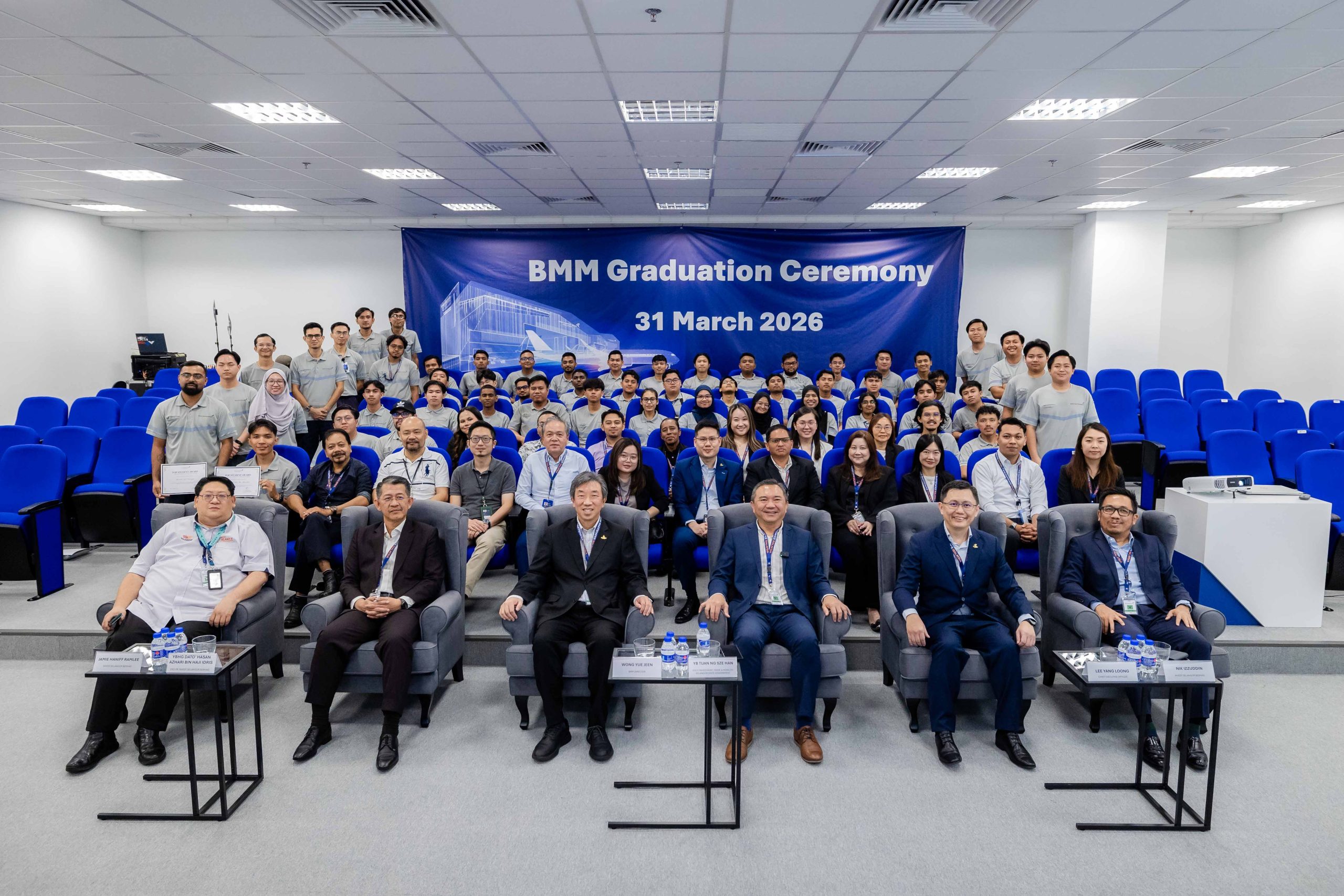
    Base Maintenance Malaysia (“BMM”), a wholly owned subsidiary of SIA Engineering Company Limited (“SIAEC”), has marked a significant milestone with the graduation of its first cohort of 55 trainee technicians. This achievement reflects the company’s strong commitment to nurturing skilled local talent while reinforcing Malaysia’s position in the growing aerospace maintenance, repair and overhaul (MRO) sector.

    The milestone comes at a crucial time, as the Asia-Pacific region is projected to dominate global aircraft fleet expansion and MRO demand in the coming years. With this surge, the need for qualified aviation technicians has intensified, placing pressure on Malaysia’s aerospace industry to accelerate the development of a highly skilled, homegrown workforce capable of meeting international standards.

    To address this demand, BMM introduced its structured Technician Trainee Programme, designed to strengthen the national talent pipeline while supporting Malaysia’s Technical and Vocational Education and Training (TVET) ecosystem. The programme equips trainees with both theoretical knowledge and hands-on experience, ensuring they graduate with industry-relevant skills. To date, more than 100 technicians have enrolled, demonstrating strong interest and confidence in the initiative.

    The graduation ceremony, officiated by Ng Sze Han, Selangor State Executive Councillor for Investment, Trade and Mobility, highlights the collaborative efforts between industry and government in building a sustainable talent pipeline. This initiative aligns closely with Malaysia’s ambitions under the Aerospace Industry Blueprint 2030, which aims to position the country as a leading regional hub for MRO services.

    Spanning 12 months, the programme integrates classroom-based learning with supervised practical training in controlled environments. Trainees are exposed to critical areas such as aircraft maintenance fundamentals, safety and regulatory compliance, maintenance procedures, human factors, aviation legislation, and aircraft systems and engine familiarisation. This comprehensive approach ensures graduates are well-prepared to transition into real-world maintenance operations.

    BMM has also forged strategic partnerships with leading aviation training institutions, including Universiti Kuala Lumpur Malaysian Institute of Aviation Technology, ADMAL Aviation College and APR Aviation Training Centre. Through these collaborations, students gain valuable exposure to actual aircraft maintenance environments while pursuing pathways towards becoming licensed aircraft engineers and technicians.

    According to BMM Chief Executive Officer Lee Yang Loong, the graduation of this inaugural cohort represents more than just a training milestone. It underscores the company’s long-term investment in developing Malaysian aerospace professionals capable of supporting the rapidly expanding global MRO landscape. As demand for maintenance capacity continues to rise, building a strong and sustainable local talent pipeline is not only a strategic priority but also a business necessity for the future of the industry.

  • Malaysia’s Emergence as a Digital Investment Hub Requires a Stronger Skilled Workforce

    Malaysia’s Emergence as a Digital Investment Hub Requires a Stronger Skilled Workforce

    Growing Momentum in Malaysia’s Digital Economy

    Malaysia is entering an important phase in its digital economic development, as global technology investors increasingly look to Southeast Asia as a strategic region for expansion. With its strong infrastructure, business-friendly policies, and strategic location within ASEAN, Malaysia is steadily positioning itself as an attractive destination for digital investments.

    From data centres and artificial intelligence to financial technology and digital services, the country is witnessing growing interest from international companies seeking to establish or expand their regional presence. This momentum reflects the broader transformation of Malaysia’s economy, which is rapidly embracing digitalisation across multiple industries.

    According to a report jointly published by Knight Frank Malaysia and the Malaysia Digital Economy Corporation (MDEC) in February 2026, Malaysia approved more than RM342 billion in digital investments between 2022 and 2025. These investments span several high-growth sectors including cloud infrastructure, global business services, artificial intelligence, and fintech, highlighting strong confidence in the country’s digital ecosystem.


    The Talent Challenge Behind Digital Growth

    While these figures reflect positive momentum for Malaysia’s digital ambitions, they also raise an important question — whether the country has sufficient skilled talent to support this rapid expansion.

    The same report estimates that these digital investments could generate more than 114,000 new jobs, with nearly 97 percent classified as knowledge-based roles. Many of these positions require specialised expertise in areas such as artificial intelligence, data analytics, cybersecurity, cloud computing, and digital operations.

    This signals a clear shift in workforce expectations. As industries evolve alongside digital technologies, future job roles will demand stronger technical competencies and digital literacy. Without a workforce equipped with these skills, sustaining long-term growth in the digital economy may become increasingly challenging.


    Competing in the Global Talent Race

    Across the region, countries are not only competing to attract digital investments but also striving to develop and retain highly skilled technology professionals. Nations such as Singapore, Vietnam, and India have made significant progress by strengthening digital education, investing in technology training programmes, and encouraging industry-academia collaboration.

    For Malaysia to remain competitive, workforce development strategies must continue evolving alongside technological advancements. This includes strengthening collaboration between government agencies, universities, industry players, and professional training institutions.

    Upskilling and reskilling initiatives will be critical in enabling both graduates and experienced professionals to adapt to emerging technologies and digital business models. Industry-relevant certifications, technology-focused training, and continuous learning programmes will play a key role in preparing Malaysians for future job opportunities.


    Digital Skills Are No Longer Optional

    The digital transformation taking place today extends far beyond the technology sector itself. Businesses across industries such as finance, logistics, manufacturing, retail, and hospitality are increasingly integrating artificial intelligence, automation, and digital tools into their operations.

    As a result, digital literacy is no longer a niche skill reserved for technology professionals. Instead, it is becoming a fundamental competency for the modern workforce. Employees across various sectors will need at least a foundational understanding of digital systems, data usage, and emerging technologies in order to remain relevant in an increasingly digitalised economy.


    Building a Sustainable Digital Future

    Malaysia stands at a pivotal moment in its economic transformation. With strong investor confidence, expanding digital infrastructure, and its strategic role within ASEAN, the country is well positioned to strengthen its status as a regional digital hub.

    However, infrastructure and investment alone will not determine success. The true strength of a digital economy lies in the people who can build, operate, and innovate within it.

    By prioritising talent development and equipping Malaysians with the necessary digital skills, the nation can ensure that current digital investments translate into sustainable economic growth, innovation, and long-term global competitiveness.

    Ultimately, Malaysia’s digital future will depend not just on technology, but on the readiness of its workforce to lead and shape the next phase of digital transformation.

    Written By;

    Ts. Shashi Muniandy is the Chief Operating Officer of Skill Wave Academy and an MBOT Certified Technologist involved in digital workforce development initiatives in Malaysia

  • PayNet Boosts Malaysia’s Financial Sector Workforce with Second Batch of Cloud-Skilled Graduates

    PayNet Boosts Malaysia’s Financial Sector Workforce with Second Batch of Cloud-Skilled Graduates

    Payments Network Malaysia Sdn. Bhd. (PayNet) recently celebrated a significant milestone with the graduation of 50 students from its Program Akar Powered by AWS re/Start, a digital upskilling initiative designed to cultivate cloud-ready talent for Malaysia’s financial services industry. Delivered through World Education Placement Services Sdn. Bhd. (WEPS), Program Akar represents PayNet’s first flagship national initiative aimed at bridging the country’s digital skills gap. The programme equips participants with globally recognized cloud technology and digital payments skills at no cost, preparing them to meet the evolving demands of Malaysia’s financial ecosystem.

    Aligned with the national agenda to strengthen digital talent, highlighted by Prime Minister Datuk Seri Anwar Ibrahim, Program Akar provides young Malaysians with practical skills beyond conventional academic learning, enabling them to thrive in technology-driven roles. Shafenaz Farouk, Chief People Officer of PayNet, emphasized that the programme is creating a robust pipeline of digital-ready talent for the financial sector, empowering participants with industry-relevant skills, hands-on experience, and confidence to contribute immediately to the workforce.

    The second cohort follows the successful pilot at Asia Pacific University of Technology & Innovation (APU), where financial institutions such as Bank Negara, Maybank, Public Bank, CIMB, and Bank Islam have expressed interest in internships and job placements for graduates. Participants underwent a 14-week intensive training programme, covering foundational cloud computing, digital payments, and a two-day on-site values-driven development workshop. Graduates received multiple certifications, including the AWS re/Start Certificate of Completion, AWS Cloud Practitioner, Digital Payments Certificate, and Values-Driven Enrichment Programme Certificate, signaling readiness for industry roles.

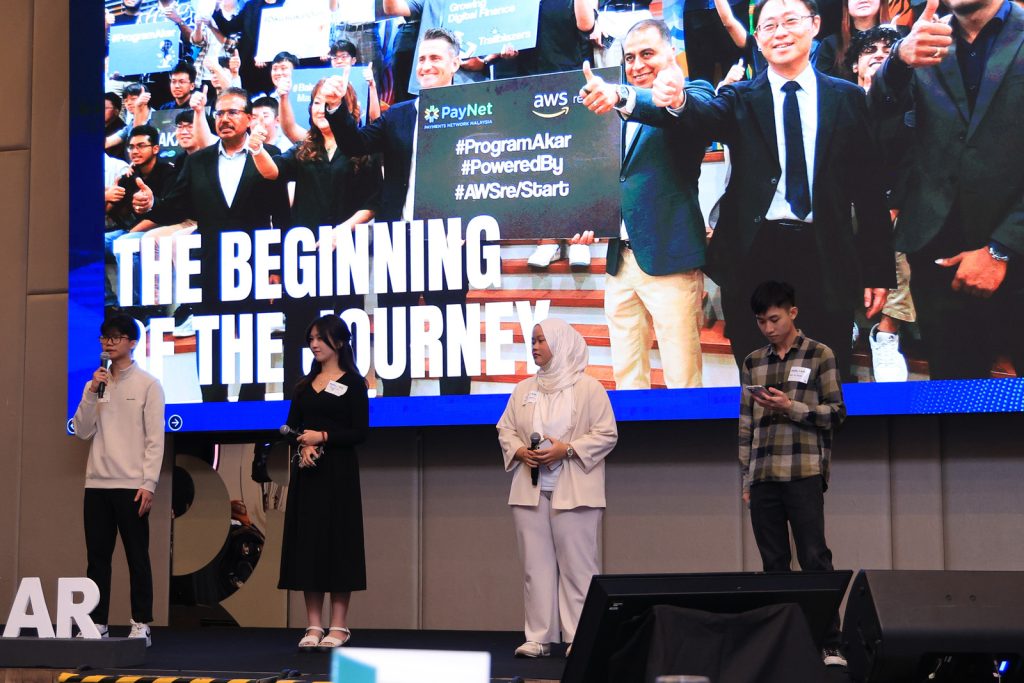
    Program Akar graduates shared their experiences as cohort participants during the Akar Success Story session

    Hussein Mohd. Ali, Country Manager of AWS Malaysia, highlighted the importance of cloud skills as the backbone for the nation’s next phase of AI-driven transformation in financial services. Program Akar equips participants to contribute effectively in areas ranging from modern digital payments to emerging AI applications, while strengthening Malaysia’s position in the global fintech landscape. WEPS CEO Mughilen Rathakrishnan added that the initiative provides a clear pathway for young Malaysians to enter the workforce with in-demand, future-proof skills.

    With Cohort 2 achieving strong outcomes, PayNet continues to build momentum in nurturing Malaysia’s fintech talent. Through ongoing collaboration with industry partners, Program Akar ensures alignment with sector needs, addressing critical talent gaps and supporting the country’s digital finance ambitions. Globally, AWS re/Start operates in over 60 countries, with 98% of graduates securing interview opportunities, reflecting the programme’s proven impact on shaping a highly skilled, employable workforce.

    For more information on Program Akar, please visit https://www.paynet.my/beyond-payments/community-impact/paynet-akar.html