Category: Artificial Intelligence (AI)

  • HONOR Elevates N Series to Flagship Level with Industry-Leading AI Imaging Technology

    Global AI device ecosystem leader HONOR has officially repositioned its N Series from a mid-range lineup to a full-fledged flagship category, marking a significant leap in both performance and innovation. This strategic move reflects the brand’s ambition to meet evolving user expectations by combining cutting-edge hardware with advanced computational photography. The upcoming N Series promises to deliver superior imaging capabilities, enhanced clarity, and greater creative flexibility, setting a new benchmark for smartphone photography in its class.

    At the core of this transformation is the integration of a Snapdragon elite-level chipset, designed to power flagship-grade performance and seamless AI-driven experiences. By incorporating top-tier processing capabilities, the N Series is built to support intensive tasks, advanced imaging systems, and everyday usability without compromise. This ensures users can enjoy faster speeds, improved efficiency, and a smoother overall experience, reinforcing HONOR’s commitment to delivering premium technology that caters to modern digital lifestyles.

    Photography remains a standout feature of the new N Series, particularly with its upgraded telephoto camera system. Engineered to outperform its predecessor, the enhanced telephoto lens enables users to capture distant subjects with remarkable clarity and precision. Whether photographing expansive landscapes or spontaneous moments from afar, the device produces sharper details and more refined compositions, elevating mobile photography to a professional level.

    In addition to hardware improvements, the N Series introduces industry-leading AI imaging capabilities that bring a new dimension to content creation. One of the most notable features is the enhanced AI Image-to-Video function, which allows users to transform still images into dynamic, cinematic visuals. This innovation not only enhances storytelling but also adds emotional depth to captured moments, enabling users to relive memories of loved ones, friends, and even pets in a more immersive and engaging way.

    Complementing its technological advancements is a refreshed design that embodies premium craftsmanship. The new N Series features a sophisticated aesthetic achieved through advanced cold carving techniques, resulting in a sleek, polished finish that enhances both durability and tactile comfort. This refined design language reflects its flagship positioning, offering users a device that is as elegant as it is powerful.

    More details about the upcoming N Series will be revealed on 9 April 2026. Stay updated via HONOR Malaysia official Facebook or website at https://www.honor.com/my/.

  • Cisco Redefines Security for the Era of the Agentic Workforce

    Cisco Redefines Security for the Era of the Agentic Workforce

    Cisco (NASDAQ: CSCO) has introduced a comprehensive suite of security innovations designed to support the rapidly evolving agentic AI ecosystem, where intelligent software agents are no longer limited to responding to queries but are increasingly सक्षम of taking action autonomously. Announced at the RSA Conference 2026, these solutions aim to address key barriers to enterprise adoption of AI agents by embedding robust security measures across every stage of the agent lifecycle—from identity and access control to deployment and real-time threat response.

    At the core of Cisco’s announcement is the expansion of Zero Trust Access to AI agents, enabling organisations to establish trusted identities, enforce strict access controls, and ensure full visibility over agentic activities. New capabilities within Cisco Identity Intelligence and Duo Identity and Access Management (IAM) allow enterprises to register and map AI agents to accountable human owners, while Secure Access security service edge (SSE) introduces model context protocol (MCP) policy enforcement and intent-aware monitoring. These advancements ensure that agents operate strictly within defined parameters, reducing the risk of misuse or unauthorised actions.

    To further strengthen AI security, Cisco has launched AI Defense: Explorer Edition, a self-service platform that empowers developers and security teams to test AI models and applications against real-world threats before deployment. Equipped with dynamic red teaming, model validation tools, and API-first integrations, the platform enables organisations to identify vulnerabilities such as prompt injection and jailbreak attempts while embedding robust guardrails into agent workflows. Complementing this is the introduction of the Agent Runtime Software Development Kit (SDK), which integrates policy enforcement directly into the development phase across major AI frameworks.

    Cisco also revealed DefenseClaw, an open-source secure agent framework designed to automate security processes and streamline deployment. By integrating tools such as Skills Scanner, MCP Scanner, AI Bill of Materials (BoM), and CodeGuard, DefenseClaw ensures that AI agents are fully verified, scanned, and inventoried before deployment. Its planned integration with NVIDIA OpenShell further enhances runtime security by providing a sandboxed environment that eliminates manual intervention and accelerates secure scaling of agentic workloads.

    In parallel, Cisco is advancing security operations through new AI-powered innovations within its Splunk platform. These include Exposure Analytics for real-time asset visibility and risk scoring, Detection Studio for streamlined threat detection workflows, and Federated Search for cross-environment data correlation. Additionally, a suite of specialised AI agents—such as Triage Agent, Malware Threat Reversing Agent, and Guided Response Agent—will automate and accelerate security operations, enabling Security Operations Centres (SOCs) to detect and respond to threats at machine speed.

    Cisco’s strategy is built around three key pillars: protecting the world from AI agents, protecting agents from external threats, and enabling rapid detection and response to AI-driven incidents. According to a recent Cisco survey, while 85% of enterprises are experimenting with AI agents, only 5% have deployed them at scale—highlighting the urgent need for trusted security frameworks.

    By embedding security into the foundation of the agentic AI economy, Cisco is positioning itself at the forefront of enabling safe and scalable AI adoption. As organisations continue to explore the transformative potential of AI agents, Cisco’s integrated approach aims to provide the confidence and control needed to unlock innovation while mitigating risk.

  • Moltbook Highlights the Internet’s Move Toward a Hybrid Era: With the rise of AI agents, human verification becomes a critical part of digital infrastructure

    Moltbook Highlights the Internet’s Move Toward a Hybrid Era: With the rise of AI agents, human verification becomes a critical part of digital infrastructure

    The launch of Moltbook in early 2026 marked a turning point for online interaction, presenting an AI-only forum where autonomous agents post, debate, and interact while humans observe. Initially perceived as a novelty, the platform highlighted a deeper shift: AI agents are no longer merely responding to human prompts—they are communicating with each other at scale. This evolution signals a structural change in the internet, transforming intelligent systems from tools into active digital participants. For countries like Malaysia, which is aggressively implementing its National AI Action Plan, the challenge is no longer about AI adoption, but about building infrastructure for a hybrid internet where human presence remains identifiable and verifiable. In this context, proof-of-human is emerging as a foundational layer for the next generation of digital participation.

    Malaysia’s Path to a Hybrid Internet

    Malaysia is fast embracing the hybrid internet with strong momentum. Under the National AI Action Plan, 2026 is a milestone year in the country’s ambition to become an AI-driven nation by 2030. Reports indicate that AI adoption among Malaysian businesses grew 35% year-on-year, while 81% of employees use generative AI to enhance productivity. From startups to large enterprises, AI is increasingly integrated into customer engagement, operations, and product development, positioning intelligent systems as active collaborators. As this trend scales, hybrid participation is evolving from experimental applications to essential infrastructure, with Malaysia’s competitive advantage hinging on the design of systems that enable both human and AI actors to coexist efficiently and securely.

    From Identity Verification to Protocol-Level Proof

    As AI systems proliferate across Malaysia’s economy, traditional identity verification models are no longer sufficient. Intelligent agents can generate realistic content, simulate engagement, and operate continuously, making it harder to distinguish human participation. Proof-of-human offers a solution by establishing a presence-first approach that confirms human uniqueness without requiring personal identity disclosure. Similar to how encryption secured digital transactions, or payment rails enabled e-commerce, proof-of-human is emerging as foundational infrastructure for distinguishing human and AI activity in digital ecosystems, ensuring accountability and structured participation.

    Privacy-Preserving Human Verification

    For proof-of-human to succeed, it must prioritize privacy. Expanding surveillance or centralizing personal data would introduce new risks in an AI-native environment. Solutions such as zero-knowledge proofs allow individuals to verify their humanness without revealing their identity or storing sensitive information centrally. This model separates verification from identity, enabling platforms to maintain clear distinctions between human and AI actors while preserving user anonymity. Instead of competing with AI, this infrastructure anchors human presence in hybrid ecosystems, maintaining trust and resilience as autonomous systems scale.

    Building Scalable AI-Native Infrastructure

    Moltbook’s early experimentation with AI-to-AI interaction offers insights into the future of digital participation. In Malaysia, where AI adoption spans multiple sectors, the next growth phase requires clear standards for human-machine coexistence. Aligning national strategy with enterprise execution and scalable infrastructure is crucial, and privacy-preserving proof-of-human frameworks provide a blueprint for ensuring human presence without compromising data security. As digital ecosystems become increasingly AI-native, anchoring participation through such protocols strengthens long-term resilience and positions Malaysia as a key contributor to global standards for the hybrid internet.

  • HONOR Strengthens Its AI Strategy at MWC 2026 with the Introduction of a Robot Phone, Humanoid Robot, and Magic V6

    HONOR Strengthens Its AI Strategy at MWC 2026 with the Introduction of a Robot Phone, Humanoid Robot, and Magic V6

    At Mobile World Congress 2026 in Barcelona, HONOR unveiled a sweeping expansion of its artificial intelligence strategy, advancing its Augmented Human Intelligence (AHI) vision and accelerating its ambitious ALPHA PLAN. Anchored around three connected pillars — Alpha Phone, Alpha Store and Alpha Lab — the brand presented a future where intelligent hardware and software converge seamlessly around real human needs.

    Central to the announcement was the preview of the Robot Phone, described as a new species of smartphone that reimagines how AI devices could integrate motion, spatial awareness and embodied interaction. Moving beyond static screens and voice commands, the Robot Phone introduces robot-grade motion control, cinematic imaging and multimodal perception. Equipped with a self-developed micro motor and an ultra-compact 4DoF gimbal system, the device delivers three-axis stabilization, AI Object Tracking and intelligent rotational movement for cinematic transitions. Built around a 200MP sensor, it aims to close the gap between smartphone videography and professional storytelling, while enabling expressive body language gestures such as nodding, head-shaking and even dancing to music.

    Alongside this futuristic concept, HONOR officially introduced the HONOR Magic V6, its most refined foldable smartphone to date. The Magic V6 integrates silicon-carbon battery technology, advanced display engineering and AI-enhanced productivity features within a sleek foldable design. Complementing the flagship device are the HONOR MagicPad 4 and HONOR MagicBook Pro 14, strengthening the brand’s ecosystem approach and reinforcing its roadmap to unify devices through intelligent integration.

    In a bold extension of its AI ambitions, HONOR also debuted its first humanoid robot, signaling a strategic expansion into consumer-grade robotics. Designed to support scenarios such as shopping assistance, workplace inspections and companionship, the robot reflects HONOR’s intention to bridge digital intelligence with physical interaction. Leveraging insights gathered from its smartphone ecosystem, the company aims to create embodied AI devices capable of recognizing users, understanding behavioral patterns and delivering personalized assistance from the outset.

    According to CEO James Li, HONOR’s human-centric philosophy serves as the “lighthouse” guiding AI growth through the dual beams of IQ and EQ. Through the three waves of the ALPHA PLAN, the company believes it now has the essential components in place to accelerate its transformation.

    From experimental robotics to next-generation foldables and AI-powered productivity devices, HONOR’s showcase at MWC 2026 marks a decisive step toward integrating embodied intelligence into everyday technology. The convergence of motion, perception and adaptive computing signals a new chapter in the evolution of mobile devices — one where smartphones may no longer remain static tools, but active, responsive companions in the AI era.

  • The AI Infrastructure Dilemma: Getting Ready for the Era of Agentic AI

    The AI Infrastructure Dilemma: Getting Ready for the Era of Agentic AI

    As the world races to establish leadership in Artificial Intelligence (AI), governments and industries are grappling with urgent demographic and economic pressures, from aging populations to shrinking workforces and the imperative to boost productivity. In this context, the emergence of agentic AI—systems that do more than respond, but reason, plan, and take autonomous actions—represents a transformative shift with profound implications for infrastructure, innovation, and national competitiveness. Unlike traditional AI models that answer queries, agentic AI can manage extended workflows independently: booking flights, updating schedules, sending reminders, or adapting plans dynamically based on external factors. This proactive, collaborative intelligence will require significantly more compute power, not only to process individual tasks but to orchestrate reasoning, planning, and continuous adaptation across billions of simultaneous users and applications.

    The challenge extends beyond GPUs, which have traditionally dominated AI conversations for training and inference. CPUs, high-speed interconnects, memory, and networking form the backbone of modern AI infrastructure, coordinating workloads, managing data movement, and supporting real-time system orchestration. High-performance CPUs, such as AMD EPYC™ 9005 Series, are critical for running AI workloads efficiently, particularly as models evolve into more modular and distributed architectures like mixture-of-experts systems. Connectivity is equally vital: smart network interface controllers (NICs), low-latency interconnects, and scalable fabrics ensure seamless, high-throughput data flow, enabling agentic AI to operate at scale with minimal delays. The convergence of these components into heterogeneous, rack-scale systems is essential for orchestrating complex, real-time interactions between billions of AI agents.

    Openness in software, hardware, and systems design emerges as another strategic priority. Closed ecosystems risk vendor lock-in and limit flexibility at a time when agility is crucial to scale AI. Open software stacks like AMD ROCm™ enable developers and researchers to build, optimize, and deploy AI models across diverse environments, supporting popular frameworks like PyTorch and TensorFlow while offering portability and performance tuning. Open hardware standards, including the Open Compute Project (OCP), the Ultra Accelerator Link (UALink), and next-generation networking frameworks from the Ultra Ethernet Consortium (UEC), provide the modularity, high-bandwidth connectivity, and interoperability needed for distributed AI systems. These open initiatives empower cloud and data center operators to build flexible, energy-efficient infrastructure capable of supporting both global AI innovation and local differentiation.

    For countries like Malaysia, embracing an open, heterogeneous AI ecosystem is not simply a technical decision—it is a strategic imperative. National competitiveness in the age of agentic AI depends on the ability to deploy scalable, high-performance infrastructure that supports complex workloads, facilitates local innovation, and ensures technological sovereignty. The upcoming release of AMD’s Helios, a next-generation rack-scale reference design, exemplifies the integration of high-performance compute, open software, and scalable architecture necessary to meet the demands of agentic AI in 2026 and beyond.

    Looking ahead, the successful adoption of agentic AI requires a holistic approach to infrastructure: CPUs and GPUs must work in tandem, high-speed networking and interconnects must provide low-latency data movement, and open software and modular rack-scale systems must enable flexibility, innovation, and interoperability. By investing in such infrastructure, Malaysia and other nations can harness the transformative power of agentic AI to drive automation, innovation, and sustainable economic growth while navigating the global AI race.

  • Timor-Leste and Zchwantech Forge Historic Partnership to Build a Sovereign AI-Driven Digital Nation

    Timor-Leste and Zchwantech Forge Historic Partnership to Build a Sovereign AI-Driven Digital Nation

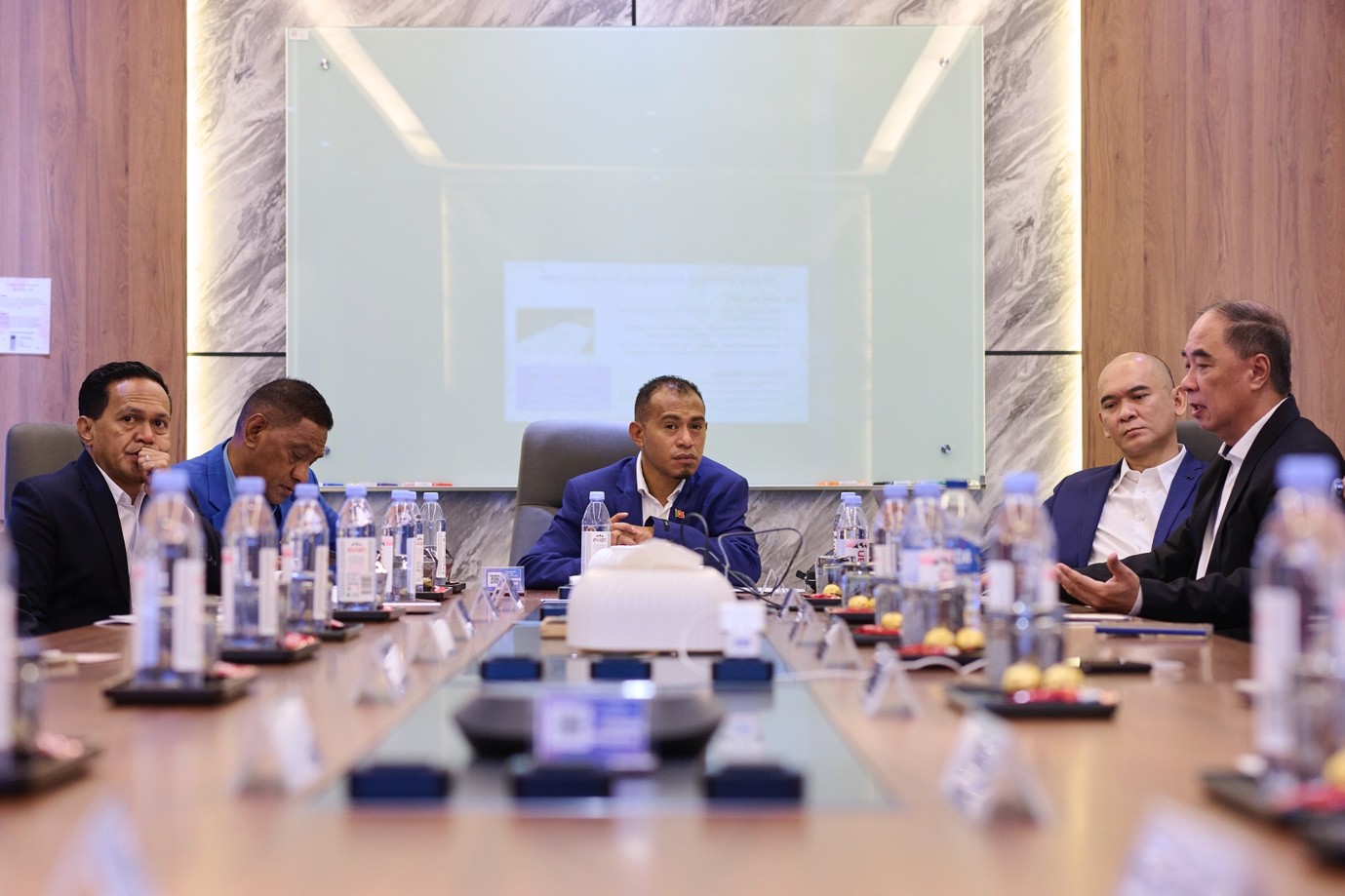
    The Government of the Democratic Republic of Timor-Leste and Malaysian technology architect Zchwantech Sdn. Bhd. have announced plans to establish a strategic partnership aimed at co-developing a sovereign, AI-powered national digital ecosystem. The announcement follows a successful high-level delegation visit to Kuala Lumpur and represents a major milestone in Timor-Leste’s long-term digital transformation agenda under the Timor Digital 2032 vision.

    The proposed collaboration focuses on building secure, future-ready national digital systems anchored in sovereignty, resilience and sustainable nation-building. Zchwantech, known for its end-to-end technology capabilities, is expected to play a key role in delivering sovereign digital infrastructure, cybersecurity frameworks, AI-driven platforms and governance models tailored to national needs.

    According to Zchwantech Chairman Datuk Seow Gim Shen, the partnership is designed to go beyond technology deployment. It aims to support Timor-Leste in developing trusted national systems that safeguard data sovereignty while enabling long-term operational resilience. This approach positions digital infrastructure as a strategic national asset rather than a standalone technology project.

    Zchwantech Executive Director Mr. Alex Chan emphasized that technology transfer and local capability development are central to the collaboration. By working closely with Timor-Leste’s institutions, the initiative seeks to ensure that local teams are equipped with the skills and knowledge required to operate, manage and progressively enhance national digital platforms. This model supports long-term sustainability and allows solutions to evolve in line with national priorities.

    As an initial step, both parties will conduct a feasibility study for a National Sovereign AI Cloud and Data Centre to be located within Timor-Leste and designed to Tier 3+ standards. This in-country infrastructure is intended to serve as the backbone for national digital services, strengthening cybersecurity, data sovereignty and continuity of operations.

    Building on this foundation, the partnership will explore the development of an AI-enhanced National Digital Identity system that integrates advanced biometrics and artificial intelligence. Envisioned as a unified digital key, the Digital ID platform aims to provide secure access to public services, social benefits and financial systems, enhancing inclusion, transparency and governance.

    The collaboration will also assess secure and smart border management solutions, including automated e-Gates, advanced biometric verification and predictive analytics. These initiatives are expected to improve national security, streamline traveler processing and enhance the overall tourism experience.

    Looking ahead, future phases of cooperation may extend to public service innovation initiatives such as smart healthcare, AI-optimized agricultural logistics, predictive maintenance for public infrastructure and personalized digital education platforms. In parallel, both parties will study the establishment of a Digital Trade Facilitation Corridor, including a National Single Window and AI-driven logistics systems, to improve customs efficiency, reduce trade costs and strengthen cross-border connectivity.

    Commenting on the initiative, Mr. Benigno Humberto Gregorio Da Cruz, Chief of Staff for the Minister of State Administration, said the partnership reflects Timor-Leste’s commitment to empowering its people through technology. He noted that the collaboration with Zchwantech represents a strategic move to build sovereign digital capabilities that will support equitable access to services and accelerate national development in line with the Timor Digital 2032 vision.

  • HONOR Tackles Rising Silent Call Threats in Malaysia with Enhanced AI-Powered Voice Scam Detection

    HONOR Tackles Rising Silent Call Threats in Malaysia with Enhanced AI-Powered Voice Scam Detection

    A rising scam call tactic known as the “silent call” is increasingly worrying Malaysians, as fraudsters leverage artificial intelligence (AI) to clone victims’ voices and impersonate people they know to demand money transfers. Authorities have urged the public to stay vigilant, especially when receiving calls where the caller remains silent for several seconds. Social media is filled with stories of Malaysians encountering these calls, highlighting the urgent need for protective measures. In response, HONOR is enhancing the Magic8 Pro with a new AI Voice Cloning Detection feature, designed to identify AI-generated voices. This feature will be available via a software update in late December 2025.

    The AI Voice Cloning Detection complements HONOR Magic8 Pro’s existing AI Deepfake Detection, analyzing calls for cloned or synthesized voices and notifying users when anomalies are detected. The necessity for such protection is evident: recent reports include a woman who lost RM5,000 after a voice clone of her employer deceived her, and a travel agent who fell victim to a call mimicking a friend, losing RM49,800. With this feature, users can answer unknown numbers with greater confidence and reduced anxiety.

    In addition, the Magic8 Pro will include AI Scam Number Detection, which cross-checks incoming calls against known scam databases and alerts users if a number is flagged as suspicious. This provides an extra layer of security, helping users avoid potential scams even before answering a call.

    Beyond calls, HONOR has upgraded its AI Deepfake Detection for video calls, now capable of screening up to eight people simultaneously to detect digitally altered faces. With deepfake-related fraud cases investigated by police numbering 454 last year, causing losses of RM2.72 million, these advanced features position the Magic8 Pro as a strong deterrent against AI-driven fraud nationwide.

    HONOR’s dedication to integrating privacy and security into its devices has earned global recognition. Its built-in deepfake detection technology received the TIME Best Inventions 2025 Award for Privacy and Security, underscoring the brand’s commitment to responsible AI innovation and ensuring users remain protected as digital threats evolve.

    For more information, visit HONOR’s official website at www.honor.com/my.

  • HONOR X9D: Telefon Kalis Air dengan Bateri Besar dan Direka Tahan Lasak untuk Gaya Hidup Aktif

    HONOR X9D: Telefon Kalis Air dengan Bateri Besar dan Direka Tahan Lasak untuk Gaya Hidup Aktif

    HONOR X9d hadir sebagai sebuah telefon pintar yang terus memberi impresi positif sejak pandang pertama. Reka bentuknya kelihatan kemas dan moden, dengan sentuhan premium yang jelas terasa apabila dipegang. Perincian pada kemasan badan digabungkan dengan pilihan warna Reddish Brown, Sunrise Gold, Forest Green dan Midnight Black memberikan identiti yang matang dan eksklusif, sesuai untuk pengguna yang mementingkan penampilan peranti sebagai sebahagian daripada gaya harian. Dengan dimensi yang langsing serta berat sekitar 193 gram, telefon ini terasa seimbang di tangan dan tidak membebankan walaupun digunakan untuk tempoh yang lama.

    Kalis air dan habuk

    Dari sudut ketahanan, HONOR X9d memberi keyakinan tambahan untuk kegunaan harian. Pensijilan IP66, IP68 dan IP69K membolehkan peranti ini digunakan dalam pelbagai keadaan termasuk hujan, persekitaran berdebu dan percikan air bertekanan tinggi. Digabungkan dengan teknologi HONOR Ultra-Bounce Anti-Drop, telefon ini direka untuk menahan hentakan harian yang tidak disengajakan, menjadikannya sesuai untuk pengguna aktif yang mahukan peranti tahan lasak tanpa mengorbankan reka bentuk.

    Paparan Utama

    Paparan menjadi salah satu kekuatan utama HONOR X9d. Skrin AMOLED FullView bersaiz 6.79 inci memberikan pengalaman visual yang memuaskan dengan warna yang hidup dan kontras yang seimbang. Tahap kecerahan maksimum sehingga 6000 nits memastikan kandungan pada skrin kekal jelas walaupun digunakan di bawah cahaya matahari terik, menjadikannya sesuai untuk kegunaan luar seperti membaca mesej, menggunakan navigasi atau menonton video.

    Dalam penggunaan harian, skrin ini terasa sangat selesa untuk mata. Aktiviti seperti menonton video, melayari media sosial, membaca artikel panjang atau bermain permainan boleh dilakukan dalam jangka masa lama tanpa menyebabkan mata cepat penat. Kadar segar semula 120Hz menjadikan pergerakan skrin terasa lancar dan responsif, manakala teknologi 3840Hz PWM Risk-Free Dimming membantu mengurangkan ketegangan mata, memberikan pengalaman tontonan yang lebih nyaman untuk penggunaan jangka panjang.

    Prosesor

    Dari segi prestasi, HONOR X9d dikuasakan oleh cip Qualcomm Snapdragon 6 Gen 4 berasaskan teknologi 4nm yang menawarkan keseimbangan baik antara kuasa pemprosesan dan kecekapan tenaga. Dalam penggunaan seharian, peranti ini memberikan tindak balas yang pantas dan stabil untuk tugasan seperti mesej, panggilan, media sosial dan pelayaran web. Aplikasi boleh dibuka dan ditukar dengan lancar tanpa gangguan ketara, menjadikan pengalaman multitasking lebih selesa.

    Untuk permainan, prestasi yang ditawarkan cukup memuaskan. Permainan seperti Subway Surfers berjalan dengan sangat lancar, manakala Mobile Legends dan PUBG Mobile dapat dimainkan dengan kadar bingkai yang konsisten serta kawalan yang responsif. Walaupun digunakan untuk sesi permainan yang agak panjang, suhu peranti kekal terkawal dan tidak terasa panas melampau, menunjukkan pengurusan haba yang baik serta kecekapan cipset dalam mengekalkan prestasi.

    Bateri Besar

    Bateri merupakan satu lagi kelebihan besar pada HONOR X9d. Dengan kapasiti 8,300mAh berasaskan teknologi silikon-karbon, telefon ini mampu bertahan hampir dua hari untuk penggunaan biasa. Dalam rutin harian yang melibatkan panggilan, mesej, media sosial, tontonan video dan navigasi, pengguna tidak perlu risau untuk kerap mencari pengecas. Ketahanan bateri ini memberikan kebebasan penggunaan yang lebih lama, terutamanya untuk mereka yang sentiasa bergerak.

    Apabila perlu dicas, sokongan pengecasan pantas 66W sangat membantu. Dalam situasi sebenar, pengecasan singkat sudah mencukupi untuk menyokong beberapa jam penggunaan, manakala pengecasan penuh mengambil masa sekitar satu jam lebih. Selain itu, sistem pembesar suara dengan output sehingga 400% memberikan pengalaman audio yang kuat dan jelas untuk muzik, tontonan video serta permainan.

    AI Fotografi

    Untuk fotografi, HONOR X9d dilengkapi kamera utama 108MP Ultra-Clear yang disokong oleh AI Imaging Engine. Dalam keadaan cahaya terang, gambar yang dihasilkan kelihatan tajam dengan perincian yang jelas serta warna yang semula jadi. Bagi penggambaran potret atau subjek harian, pemisahan antara subjek dan latar belakang kelihatan kemas, memberikan hasil yang memuaskan tanpa perlu banyak suntingan.

    Dalam keadaan cahaya rendah, sistem AI membantu meningkatkan kualiti imej dengan melaraskan pencahayaan dan mengurangkan hingar. Ciri AI Eraser pula sangat praktikal untuk kegunaan harian, membolehkan objek atau individu yang tidak diingini dipadam dengan mudah hanya melalui satu sentuhan. Untuk rakaman video, sokongan AI Video Enhancement dan AI Stabilization membantu menghasilkan rakaman yang lebih lancar dan stabil, sesuai untuk vlogging atau rakaman spontan.

    Ciri-Ciri AI

    Pengalaman perisian pada HONOR X9d diperkaya dengan pelbagai ciri AI yang benar-benar memberi nilai tambah. Fungsi seperti AI Translate dan AI Subtitles memudahkan pemahaman kandungan asing, manakala AI Notes membantu menyusun idea dan maklumat dengan lebih teratur. Magic Portal 2.0 dan Circle to Search pula mempercepatkan proses perkongsian serta pencarian maklumat tanpa perlu melalui banyak langkah. Integrasi AI Assistant Gemini menjadikan interaksi dengan peranti terasa lebih pintar dan intuitif, sekaligus membantu melancarkan tugasan harian pengguna.

    Tahan Lasak

    Secara keseluruhan, Nak cari telefon yang tak risau jatuh, kena habuk, atau kena hujan masa tengah buat kerja buruh kat tapak binaan, atau aktiviti outdoor yang lasak—dan lain-lain kerja berat? Ambillah HONOR X9d ni. Bukan setakat nampak cantik, tapi memang padu gila sebab ia dah dapat pensijilan tiga kali ganda iaitu IP66, IP68, dan IP69K— maknanya ia kalis air, kalis habuk, dan tak kisah kena semburan air kuat atau suhu panas. Teknologi Ultra-Bounce Anti-Drop tu pun ada, jadi kalau terlepas tangan masa tengah busy tu, tak payah risau sangat. Dengan perlindungan sebegini, memang terbukti ia bukan sekadar tahan lasak, malah sesuai sangat untuk kita yang kerjanya selalu terdedah pada persekitaran mencabar.

    Tambahan pula, selepas guna untuk seketika, memang terbukti bahawa HONOR X9d menawarkan pengalaman penggunaan yang seimbang dan praktikal. Gabungan skrin yang cun (berkualiti tinggi), prestasi yang stabil, dan kamera pintar menjadikannya sangat seronok untuk digunakan setiap hari. Dan yang paling win, bateri dia tu besar gila dan tahan lama, memang sesuai sangat untuk kita yang seharian kat luar tak sempat nak caj. Senang cerita, ia memang ‘daily gadget’ yang berbaloi dan boleh diharap dalam jangka masa panjang, tak kira la awak pakai untuk kerja office atau kerja site.

  • Asia School of Business to Launch First-Ever AI-Driven Leadership Conference, Welcoming Top Global AI Experts to Malaysia

    Asia School of Business to Launch First-Ever AI-Driven Leadership Conference, Welcoming Top Global AI Experts to Malaysia

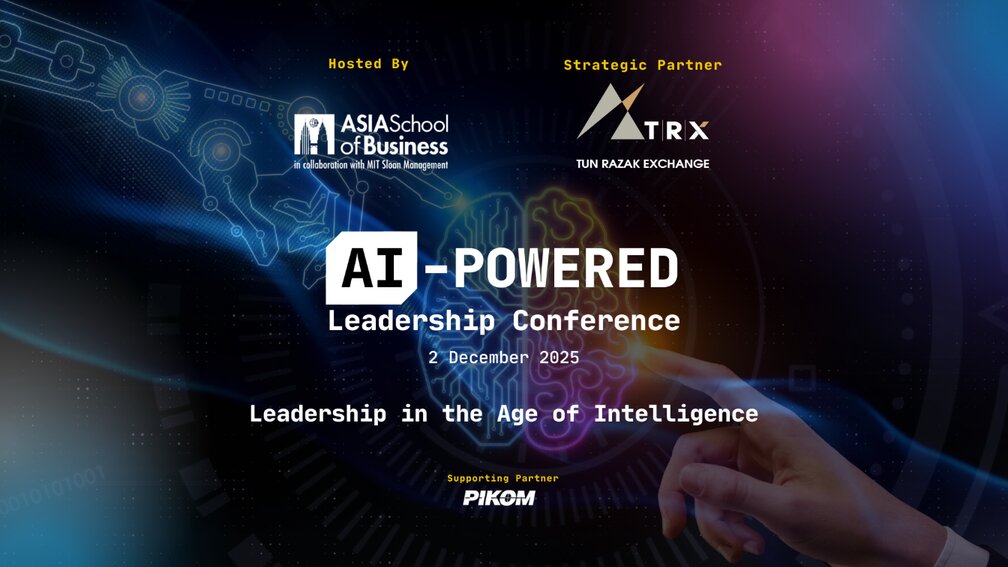
    The Asia School of Business (ASB) is set to host its inaugural AI-Powered Leadership Conference, a landmark one-day event aimed at exploring the future of leadership in an increasingly AI-driven world. Bringing together a distinguished lineup of global AI pioneers, CEOs, innovators, and policymakers, the conference promises to offer deep insights into how organisations can lead responsibly and competitively amid rapid technological transformation. Supported by strategic partner TRX City Sdn Bhd, the master developer of the International Financial Centre Tun Razak Exchange (TRX), the event will examine the impact of AI on industries, talent management, and strategic decision-making. The conference will be graced by YB Gobind Singh, Malaysia’s Minister of Digital, and will feature keynote sessions from internationally acclaimed experts, including Professor Sanjay Sarma, MIT Professor and Eminent Visiting Professor at ASB known for his pioneering work in technology; Professor De Kai, a leader in AI and language technologies; Brian A. Wong, former Alibaba executive and author of The Tao of Alibaba; and Professor Hiroshi Ishiguro, renowned for his groundbreaking contributions to interactive robotics and human-robot collaboration. ASB faculty members Professor Ong Shien Jin and Professor David Asirvatham will also present on organisational readiness and decision-making in the AI era. Attendees can look forward to interactive discussions, leadership-focused dialogues, and curated showcases highlighting emerging AI applications. The conference will revolve around three core themes: AI-driven leadership, cybersecurity in the age of AI, and responsible, human-centered adoption of AI. More information on registration and the agenda can be found at ASB’s official website.

  • Strengthening the Human Element in Malaysia’s E-Commerce Sector

    Strengthening the Human Element in Malaysia’s E-Commerce Sector

    Malaysia’s e-commerce sector has experienced unprecedented growth, transforming the way people shop and how businesses operate. Consumers can now purchase everything from everyday essentials to luxury goods with just a few taps, often without leaving social media platforms. This convenience, however, brings new challenges, as artificial intelligence (AI) increasingly blurs the line between real and automated activity. While AI has revolutionised online commerce—powering personalised recommendations, automating inventory, and optimising logistics—it has also enabled bots to manipulate demand, scrape listings, generate fake reviews, and even create purchases that never occurred. What started as a tool for efficiency has quietly introduced risks that threaten the trust between businesses and consumers.

    According to the Department of Statistics Malaysia, e-commerce revenue reached RM1.184 trillion in 2023, marking a 5.1 percent increase from the previous year. While Business-to-Business transactions accounted for the bulk at 69 percent, Business-to-Consumer activity surged by 7.7 percent, surpassing B2B and signalling a shift toward a consumer-driven digital marketplace. Yet with Malaysia’s increasingly connected digital landscape comes vulnerability. In the first half of 2025 alone, Malaysians lost RM1.12 billion to online scams, including RM63 million in e-commerce fraud, highlighting the urgent need for stronger digital protection alongside digital progress.

    The challenges are particularly acute for small and medium enterprises (SMEs), which comprise 96.1 percent of Malaysian businesses. Many SMEs have embraced digitalisation but lack the technical resources to detect or counter automated threats, leading to hidden costs in operations, security, and customer trust. As social commerce becomes Malaysia’s new digital high street—with over 70 percent of establishments using social media and 56.2 percent maintaining websites—the stakes grow higher. Fraudsters exploit one-tap checkouts, stored payment details, and AI-generated personas, making it harder than ever to distinguish human activity from automation.

    To address these risks, Malaysia needs a method of confirming the authenticity of digital interactions. Innovations like World provide a privacy-preserving solution to verify that online users are real, unique people without revealing personal information. By leveraging cryptographic technology, World allows each individual to complete a one-time verification that confirms their humanness, enabling businesses to prevent bot-driven transactions, ensure limited-edition items reach real fans, and restore trust in online reviews. This approach emphasises a simple but powerful principle: one person, one verification.

    Adopting human-centric verification aligns closely with Malaysia’s broader digital ambitions, which prioritise innovation, security, and privacy. For policymakers, it strengthens consumer protection frameworks. For businesses, it restores fairness and authenticity to an environment increasingly dominated by algorithms. As Malaysia’s digital economy approaches the trillion-ringgit milestone, its next phase of growth will depend on trust. AI will continue to fuel innovation, but the true strength of e-commerce lies in keeping people—not machines—at the centre of every click, review, and transaction. By putting humans first, Malaysia can ensure a sustainable, secure, and trustworthy digital marketplace for years to come.