KUALA LUMPUR, 2026 – Consumers across Southeast Asia and Oceania have rapidly embraced digital technologies that simplify everyday routines, from digital commerce and mobile payments to super apps and connected services. As artificial intelligence (AI) becomes increasingly integrated into these experiences, expectations are now shifting towards technology that can do more than provide convenience, with consumers looking for AI to help them work, communicate, make decisions and manage daily activities more effortlessly.
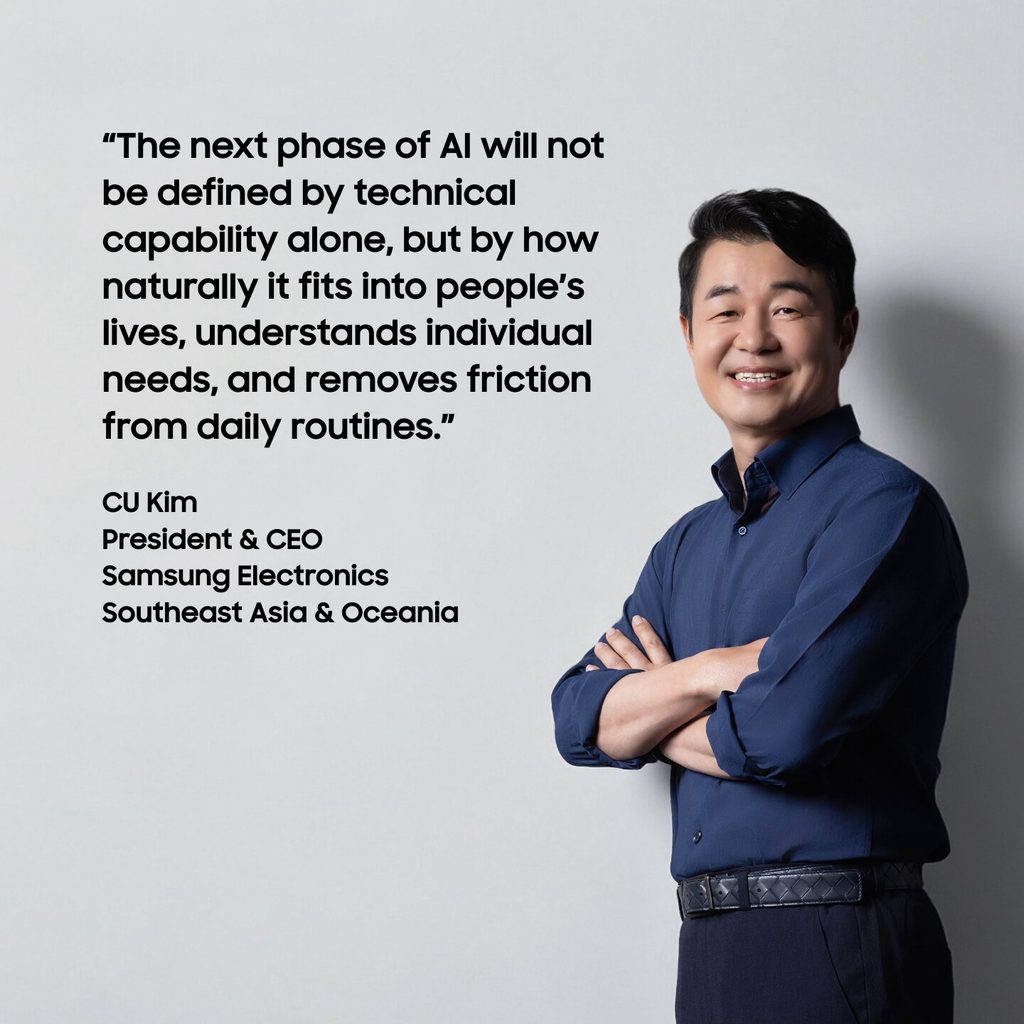
As the world marks AI Appreciation Day this July, the growing adoption of AI reflects a broader shift from experimentation towards practical, everyday applications. The next phase of AI is increasingly focused not only on technological capabilities but also on how naturally intelligence can fit into different lifestyles, understand individual needs and reduce friction in daily routines. Samsung is set to showcase its latest vision for AI at Galaxy Unpacked in London on 22 July, highlighting how intelligent experiences can become more seamlessly integrated into consumers’ everyday lives.
From Individual AI Tools to Connected Experiences
For years, technology has largely developed around individual devices, with smartphones supporting communication and productivity, wearables providing health and activity insights, televisions delivering entertainment and appliances helping with household routines. However, connected ecosystems are creating opportunities for these devices to work together, enabling AI to respond more effectively to a user’s context and needs.
Samsung’s SmartThings plays a central role in this connected ecosystem by bringing compatible devices, services and partners together. Instead of relying on individual features in isolation, connected devices can contribute to more seamless and personalised experiences across different aspects of daily life.
For example, Samsung’s Bespoke AI Refrigerator Family Hub, equipped with AI Vision, can help users keep track of fresh produce and packaged goods, while providing alerts when frequently used items are running low. These capabilities can help simplify grocery planning and reduce some of the routine decisions involved in managing a household.
AI-powered experiences also extend into personal well-being. SmartThings integrates with Samsung Health to provide sleep environment insights through Galaxy devices such as the Galaxy Ring. Meanwhile, features such as Running Coach on Galaxy Watch can analyse running performance data and create personalised training programmes based on individual fitness goals.
Entertainment is another area where AI can enhance the connected experience. Samsung Vision AI brings intelligence to the television experience, helping the screen adapt to viewer preferences while making content discovery and entertainment more personalised.
Together, these connected experiences demonstrate how AI can move beyond individual devices towards an ecosystem approach, where technology can use context to provide more relevant and personalised support throughout the day.
Mobile Remains the Gateway to AI
Despite the growing number of connected devices, smartphones remain a primary gateway to digital experiences. Mobile devices connect users to services, content, applications, smart devices and relationships that form part of their everyday routines.
This is where agentic AI is expected to play a growing role. Rather than simply functioning as a tool for searching, messaging or browsing, mobile AI is evolving towards experiences that can help users understand information, identify what may need attention, suggest potential next steps and assist with everyday actions.
Samsung’s Galaxy AI is designed around this evolving approach to mobile intelligence, with AI capabilities integrated directly into the device experience. The objective is to reduce the need for users to manually manage every step of a task, while providing suggestions and assistance based on context.
Building Trust Through Privacy and Security
As AI becomes more deeply integrated into daily life, consumer trust remains an important consideration. The increasing use of AI involves greater interaction with personal data, making transparency, privacy and user control critical to wider adoption.
Samsung says Galaxy AI is designed to keep sensitive information close to the user while providing visibility and choices regarding how data is used to support AI experiences. As AI expands across Samsung’s connected ecosystem, the company has also extended Knox Matrix, its cross-device security platform, to provide protection across connected home appliances, mobile devices and televisions.
Foldables and the Next Chapter of AI
The evolution of AI is also expected to influence how consumers interact with information. New device form factors, including foldable smartphones, can provide additional flexibility for AI-powered experiences by offering larger and adaptable displays for multitasking, richer content and more contextual interactions.
Samsung is expected to reveal more about its vision for AI and its next-generation Galaxy devices at Galaxy Unpacked in London on 22 July 2026. The company’s approach highlights a broader industry shift towards technology that aims to integrate intelligence more naturally into everyday routines rather than requiring users to manage increasingly complex digital tools.
Consumers can also register their interest in Samsung’s upcoming Galaxy devices from 8 to 22 July 2026 for a chance to win prizes worth up to RM62,944 in total and receive an additional RM120 e-voucher upon completing the registration. From 8 to 24 July 2026, customers can also purchase a RM250 Samsung Reservation+ Voucher for RM50, which can be used towards their next Galaxy foldable device.