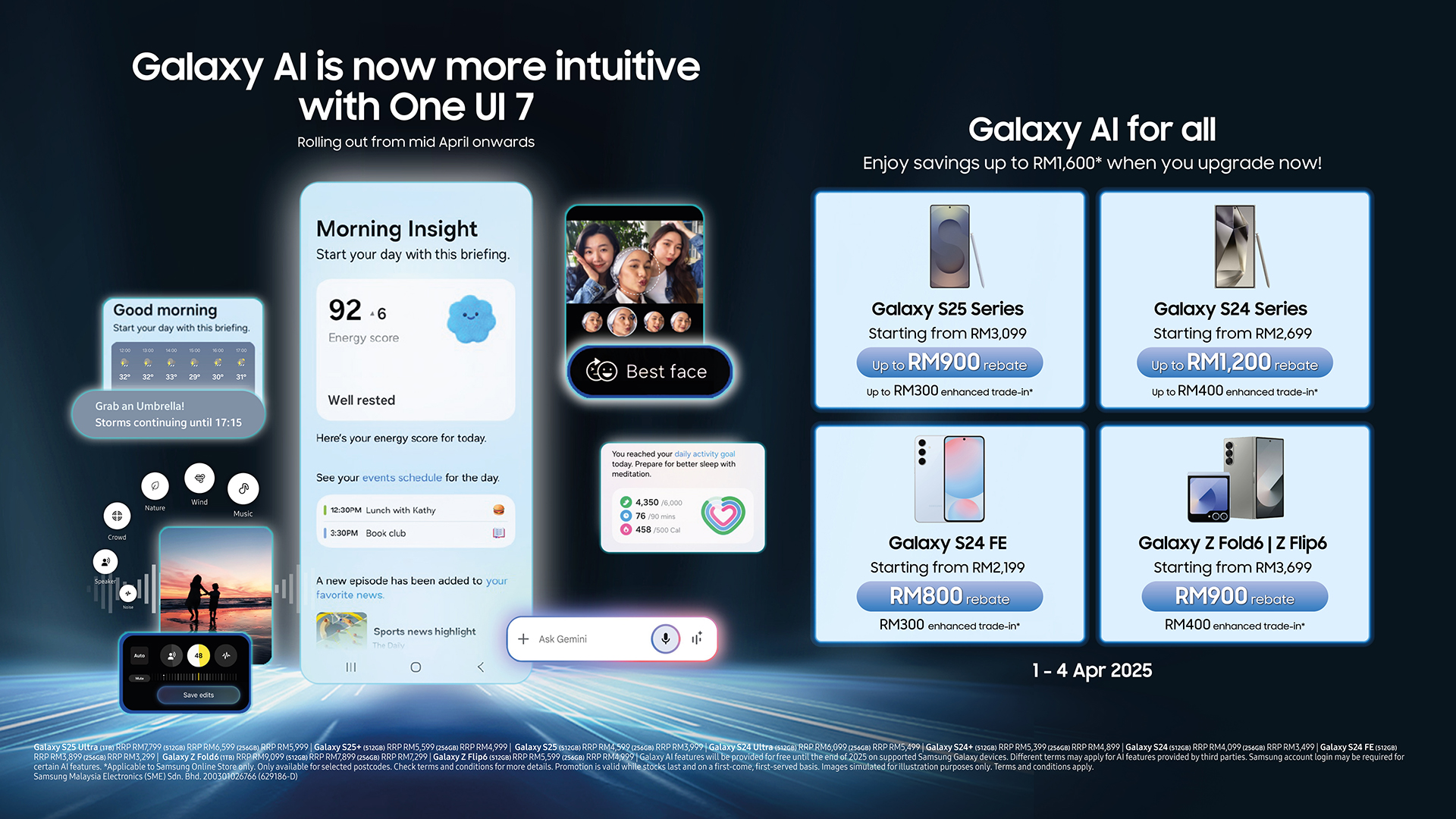
The rapid rise and popularity of artificial intelligence has seen many companies racing to join the movement. For Samsung, however, AI is not a sudden trend. It is a technology the company has been developing and integrating into its devices for more than a decade, with the aim of delivering meaningful benefits to users through innovation. Earlier this year at CES 2025, Samsung unveiled its “AI for All” vision, a mission to empower users through AI at every touchpoint.
In a recent conversation with CU Kim, President and CEO of Southeast Asia and Oceania at Samsung Electronics, a clearer picture emerged of how Samsung is applying AI in one of the most diverse and dynamic regions in the world. At the heart of the discussion was the company’s focus on democratizing AI so that it provides genuine value across different price points and levels of technical literacy. According to Kim, 77 percent of Galaxy AI-powered device users in the region are actively engaging with Galaxy AI features. These features are not only available on the latest flagship devices but also on earlier models, the FE and Tab series, and even on the more affordable Galaxy A series. Popular features such as Circle to Search with Google and Best Face are already improving the everyday experiences of users.
What sets Samsung’s approach apart is its emphasis on solving real challenges. In a region marked by extraordinary linguistic diversity, AI-powered translation features are breaking down communication barriers. At the same time, on-device AI capabilities mean that users are not entirely dependent on cloud connectivity, ensuring a reliable experience even in areas with uneven network infrastructure. Samsung is also extending intelligence beyond mobile into its wider ecosystem. With Home AI and the SmartThings platform, the company is creating hyper-personalized smart home environments that adapt to user habits and routines.
Looking at the broader landscape, Kim explained that consumers now expect greater efficiency, seamlessness, and ease of use in their daily lives. Features such as the AI ProVisual Engine and Enhanced Search on the Galaxy S25 series have been particularly sought after. In the home, AI-enabled OLED and Neo QLED televisions are delivering personalized and advanced viewing experiences. Beyond personal use, Samsung is also tapping into the enthusiasm of younger generations. A recent Samsung survey revealed that nine out of ten youths in Southeast Asia already incorporate AI tools into their learning, creativity, and community projects. Many believe AI will create new opportunities, even as some traditional jobs fade, and are actively developing AI-related skills.
For businesses and organizations in Southeast Asia and Oceania, Kim sees tremendous potential. With rapidly advancing digital infrastructure, companies in the region can leapfrog older systems and implement AI-driven solutions from the ground up. Samsung is enabling this shift through initiatives such as SmartThings Pro, a platform designed to create intelligent environments that boost efficiency and customer experiences. The company has already introduced AI solutions in industries ranging from hospitality to education, including the Samsung Digital Lighthouse School program in Indonesia, which is enhancing the learning experience of thousands of students through Galaxy Tab devices.
Looking ahead, Kim expressed particular excitement about how Samsung’s innovations will empower communities. Gaming enthusiasts, for example, can look forward to console-quality visuals on the Galaxy S25 series with features like ProScaler and advanced Ray Tracing. The company has also partnered with Moonton Games to launch the first-ever MLBB Campus Series tournament for students in Southeast Asia, part of its Galaxy Gaming Academy initiative to support the next generation of esports players.
In daily life, Samsung is moving beyond simple device control to create intelligent environments that anticipate user needs. Samsung Health and SmartThings are able to optimize sleep environments by adjusting temperature and humidity according to individual sleep patterns and environmental conditions. Upcoming innovations such as the Galaxy S25 Edge smartphone and the Bespoke AI home appliances with SmartThings will continue this focus on accessibility, personalization, and security.
For Samsung, the future of AI is not about replacing human capability but enhancing it. As CU Kim emphasized, the company is committed to ensuring that AI remains a trusted companion that empowers rather than complicates daily life. In Southeast Asia and Oceania, Samsung is working closely with communities to build this future together.
To learn more about Galaxy AI, visit www.samsung.com/my/galaxy-ai.