Tag: #RenewableEnergy

  • Konflik Global Tingkatkan Kos Tenaga, Perniagaan Malaysia Perlu Perkukuh Daya Tahan

    Konflik Global Tingkatkan Kos Tenaga, Perniagaan Malaysia Perlu Perkukuh Daya Tahan

    Di Muar, yang terkenal sebagai hab pembuatan perabot terbesar di Malaysia, lebih 100 kilang kecil dilaporkan menamatkan operasi dalam tempoh beberapa bulan kebelakangan ini. Bukan kerana permintaan pasaran semakin perlahan, tetapi disebabkan tekanan kos yang semakin sukar ditanggung. Margin keuntungan yang sudah lama terjejas akibat tarif Amerika Syarikat kini semakin mengecil apabila kos tenaga dan bahan mentah meningkat susulan konflik di Iran. Bagi pengusaha yang masih bertahan, mereka menyaksikan satu demi satu kilang di kawasan sekitar terpaksa gulung tikar. Ada syarikat yang sudah bertapak berpuluh tahun memilih untuk menutup perniagaan daripada terus menanggung kerugian, manakala pemain industri yang lebih kecil pula semakin kehabisan pilihan untuk meneruskan operasi.

    Apabila kemudahan tenaga Iran mula menjadi sasaran serangan Amerika Syarikat dan Israel pada 28 Februari 2026, perhatian dunia tertumpu kepada ketegangan geopolitik, lonjakan harga minyak serta gangguan di Selat Hormuz yang mengendalikan hampir 20 peratus aliran harian minyak dan gas asli cecair (LNG) dunia. Walaupun gencatan senjata diumumkan pada 8 April lalu, ramai pemilik perniagaan di Malaysia masih belum dapat menarik nafas lega sepenuhnya.

    Ini kerana keadaan di Selat Hormuz masih belum kembali normal. Walaupun laluan tersebut dibuka semula, jumlah kapal yang melaluinya masih jauh lebih rendah berbanding kebiasaan. Dalam keadaan normal, lebih 120 kapal menggunakan laluan itu setiap hari, namun kini ada masanya hanya sekitar tiga kapal sahaja yang melaluinya.

    Laporan Pasaran Minyak Mei 2026 oleh Agensi Tenaga Antarabangsa (IEA) menunjukkan harga minyak mentah penanda aras masih berada sekitar AS$110 setong. Pada masa yang sama, pengeluaran minyak negara-negara Teluk kekal 14.4 juta tong sehari lebih rendah berbanding sebelum konflik, manakala stok minyak global terus menyusut pada kadar yang membimbangkan. Walaupun konflik ketenteraan telah reda, kesannya terhadap rantaian bekalan tenaga dunia masih belum pulih sepenuhnya. Kini, impaknya mula dirasai secara langsung oleh perniagaan di Malaysia, khususnya melalui peningkatan kos elektrik.

    Tinjauan Persekutuan Pekilang-Pekilang Malaysia (FMM) pada Mei 2026 mendapati 72 peratus responden mengakui keadaan perniagaan mereka semakin mencabar sejak konflik tercetus. Sementara itu, 28 peratus syarikat sama ada telah melaksanakan atau sedang merancang langkah pelarasan tenaga kerja bagi mengurangkan tekanan kos. Berbeza dengan krisis yang berlaku secara mendadak, kesan perang kali ini hadir secara perlahan melalui peningkatan kos operasi yang berterusan. Malah, buat pertama kalinya sejak sistem tarif elektrik baharu diperkenalkan, pelarasan kos yang sebelum ini memberi penjimatan kini berubah menjadi caj tambahan kepada pengguna perniagaan.

    Untuk memahami situasi ini, kita perlu melihat kepada perubahan yang diperkenalkan pada Julai 2025. Ketika itu, mekanisme Imbalance Cost Pass-Through (ICPT) digantikan dengan Automatic Fuel Adjustment (AFA), iaitu sistem pelarasan bulanan yang menjejaki perubahan harga bahan api global dan kadar pertukaran asing hampir secara masa nyata.

    Di bawah ICPT, terdapat tempoh penampan antara perubahan harga global dan kesannya kepada bil elektrik tempatan. Tempoh ini sedikit sebanyak membantu mengurangkan kejutan kos kepada pengguna. Namun menerusi AFA, penampan tersebut tidak lagi wujud. Ini bermakna sebarang perubahan besar dalam pasaran tenaga dunia boleh memberi kesan kepada kos operasi syarikat dalam tempoh sekitar sebulan sahaja.

    Sepanjang penghujung 2025 hingga awal 2026, AFA sebenarnya memberikan manfaat kepada perniagaan apabila rebat elektrik meningkat secara konsisten dan pernah mencecah hampir 9 sen bagi setiap kilowatt jam (kWh) pada November 2025. Namun keadaan mula berubah apabila rebat semakin berkurangan sepanjang Februari dan Mac sebelum susut kepada hanya 0.47 sen/kWh pada April 2026.

    Memasuki Mei 2026, buat pertama kalinya sejak diperkenalkan, kadar AFA bertukar positif. Ini bermakna pengguna tidak lagi menerima rebat, sebaliknya dikenakan surcaj bagi penggunaan elektrik. Kadar bagi Mei ditetapkan pada +1.38 sen/kWh selepas bantuan daripada Kumpulan Wang Industri Elektrik sebanyak RM91 juta digunakan untuk mengurangkan tekanan kos. Tanpa bantuan tersebut, kadar sebenar adalah sekitar +2.24 sen/kWh. Malah, Tenaga Nasional Berhad (TNB) mengunjurkan surcaj akan terus dikenakan sepanjang suku ketiga tahun ini dengan kadar tertinggi dijangka mencecah +3.93 sen/kWh pada Ogos.

    Menurut Ketua Pegawai Eksekutif EFS Group, Darren Tan, mekanisme yang sebelum ini membantu mengekalkan bil elektrik pada tahap lebih rendah kini telah berubah menjadi faktor yang meningkatkan kos operasi syarikat.

    “Perlindungan yang pernah dinikmati perniagaan kini semakin berkurangan. Kenaikan kos ini tidak lagi mudah untuk diserap secara pasif seperti sebelum ini,” katanya.

    Bagi sektor komersial dan industri, setiap perubahan AFA memberi kesan terus kepada kos operasi kerana mereka tidak menikmati perlindungan ambang penggunaan seperti pengguna domestik.

    Apa yang menjadikan situasi kali ini lebih mencabar bukan sekadar kenaikan harga, tetapi puncanya yang berpunca daripada gangguan terhadap infrastruktur tenaga. Jika sebelum ini kenaikan harga biasanya didorong oleh faktor permintaan pasaran dan bersifat sementara, kali ini ia melibatkan kerosakan fizikal terhadap kemudahan tenaga dan rantaian bekalan global.

    Menurut data awal IEA, inventori minyak dunia berkurangan sebanyak 129 juta tong pada Mac dan 117 juta tong lagi pada April. Dalam masa sama, kehilangan lebih 14 juta tong sehari pengeluaran minyak dari negara-negara Teluk tidak dapat dipulihkan dengan cepat hanya melalui perjanjian damai. Beberapa penganalisis turut menjangkakan harga minyak akan kekal tinggi dalam tempoh terdekat berikutan keperluan untuk membina semula inventori global yang semakin susut.

    Darren berkata apa yang berlaku hari ini bukan lagi sekadar isu geopolitik sementara, sebaliknya didorong oleh gabungan ketidaktentuan geopolitik, cabaran peralihan tenaga global dan peningkatan permintaan daripada infrastruktur digital.

    “Perniagaan perlu menerima hakikat bahawa ketidaktentuan ini mungkin berlanjutan lebih lama daripada yang dijangkakan. Mereka yang masih mengandaikan harga akan kembali stabil dalam masa terdekat mungkin sedang memandang rendah risiko sebenar yang bakal dihadapi,” katanya.

    Di seluruh Asia Pasifik, konflik ini turut mempercepatkan usaha peralihan kepada tenaga boleh baharu. Permintaan terhadap panel solar meningkat apabila syarikat-syarikat berlumba mendapatkan bekalan sebelum berdepan risiko kenaikan harga yang lebih tinggi. Di Malaysia, saham syarikat berkaitan solar turut mencatat pemulihan ketara apabila semakin banyak syarikat melihat tenaga boleh baharu sebagai strategi perniagaan dan bukannya sekadar inisiatif kelestarian.

    Jika sebelum ini perbincangan mengenai tenaga solar sering berkisar tentang sasaran karbon dan ESG, kini fokus semakin beralih kepada kestabilan kos dan perlindungan margin keuntungan. Banyak syarikat mula melihat tenaga sebagai aset strategik yang perlu diurus seperti bahan mentah penting lain.

    “Peralihan yang perlu berlaku sekarang bukan lagi daripada kecekapan kepada kelestarian semata-mata, tetapi daripada kecekapan kepada daya tahan,” jelas Darren.

    Beliau berkata tenaga solar bukan sahaja membantu menjimatkan kos, malah memberi kepastian yang lebih tinggi terhadap perbelanjaan tenaga. Dengan sebahagian kos dapat distabilkan, syarikat boleh membuat unjuran kewangan dengan lebih tepat serta mengurangkan risiko daripada faktor luaran yang sukar dikawal.

    Keperluan untuk bertindak juga semakin mendesak apabila beberapa insentif kerajaan bakal berakhir pada penghujung tahun ini. Antaranya Green Investment Tax Allowance (GITA), yang membolehkan syarikat mengimbangi sehingga 60 peratus kos projek solar yang layak terhadap pendapatan bercukai dan akan tamat pada 31 Disember 2026.

    Selain itu, program Solar Accelerated Transition Action Programme (Solar ATAP) membolehkan syarikat memasang sistem solar sehingga 100 peratus daripada permintaan maksimum tanpa had kuota, manakala Corporate Renewable Energy Supply Scheme (CRESS) pula memberi pilihan untuk membeli tenaga solar terus daripada pemaju bebas melalui grid TNB.

    Bagi syarikat yang masih bimbang tentang kos pelaburan awal, model Power Purchase Agreement (PPA) kini menawarkan penyelesaian yang lebih fleksibel.

    “Perniagaan tidak lagi perlu mengeluarkan modal yang besar pada peringkat awal. Mereka hanya membayar berdasarkan tenaga yang dijana dan dalam banyak keadaan boleh menikmati penjimatan hampir serta-merta tanpa memberi tekanan besar kepada kedudukan kewangan syarikat,” katanya.

    Menurut Darren, syarikat yang bertindak lebih awal bukan kerana takut, tetapi kerana mereka melihat peluang untuk mengunci kos tenaga yang lebih stabil dalam persekitaran global yang semakin tidak menentu. Walaupun konflik di Timur Tengah semakin reda, kesannya terhadap ekonomi dan kos operasi perniagaan masih jauh daripada berakhir.

  • Huawei and JS Solar Join Forces to Drive Malaysia’s Green Energy Future at IGEM 2025

    Huawei and JS Solar Join Forces to Drive Malaysia’s Green Energy Future at IGEM 2025

    Huawei Technologies (Malaysia) Sdn Bhd (Huawei Malaysia) and JS Solar Holding Berhad (JS Solar) have entered into a Memorandum of Understanding (MoU) at the International Greentech & Eco Products Exhibition & Conference Malaysia (IGEM) 2025, marking a significant step towards advancing smart solar and energy storage projects across Malaysia.

    The collaboration between Huawei Malaysia and JS Solar aims to accelerate the nation’s clean energy transition and support Malaysia’s carbon neutrality goals. Under this partnership, JS Solar’s renewable energy portfolio which includes Large-Scale Solar (LSS) farms, Ground-Mounted Self-Consumption Solar (SELCO) farms, hybrid rooftop systems, and Corporate Renewable Energy Supply Scheme (CRESS) project will benefit from Huawei’s cutting-edge digital power technologies.

    JS Solar’s Managing Director, Chai Jeun Sian, expressed optimism about the collaboration, emphasizing its strategic role in expanding JS Solar’s presence in East Malaysia. He stated that by integrating Huawei’s advanced Smart PV and energy storage technologies with JS Solar’s expertise in project delivery, the partnership will deliver reliable, efficient, and sustainable energy solutions. He added that this cooperation demonstrates both companies’ commitment to supporting Malaysia’s Net Zero aspirations and driving the nation’s renewable energy agenda forward.

    Huawei Malaysia’s Vice President of Digital Power Business, Chong Chern Peng, echoed this sentiment, highlighting the potential of Smart PV and energy storage solutions in optimizing power generation and improving energy management. He noted that Huawei’s technologies will enable JS Solar to enhance operational efficiency, ensure grid stability, and maintain consistent performance even in challenging conditions. The partnership, he said, reflects Huawei’s mission to establish a smarter and more resilient energy ecosystem for Malaysia’s future.

    As part of the agreement, JS Solar will serve as the Engineering, Procurement and Construction (EPC) partner, while Huawei Malaysia will contribute its technological expertise as the enabler of Smart PV systems. Huawei’s intelligent inverters and digitally managed systems will be integrated into JS Solar’s projects to optimize solar generation, improve grid reliability, and enhance long-term system performance through advanced monitoring and predictive maintenance.

    Both companies also plan to collaborate on the development of Solar + Battery Energy Storage System (BESS) technologies, exploring innovative business models and scalable solutions that boost renewable energy efficiency and strengthen grid resilience.

    The signing ceremony took place at IGEM 2025, held from 15 to 17 October 2025 at the Kuala Lumpur Convention Centre under the theme “Race Towards Net Zero: Inclusivity & Sustainability.” The MoU was signed by Chai Jeun Sian, Managing Director of JS Solar Holding Berhad, and Chong Chern Peng, Vice President of Huawei Malaysia, Digital Power Business. The event was witnessed by YBhg. Dato’ Leong Kin Mun and YBrs. Tuan Haji Ismail bin Mohd Amin, both Board Members of the Malaysian Green Technology and Climate Change Corporation (MGTC), alongside Ahmad Fareez bin Abd Jamil, Vice President of Business & Strategy at JS Solar, and Zhang Xiaoming, Director of Smart PV and ESS at Huawei Malaysia.

    At IGEM 2025, Huawei Malaysia participated under the theme “Powering Malaysia Forward,” showcasing its full range of Smart PV solutions, successful regional projects, and its flagship Grid-Forming Energy Storage System (ESS). Designed for applications across utility, commercial, industrial, and residential settings, the ESS plays a vital role in ensuring grid stability throughout the power value chain.

    During the event, Huawei Malaysia Solutions Expert, Damon Leong Wei Jie, delivered two technical presentations. His sessions, titled “24 Years of Excellence: High-Quality and Utmost Safety in Serving Malaysia’s Energy Transition” and “Debunking the Myth of String Inverters on Floating Solar Power Plants,” highlighted Huawei’s dedication to safety standards and clarified common misconceptions about inverter technologies in solar power systems.

    Since its inception in 2010, IGEM has established itself as Southeast Asia’s premier green technology exhibition, organized with the support of the Ministry of Natural Resources and Environmental Sustainability (NRES) and MGTC. Over the years, IGEM has generated more than RM58.1 billion in business leads and attracted over 650,000 visitors, including industry players, dignitaries, and companies from more than 122 countries.

  • Huawei Malaysia Partners with OpenRe to Power Malaysia’s Future with Battery Energy Storage Solutions

    Huawei Malaysia Partners with OpenRe to Power Malaysia’s Future with Battery Energy Storage Solutions

    Huawei Technologies (Malaysia) Sdn Bhd (Huawei Malaysia) and Open Re Sdn Bhd (OpenRE) have entered into a Memorandum of Understanding (MoU) to collaborate on the development and implementation of artificial intelligence (AI)-integrated Battery Energy Storage System (BESS) solutions in Malaysia. The partnership aims to address the nation’s increasing energy demand and support its renewable energy goals by providing sustainable and intelligent energy management systems for businesses and industries.

    The collaboration focuses on delivering advanced BESS solutions to help manage Maximum Demand (MD) scenarios, which occur during peak electricity consumption periods when power usage and costs are at their highest. Through this partnership, Huawei Malaysia and OpenRE intend to establish a sustainable, AI-driven BESS ecosystem that enables commercial and industrial users to enhance energy efficiency, reduce operational costs, and contribute to the nation’s decarbonisation agenda and sustainable growth.

    Chief Executive Officer of OpenRE, Dr. Lin Horng Sheng, described the partnership as a major step forward in Malaysia’s pursuit of intelligent energy management. He emphasised that combining Huawei’s world-class BESS hardware with OpenRE’s proprietary AI Energy Demand Response (AIE-DR) technology will enable industries to achieve greater efficiency, manage peak demand more effectively, and progress towards carbon-neutral operations. He added that the collaboration is a vital step in building a sustainable energy ecosystem that empowers local industries to thrive during the clean energy transition.

    Vice President of Huawei Malaysia, Digital Power Business, Chong Chern Peng, said that Malaysia’s energy transition depends on the seamless integration of digital technologies and clean power systems. He highlighted that through this partnership, Huawei and OpenRE aim to strengthen the country’s energy-storage value chain and expand access to reliable, affordable, and sustainable energy management solutions for a wide range of industries.

    As the technology enabler, Huawei Malaysia will leverage its global expertise and innovation in product manufacturing, technical knowledge, and market supply, delivering its advanced Smart PV and BESS technologies. OpenRE will complement these efforts with its Energy Management System (EMS) AI software, providing technical and business support to end-users to ensure efficient and intelligent energy utilisation.

    Under the terms of the MoU, both companies will collaborate to build a sustainable ecosystem that captures new market opportunities while delivering end-to-end energy management solutions tailored for key industrial sectors. This cooperation is aligned with Malaysia’s National Energy Transition Roadmap (NETR), which identifies energy storage as a critical enabler in achieving the country’s carbon-neutral target by 2050. The Huawei Malaysia-OpenRE partnership reinforces this vision by empowering industries with energy storage solutions that improve grid flexibility, reliability, and renewable energy integration.

    The signing ceremony took place during the International Greentech & Eco Products Exhibition & Conference Malaysia (IGEM) 2025 at the Kuala Lumpur Convention Centre, held from 15 to 17 October. The MoU was signed by Dr. Teoh Boon Yew, General Manager (Business Development) of OpenRE, and Chong Chern Peng, Vice President of Huawei Malaysia, Digital Power Business. The event was witnessed by Malaysian Green Tech & Climate Change Corporation (MGTC) Board Members YBhg. Dato’ Leong Kin Mun and YBrs. Tuan Haji Ismail bin Mohd Amin, along with Dr. Chong Lee Wai, Chief Technology Officer of OpenRE, and Zhang Xiaoming, Director of Smart PV and ESS, Digital Power Business, Huawei Malaysia.

  • Solarvest and Huawei Malaysia Team Up for Solar and Energy Storage Innovation

    Solarvest and Huawei Malaysia Team Up for Solar and Energy Storage Innovation

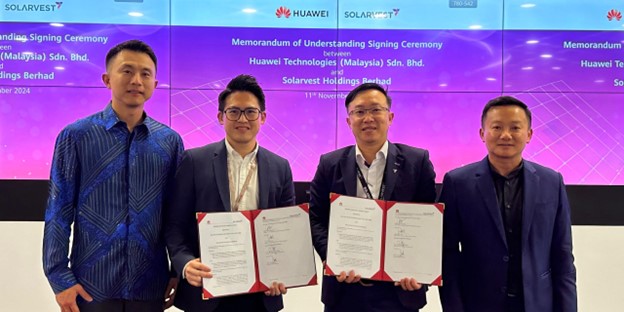
    As Malaysia continues its journey towards a sustainable, low-carbon economy, a new wave of innovation is making its mark in the energy sector. Solarvest Holdings Berhad and Huawei Technologies (Malaysia) Sdn Bhd have deepened their collaboration to deliver advanced solar and energy storage solutions that promise to transform the nation’s energy infrastructure. By combining the strengths of Solarvest’s renewable energy development expertise with Huawei’s cutting-edge technology, the partnership aims to drive greater energy independence, resilience, and sustainability across Malaysia.

    The latest initiative in this collaboration centers on the deployment of solar + energy storage systems, which combine photovoltaic (PV) solar energy generation with cutting-edge battery storage solutions. As part of their joint efforts, Solarvest and Huawei Malaysia will focus on reducing Malaysia’s reliance on traditional energy sources, while also empowering businesses, communities, and individuals to take charge of their own energy needs.

    The integration of Battery Energy Storage Systems (BESS) alongside solar technology offers a number of advantages, from enhancing grid stability to enabling a continuous power supply even when the sun isn’t shining. With this collaboration, Solarvest will focus on large-scale solar power installations across Malaysia, while Huawei Malaysia’s technology will power the energy storage component, ensuring greater flexibility and energy efficiency.

    In addition to creating more sustainable energy systems, this partnership aims to address Malaysia’s growing demand for renewable energy solutions that are both reliable and cost-effective. Solarvest’s large-scale solar farms (LSS) and other solar energy projects will incorporate Huawei’s Smart PV inverters and BESS technology, maximizing the efficiency of solar power generation and storage.

    One of the key benefits of Solar + Storage solutions is the ability to store excess energy produced during the day for use at night or during peak demand periods. With Huawei’s BESS technology, stored energy can be dispatched to the grid, stabilizing power supply and reducing Malaysia’s dependency on fossil fuel-based electricity generation.

    “Energy storage is the key to unlocking the full potential of renewable energy in Malaysia,” said Mr. Davis Chong Chun Shiong, Executive Director and Group CEO of Solarvest. “With Huawei’s advanced storage and inverter technologies, we can ensure that energy generated by solar projects is efficiently stored and readily available whenever it is needed. This not only supports Malaysia’s transition to a greener energy future but also offers businesses and consumers greater control over their energy usage.”

    This partnership goes beyond technology to support the growth of Malaysia’s green energy workforce. As part of their ongoing commitment to training and education, Huawei Malaysia will support Solarvest’s efforts to upskill the local workforce in solar energy technologies, including the installation and maintenance of solar systems, BESS integration, and EV charging infrastructure.

    The collaboration will play a critical role in developing a skilled labor force capable of supporting the country’s green transition. Huawei will also offer hands-on training programs, certification courses, and job placements to ensure that Malaysia’s energy professionals are equipped with the necessary skills to implement advanced energy solutions.

    “We are committed to building a green economy in Malaysia, and this includes nurturing the next generation of green energy professionals,” said Mr. Simon Sun, CEO of Huawei Malaysia. “Through training programs and partnerships with local educational institutions, we aim to create a sustainable talent pipeline that will support Malaysia’s clean energy sector for years to come.”

    The integration of solar power with energy storage also aligns with Malaysia’s goal of achieving carbon neutrality by 2050. By reducing dependence on fossil fuels, the partnership between Solarvest and Huawei Malaysia supports the country’s efforts to meet its climate targets and reduce carbon emissions.

    Huawei’s Smart PV inverters have already made a significant impact on Malaysia’s energy grid, with the company’s technologies expected to generate an estimated 3.9 billion kWh of clean electricity annually, which equates to a reduction of 1.81 million tonnes of CO2 emissions each year. The new partnership will further amplify these contributions, accelerating the growth of renewable energy in the region.

    “The combination of smart technology and energy storage will not only improve the efficiency of renewable energy but also make our grid more resilient to future challenges,” said Mr. Chong Chern Peng, Vice President of Huawei Malaysia’s Digital Power Business. “By partnering with Solarvest, we are laying the foundation for an energy ecosystem that is both greener and more reliable.”

    This new initiative comes at a critical time when Malaysia is ramping up its efforts to meet both local and global climate commitments. With the growing importance of clean energy in the fight against climate change, partnerships like this one between Solarvest and Huawei Malaysia are crucial for accelerating the energy transition.

    The two companies are united by a shared vision of a carbon-neutral Malaysia, with a clear focus on building resilient, efficient, and sustainable energy systems that will empower future generations. By tapping into the full potential of solar + storage solutions, Malaysia is not only moving towards its climate goals but also leading the way for Southeast Asia in renewable energy innovation.