Tag: #HighPerformanceComputing

  • Samsung and AMD deepen their strategic partnership to advance next-generation AI memory technologies.

    Samsung Electronics and AMD have formalized an expanded partnership through a Memorandum of Understanding (MOU) to accelerate innovation in next-generation AI memory and computing technologies. The agreement, signed in Pyeongtaek, South Korea, reflects a deepening collaboration between two industry leaders committed to advancing high-performance AI infrastructure.

    AI Memory & Hardware Innovation

    At the core of this collaboration is Samsung’s cutting-edge HBM4 (High Bandwidth Memory), built on its advanced 10nm-class DRAM process and paired with a 4nm logic base die. Delivering speeds of up to 13 Gbps and bandwidth reaching 3.3 TB/s, HBM4 is set to exceed current industry standards. This next-generation memory will power AMD’s upcoming Instinct MI455X GPU, designed to handle intensive AI workloads such as large-scale model training and inference with enhanced efficiency and reliability.

    Infrastructure & System Integration

    The partnership extends beyond memory, encompassing full-stack AI system integration. Samsung’s advanced DRAM solutions, including DDR5 optimized for AMD’s 6th Gen EPYC “Venice” CPUs, will support next-generation AI platforms like AMD’s Helios rack-scale architecture. By combining AMD Instinct GPUs, EPYC CPUs, and Samsung’s memory technologies, the collaboration aims to deliver highly scalable and performance-driven AI infrastructure.

    Strategic Impact & Industry Significance

    As AI workloads continue to demand higher bandwidth and energy efficiency, this collaboration positions both companies at the forefront of AI hardware innovation. The partnership also opens opportunities for foundry services, where Samsung may manufacture next-generation AMD chips, further strengthening supply chain integration. With nearly two decades of collaboration history, this expanded alliance reinforces their shared vision of enabling faster, more efficient AI systems globally.

    Future Outlook

    By aligning on advanced memory solutions and high-performance computing platforms, Samsung and AMD are setting the stage for the next wave of AI breakthroughs. Their combined expertise is expected to drive innovation across data centers, enterprise AI, and cloud infrastructure, ensuring scalable and impactful AI deployment worldwide.

  • The AI Infrastructure Dilemma: Getting Ready for the Era of Agentic AI

    The AI Infrastructure Dilemma: Getting Ready for the Era of Agentic AI

    As the world races to establish leadership in Artificial Intelligence (AI), governments and industries are grappling with urgent demographic and economic pressures, from aging populations to shrinking workforces and the imperative to boost productivity. In this context, the emergence of agentic AI—systems that do more than respond, but reason, plan, and take autonomous actions—represents a transformative shift with profound implications for infrastructure, innovation, and national competitiveness. Unlike traditional AI models that answer queries, agentic AI can manage extended workflows independently: booking flights, updating schedules, sending reminders, or adapting plans dynamically based on external factors. This proactive, collaborative intelligence will require significantly more compute power, not only to process individual tasks but to orchestrate reasoning, planning, and continuous adaptation across billions of simultaneous users and applications.

    The challenge extends beyond GPUs, which have traditionally dominated AI conversations for training and inference. CPUs, high-speed interconnects, memory, and networking form the backbone of modern AI infrastructure, coordinating workloads, managing data movement, and supporting real-time system orchestration. High-performance CPUs, such as AMD EPYC™ 9005 Series, are critical for running AI workloads efficiently, particularly as models evolve into more modular and distributed architectures like mixture-of-experts systems. Connectivity is equally vital: smart network interface controllers (NICs), low-latency interconnects, and scalable fabrics ensure seamless, high-throughput data flow, enabling agentic AI to operate at scale with minimal delays. The convergence of these components into heterogeneous, rack-scale systems is essential for orchestrating complex, real-time interactions between billions of AI agents.

    Openness in software, hardware, and systems design emerges as another strategic priority. Closed ecosystems risk vendor lock-in and limit flexibility at a time when agility is crucial to scale AI. Open software stacks like AMD ROCm™ enable developers and researchers to build, optimize, and deploy AI models across diverse environments, supporting popular frameworks like PyTorch and TensorFlow while offering portability and performance tuning. Open hardware standards, including the Open Compute Project (OCP), the Ultra Accelerator Link (UALink), and next-generation networking frameworks from the Ultra Ethernet Consortium (UEC), provide the modularity, high-bandwidth connectivity, and interoperability needed for distributed AI systems. These open initiatives empower cloud and data center operators to build flexible, energy-efficient infrastructure capable of supporting both global AI innovation and local differentiation.

    For countries like Malaysia, embracing an open, heterogeneous AI ecosystem is not simply a technical decision—it is a strategic imperative. National competitiveness in the age of agentic AI depends on the ability to deploy scalable, high-performance infrastructure that supports complex workloads, facilitates local innovation, and ensures technological sovereignty. The upcoming release of AMD’s Helios, a next-generation rack-scale reference design, exemplifies the integration of high-performance compute, open software, and scalable architecture necessary to meet the demands of agentic AI in 2026 and beyond.

    Looking ahead, the successful adoption of agentic AI requires a holistic approach to infrastructure: CPUs and GPUs must work in tandem, high-speed networking and interconnects must provide low-latency data movement, and open software and modular rack-scale systems must enable flexibility, innovation, and interoperability. By investing in such infrastructure, Malaysia and other nations can harness the transformative power of agentic AI to drive automation, innovation, and sustainable economic growth while navigating the global AI race.

  • AMD Launches EPYC Embedded 2005 Series Processors: High-Performance, Energy-Efficient Solutions in a Compact Form Factor for Networking, Storage, and Industrial Applications

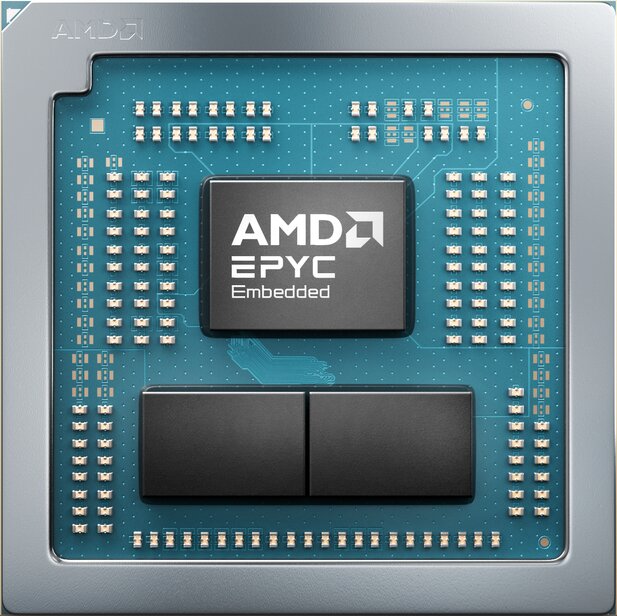
    AMD Launches EPYC Embedded 2005 Series Processors: High-Performance, Energy-Efficient Solutions in a Compact Form Factor for Networking, Storage, and Industrial Applications

    AMD has unveiled its latest EPYC Embedded™ 2005 Series processors, engineered to deliver high-performance, power-efficient computing in compact designs tailored for networking, storage, and industrial environments where power, space, and thermal constraints are critical. Built on the proven Zen 5 architecture, these processors feature up to 16 x86 cores, 64 MB of shared L3 cache, and configurable thermal design power (TDP) ranging from 45W to 75W, offering designers the flexibility to optimize for performance, energy efficiency, and thermal management. The processors come in a highly integrated 40mm × 40mm BGA package, 2.4 times smaller than comparable Intel Xeon solutions, enabling higher compute density, shorter electrical paths for better signal integrity, and improved thermal performance, making them ideal for 24/7 operation in constrained infrastructures.

    The EPYC Embedded 2005 Series also delivers exceptional performance per watt, with up to 28 percent higher boost CPU frequency and 35 percent higher base CPU frequency compared to comparable Intel solutions, enabling superior performance density and lower total system cost. These processors are purpose-built for long-life deployments, supporting up to 10 years of continuous field operation, component availability, and technical assistance, alongside 15 years of software maintenance, ensuring stability and a strong return on investment. Advanced Reliability, Availability, and Serviceability (RAS) features detect, prevent, and correct errors to minimize downtime, while application-specific features such as BMC support, PCIe Hot Plug, and multi-SPI ROM provide additional design flexibility. Security is reinforced with AMD Infinity Guard technologies, including AMD Secure Processor, AMD Platform Secure Boot, and AMD Memory Guard, safeguarding data integrity and system reliability for mission-critical applications.

    Connectivity and modularity are central to the EPYC Embedded 2005 Series, offering 28 lanes of PCIe Gen5 for high-speed I/O integration, including Ethernet NICs, FPGAs, and networking ASICs, while DDR5 memory support ensures higher memory bandwidth and future-proofing as DDR4 phases out. The processors are complemented by a robust open-source software ecosystem, with upstream support for Yocto, kernel drivers, and the Extended Development Kit (EDK II), simplifying integration and accelerating time to market. Targeting AI-driven workloads, modern networking switches, routers, DPU control planes, cold cloud storage, aerospace, and robotics applications, the AMD EPYC Embedded 2005 Series delivers the performance, energy efficiency, security, and longevity required for the next generation of embedded infrastructure systems.