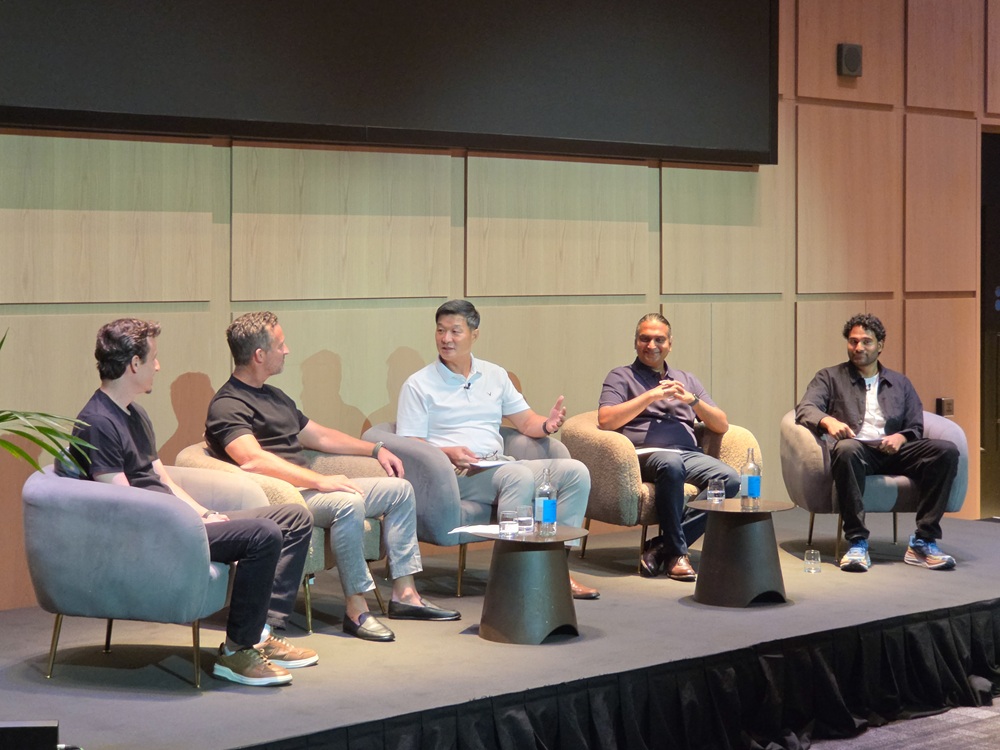
Samsung Electronics has outlined its vision for the next chapter of digital health at Galaxy Unpacked July 2026 in London, highlighting a future where healthcare moves beyond reactive treatment towards more preventive, personalised and connected experiences. The vision brings together trusted health technologies, artificial intelligence (AI) and partnerships across the healthcare ecosystem to help bridge the gap between health insights and meaningful everyday action.
As part of the event, Samsung hosted a Health Forum panel titled “Rewriting the Rules of Preventive Health”, moderated by Dr. Hon Pak, Senior Vice President and Head of the Digital Health Team, Mobile eXperience (MX) Business at Samsung Electronics. The session brought together experts from nutrition, fitness, clinical research and AI to discuss how technology can help people turn health information into practical lifestyle changes.
Opening the discussion, Dr. Pak highlighted what he described as two “missing miles” in modern healthcare. The first involves detection and monitoring, where health-related changes often take place outside clinical settings and continuous data has traditionally remained disconnected from healthcare professionals. The second is the gap between receiving medical advice and taking action, as individuals must continue making health-related decisions every day despite busy lifestyles and the challenges of changing established habits.
Samsung’s Connected Care approach seeks to address both gaps by connecting people’s daily health experiences across wearables, smartphones and a broader connected ecosystem. Rather than looking only at individual biometric readings, the approach aims to provide greater context around those signals and identify opportunities to offer relevant support at the moments when personal health decisions are made. Samsung emphasised that achieving this vision requires collaboration across the healthcare ecosystem, with AI serving as an enabler across everyday behaviour, clinical credibility, privacy and advanced health research.
On everyday health behaviour, Kartik Poria, Head of Product at Samsung Food, highlighted nutrition as an important area where the gap between knowing what is healthy and actually making healthier choices can emerge. Samsung Health and Samsung Food are being brought together to connect health indicators, meal information, recipe planning and food preferences. The integrated experience is designed to support healthier eating habits by making practical choices easier to incorporate into everyday routines rather than relying solely on tracking or reminders.
Exercise was another key focus, with Kevin Duffy, CEO of iFIT, highlighting the role of physical activity in supporting both physical and mental wellbeing. Through Samsung Health, users can discover and subscribe to iFIT’s fitness programmes, while compatible iFIT workouts can integrate with Galaxy Watch to provide access to key activity metrics during guided sessions. The Fitness Index also provides users with a broader view of their physical fitness, supported by personalised recommendations. Looking ahead, Duffy highlighted the potential of Samsung’s Health Assistant to bring together fitness goals, activity history and Fitness Index data to help surface relevant workouts based on an individual’s needs.
The discussion also explored the importance of clinical evidence and privacy as digital health technologies become increasingly integrated into everyday life. Rohit Ail, Head of the Technology Incubation Lab at Samsung R&D Institute UK (SRUK), explained that Samsung is working to generate clinical evidence in real-world healthcare environments, with collaborations across Europe involving organisations including the NHS and leading hospitals. These efforts include research into cardiovascular disease risk and AI-supported decision-making, as well as digital phenotyping research focused on the long-term effects experienced by adolescent and young adult cancer survivors.
Privacy remains another important component of Samsung’s Connected Care vision. Ail said Samsung approaches user data as belonging to the individual, with Samsung acting as its custodian. The company’s approach includes Samsung Knox, GDPR-compliant infrastructure and alignment with the European Health Data Space framework. SRUK has also developed a Decentralized Clinical Trial framework designed to keep participant identities under the control of healthcare organisations while pseudonymising data from the outset.
AI is positioned as the connecting layer between everyday health experiences and clinical research. Otávio Penatti, Head of the Health AI R&D Team at Samsung R&D Institute Brazil (SRBR), explained Samsung’s research into health foundation models, which use self-supervised learning to identify meaningful patterns from unlabeled biosignal data. By combining expertise in biosignal intelligence, wearable AI and personalised health insights, Samsung is exploring how signals such as ECG, ACC and PPG can be interpreted collectively rather than as isolated measurements, potentially enabling more continuous and personalised health insights.
The Health Forum concluded with panel members sharing their visions for Connected Care over the next five years. The perspectives centred on making healthy eating easier, delivering adaptive fitness guidance, ensuring evidence-based and privacy-focused care, and using AI to better understand the body’s signals. Dr. Pak brought these themes together around three key areas — everyday behaviour, clinical trust and personal AI — with the shared goal of closing the first and last miles of healthcare and supporting a more preventive approach to health.
Samsung’s Connected Care vision ultimately reflects a broader shift towards health experiences that are increasingly connected, personalised and proactive, while emphasising the importance of evidence, privacy and collaboration in building greater trust around digital health technologies.