Tag: #HEALTH

  • Diabesity on the Rise: How Small Lifestyle Shifts Change Everything

    Diabesity on the Rise: How Small Lifestyle Shifts Change Everything

    Diabetes is rising rapidly across the Asia-Pacific region, and APAC is projected to become the largest contributor to the global economic burden of diabetes by 2030. In Malaysia, the 2023 National Health and Morbidity Survey (NHMS) reported that 15.6% of adults aged 18 and above are living with diabetes. What is more concerning is that two in five cases remain undiagnosed, while the prevalence of known diabetes has increased to 9.7%.

    The NHMS 2023 also revealed that 54.4% of Malaysian adults are overweight or obese, a worrying trend as obesity is one of the major but preventable risk factors for type 2 diabetes. Excessive weight gain significantly increases the risk of insulin resistance, a condition where the body no longer responds effectively to insulin, leading to rising blood sugar levels and eventually diabetes.

    Dr. Alex Teo, Director of Research Development and Scientific Affairs for Asia Pacific at Herbalife, explained that this risk is worsened by the fast-paced, stressful, and sedentary lifestyles that are becoming more common in urbanising societies. Long working hours and easy access to fast food often lead to unhealthy snacking and “stress-eating,” where sweet treats and comfort foods become quick solutions to cope with daily stress.

    He also highlighted the growing concern of childhood obesity, noting that one in three Malaysian children aged five to seventeen is now overweight or obese. Early childhood obesity increases the risk of lifelong health challenges, including type 2 diabetes and other chronic diseases.

    It is also important to understand that some individuals may appear slim but still carry excessive internal body fat, a condition known as TOFI (thin outside, fat inside). This is particularly common among Asians and those who consume low-protein diets and lead sedentary lifestyles. Type 2 diabetes often develops silently in its early stages, meaning individuals may have dangerously high blood sugar levels without experiencing any symptoms.

    Addressing “diabesity”—the combination of diabetes and obesity—begins by tackling root causes such as poor diet and inactivity. Small daily changes leading to modest weight loss can significantly improve insulin sensitivity and reduce the risk of developing diabetes.

    Nutrition plays a critical role in preventing and managing type 2 diabetes. High-glycaemic foods such as white bread and sugary snacks cause rapid spikes in blood sugar, which over time can contribute to insulin resistance. Reducing sugary drinks like bubble tea helps lower excess sugar intake. Tapioca pearls, for example, add extra calories and raise the glycaemic index of the drink, contributing to weight gain and poor diabetes control.

    In contrast, whole grains, fruits, and vegetables—especially those rich in fibre—help stabilise blood sugar by slowing sugar absorption, increasing fullness, and supporting digestion. By focusing on nutritious, minimally processed foods, individuals can better manage blood sugar levels and support overall metabolic health.

    Targeted supplementation may also help. Protein increases satiety, supports metabolism, and burns more calories during digestion. Omega-3 fatty acids found in fish such as salmon help reduce inflammation and improve insulin sensitivity. Magnesium supports glucose metabolism, insulin function, blood pressure regulation, and muscle health—making it easier to stay active and manage weight.

    Lifestyle choices play an equally important role. Regular physical activity—at least 150 minutes of moderate exercise per week—helps regulate weight gain and improve insulin sensitivity. For those who struggle to find time, simple activities such as short walks before and after meals or quick desk stretches can still stabilise blood sugar and improve well-being.

    Poor sleep and chronic stress disrupt metabolic functions and increase the risk of diabetes. Prioritising rest and practicing stress-reduction techniques such as deep breathing and meditation are essential in regulating stress hormones and supporting healthier metabolic outcomes.

    Managing one’s health may feel daunting in the midst of a busy modern routine. However, small, consistent adjustments paired with preventive care and early detection can lead to significantly better long-term outcomes in diabetes prevention and overall health.

  • Jangan Abaikan Simptom Biasa – Ia Mungkin Petanda Kanser Perut dan Esofagus

    Jangan Abaikan Simptom Biasa – Ia Mungkin Petanda Kanser Perut dan Esofagus

    Ramai orang sering mengambil ringan rasa sakit perut, pedih ulu hati, atau rasa senak, menganggapnya sekadar masalah pencernaan biasa. Namun, menurut pakar, simptom-simptom ini mungkin petanda awal kanser perut atau esofagus. Kanser ini bukan sahaja berbahaya tetapi juga sering dikesan pada peringkat akhir kerana gejalanya yang tidak spesifik. Dr Hafizah Zaharah Ahmad dari Pusat Perubatan Sunway Velocity (SMCV) menekankan pentingnya pengesanan awal, kerana kadar kelangsungan hidup lima tahun bagi kanser perut peringkat awal boleh mencapai 75%, tetapi merosot kepada hanya 7% jika sudah di peringkat empat.

    Kanser perut dan esofagus terjadi apabila sel-sel abnormal membiak tanpa kawalan dalam saluran penghadaman. Refluks asid kronik dan esofagus Barrett adalah antara penyebab utama kanser esofagus. Malangnya, simptom seperti kesukaran menelan, hilang selera makan, atau loya sering disalah anggap sebagai masalah kecil. Dr Hafizah menggesa orang ramai supaya tidak mengabaikan perubahan ini, terutama jika berlarutan lebih dari dua minggu.

    Faktor risiko utama termasuk merokok, pengambilan alkohol berlebihan, diet tinggi lemak, serta kerap makan makanan yang diawet atau dipanggang. Perokok tegar dan mereka yang sering minum minuman sangat panas turut terdedah kepada kanser esofagus. Selain itu, jangkitan bakteria Helicobacter pylori turut meningkatkan risiko kanser perut. Justeru, mengamalkan gaya hidup sihat seperti berhenti merokok dan makan makanan berserat tinggi sangat digalakkan.

    Salah satu penyakit yang berkait rapat dengan kanser esofagus ialah Penyakit Refluks Gastroesofagus (GERD), di mana asid perut kerap naik ke esofagus. Ini boleh menyebabkan esofagus Barrett, keadaan pra-kanser yang berbahaya. Dr Tan Yu Peng, pakar gastroenterologi di SMCV, menyarankan mereka yang mengalami pedih ulu hati berpanjangan agar menjalani pemeriksaan segera untuk mencegah komplikasi.

    Endoskopi seperti gastroskopi merupakan kaedah paling efektif untuk mengesan kanser ini pada peringkat awal. Prosedur ini membolehkan doktor melihat bahagian dalam perut dan esofagus dengan jelas. Di negara seperti Jepun dan Korea Selatan, pemeriksaan rutin ini disarankan seawal usia 40 tahun. Malaysia kini mula menggalakkan individu berisiko tinggi untuk membuat saringan sekurang-kurangnya setiap tiga tahun.

    Rawatan bagi kanser perut dan esofagus bergantung pada tahap penyakit. Ia boleh melibatkan pembedahan, kemoterapi, dan terapi radiasi. Imunoterapi semakin digunakan untuk kanser esofagus tahap lanjut, manakala terapi sasaran seperti anti-HER2 digunakan bagi kes kanser perut dengan mutasi genetik tertentu. Rawatan yang sesuai hanya dapat ditentukan selepas pemeriksaan mendalam oleh pakar.

    Kisah penjaga pesakit kanser perut memberikan perspektif penting mengenai cabaran yang dihadapi keluarga pesakit. Beliau berkongsi bagaimana perubahan diet seperti pengambilan bubur dan cecair membantu pesakit mendapatkan nutrisi yang mencukupi. Selain fizikal, sokongan emosi dari keluarga dan rakan-rakan amat penting untuk membantu pesakit menghadapi rawatan.

    Penting untuk diingat bahawa diagnosis kanser bukanlah pengakhiran hidup. Banyak pesakit yang mendapat rawatan awal mampu menikmati kualiti hidup yang baik. Dengan pengesanan awal dan rawatan yang sesuai, pesakit boleh meneruskan aktiviti harian mereka seperti biasa.

    Langkah terbaik adalah bersikap proaktif. Jangan tunggu simptom menjadi teruk baru bertindak. Pemeriksaan rutin, perubahan gaya hidup, dan kesedaran mengenai faktor risiko adalah kunci untuk melindungi diri daripada kanser ini.

    Akhir sekali, sayangi diri anda dan keluarga. Ambil langkah bijak dengan mendapatkan pemeriksaan kesihatan secara berkala. Kesihatan adalah anugerah yang tidak ternilai, jadi jangan tunggu sehingga terlambat untuk bertindak.

  • INCLUSIVITY REVOLUTION: CELEBRATING DIVERSITY AND EMPOWERING CURVY VOICES

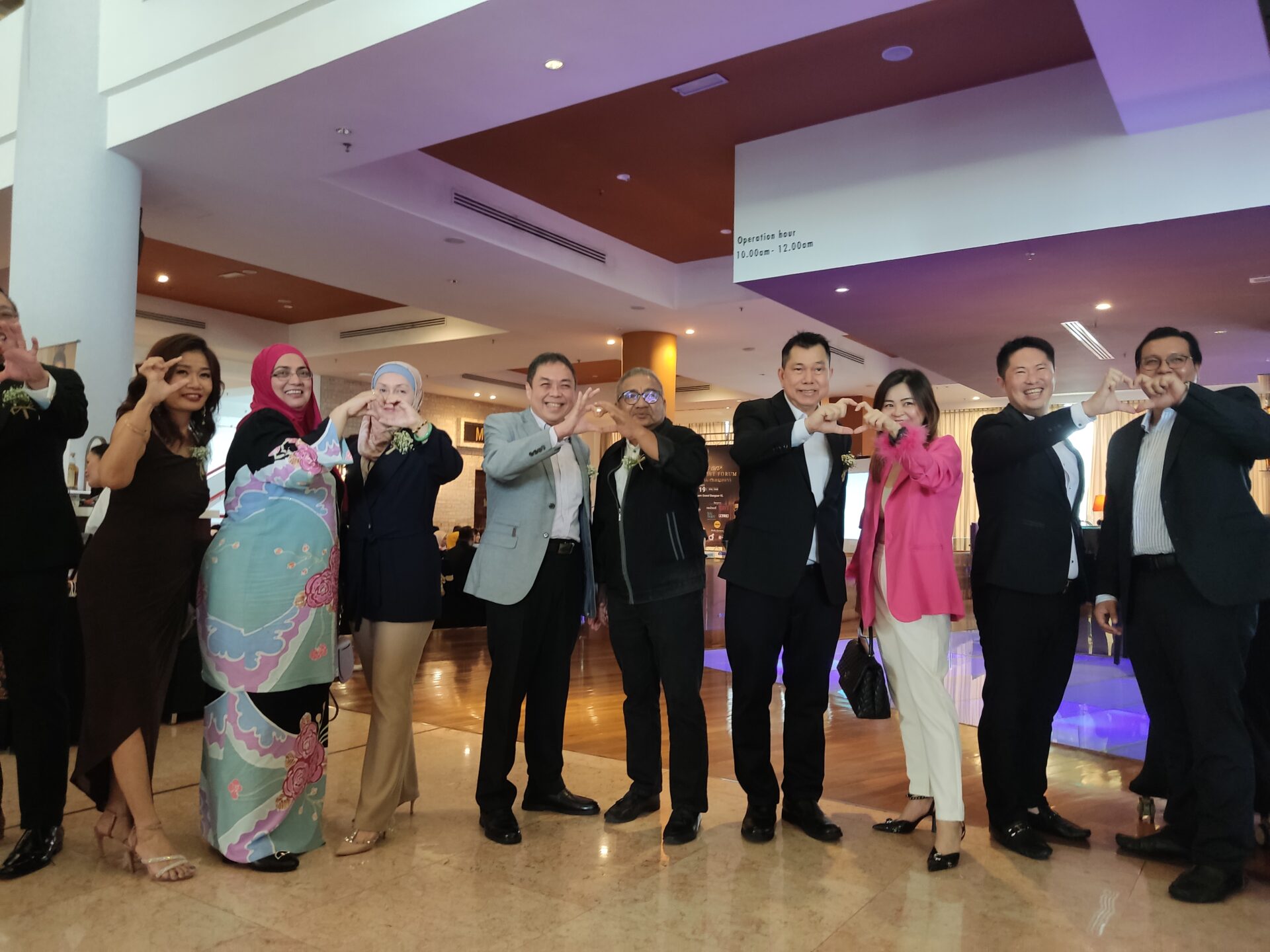
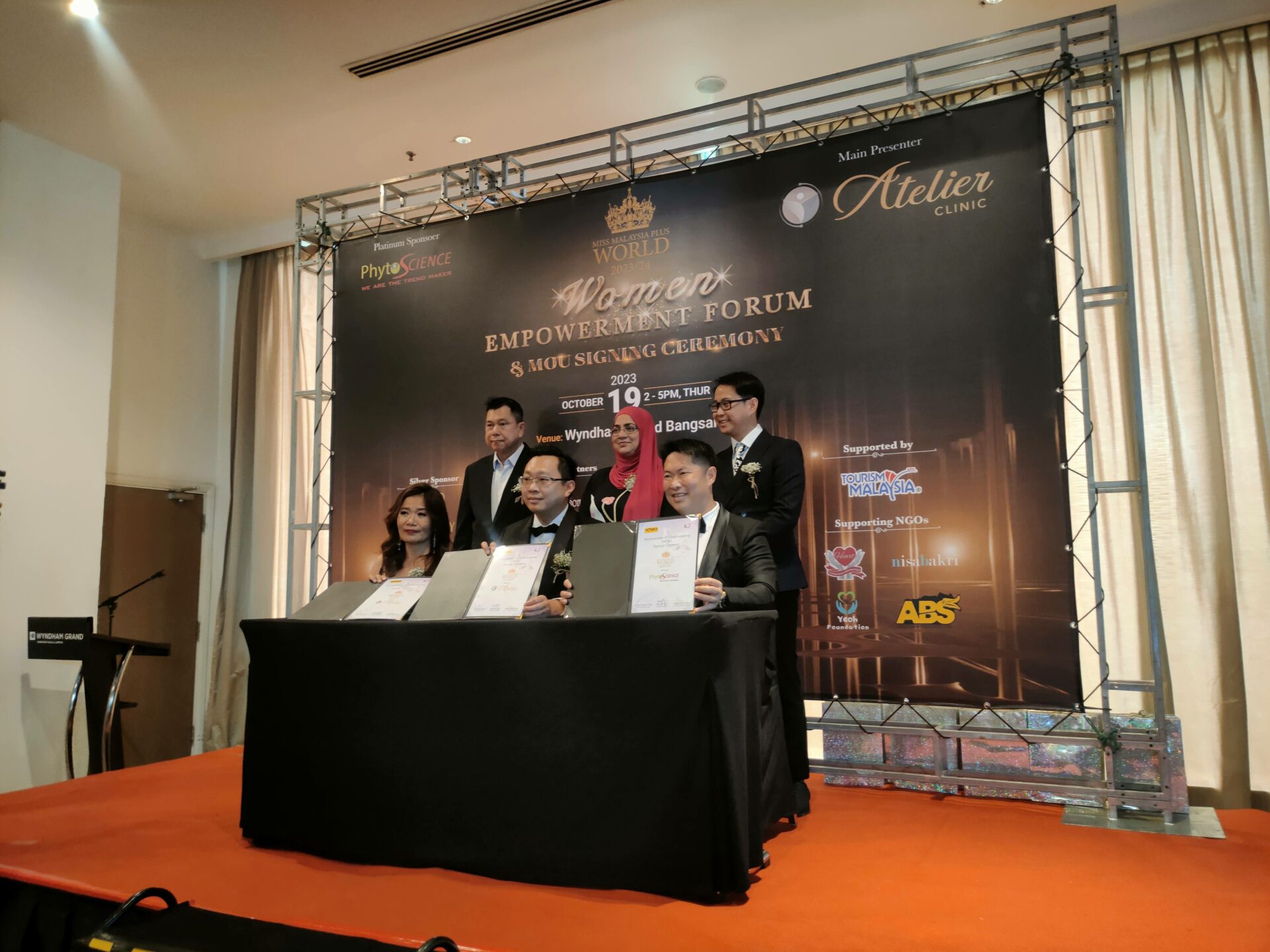
    In a steadfast commitment to champion diversity, equity, and inclusion (DEI), plus-sized individuals are taking center stage, reshaping societal perceptions. The Women’s Empowerment Gala, a pivotal component of Miss Plus World Malaysia 2023/24, celebrates the invaluable contributions, talents, and unique perspectives of curvy women while striving to foster a more inclusive and just world.

    The Women’s Empowerment Gala, with a particular focus on Body Positivity, aims to provide a platform for meaningful conversations, knowledge sharing, and empowerment. Its goal is to raise awareness and educate on the importance of embracing diversity and inclusion. Participants will partake in enlightening discussions, hands-on workshops, and informative presentations, all underscoring the significance of embracing diversity in its many forms.

    This event is designed to instil self-assurance and create an atmosphere of empowerment for individuals from all walks of life. It’s an opportunity to revel in diversity, break down barriers, and make significant strides toward a more equitable and inclusive world.


    A Paradigm Shift in the Making:

    For too long, conventional beauty standards have cast a narrow and exclusionary shadow over the lives of plus-sized women. But times are changing, and this movement seeks to challenge and redefine these standards to pave the way for a brighter, more accepting future.

    Key Elements of the Forum

    • Promoting Self-Acceptance : At the heart of Forum is the promotion of self-acceptance and body positivity among plus-sized women. It encourages individuals to embrace and love their bodies, regardless of societal pressures
    • Amplifying Voices : The importance of giving voice to plus-sized women is emphasized and a platform for them to share their stories, experiences, and perspectives to create a sense of belonging and empowerment is provided.
    • Challenging Stereotypes : It challenges and deconstructs harmful stereotypes and prejudices, fostering understanding and empathy.


    The Way Forward

    The Forum’s goal is to create a vision for a world where all women, including plus-sized women, are not judged by their appearance but rather celebrated for their unique qualities, abilities, and diverse perspectives. It aims to shift the narrative from exclusion to inclusion and from discrimination to empowerment.

    The journey ahead may be challenging, but it is a journey worth undertaking. The collective commitment to diversity, equity, and inclusion, along with the empowerment of plus-sized women, will enrich society and lead to positive, lasting change.


    Partners in Wellness

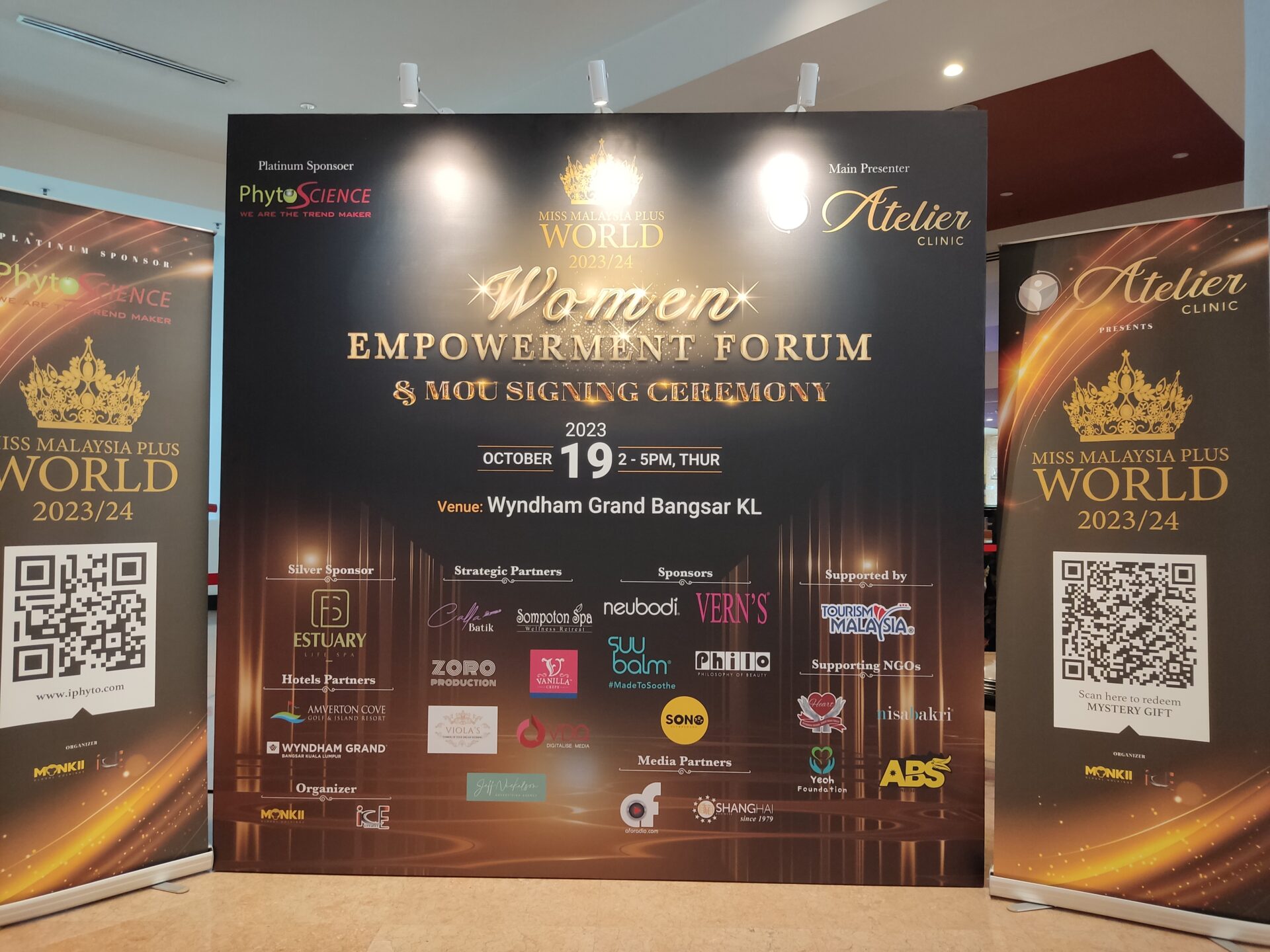
    the Women Empowerment Forum and the Miss Plus World Malaysia are supported by The Atelier Clinic and Phytoscience. Atelier Clinic, as a Main Presenter, specialises in advancing beauty, health and well-being through the power of cell-based therapies. Through thorough assessments and consultations, Atelier developed tailored treatment plans that address specific concerns, whether it’s improving join function, enhancing aesthetic appearance, optimising overall health, or combating the effects of aging.

    Phytoscience, the Miss Plus World Malaysia 2023/24 Platinum Sponsor, is a global health & wellness company that stands at the forefront of product innovation and is committed to helping people take control of their health, both physically and financially. Phytoscience produces cutting edge, award-winning, scientifically proven & clinically researched wellness formulas and rewards all its distributors with one of the most lucrative and balanced financial reward plans in the industry.


    Women Empowerment Forum

    The Women Empowerment Forum will be happening on the 19th of October 2023 at 2pm to 5pm at the Whydham Grand Bangsar KL.

    For more information, please contact Megan Tan at 019 241 8298.

  • Reliability and Resilience: Ministry of Health and SDCL Focus on Energy for Critical Care Services

    SDCL, the world’s leading specialist investor in energy efficiency, has partnered with Malaysia’s Ministry of Health, MGTC, and MyHijau companies during the groundbreaking Malaysia First Energy Efficiency Forum. This collaboration aims to initiate projects that bring about noteworthy reductions in carbon emissions and considerable cost savings.

    Hospitals are one the largest and most consistent energy users with the crucial role they play. SDCL brings deep sector experience in demonstrating how energy efficiency can deliver cheaper, cleaner and more reliable infrastructure solutions to a key infrastructure sector. Malaysia hospitals need reliable and cost-effective energy services throughout the year, ranging from electricity and heat, to hot water and cooling. Hospitals also demand reliable and resilient energy solutions and backup systems. Energy demand reduction initiatives involving lighting and temperature control may also improve patient care.

    Through the IGEM engagement, MoH, MGTC and SDCL are setting a pathway to accelerate identifying fit-for-purpose solutions in Malaysia that require no up-front capital outlay for the user and result in lower operating costs. Through focusing on energy efficiency, hospitals can deliver cleaner, more resilient energy solutions that reduce maintenance costs and increase productivity.

    SDCL CEO Jonathan Maxwell states “Our investments in energy efficiency demonstrate that energy efficiency is not only one of the largest but the most cost-effective means to reduce greenhouse gas emissions as it improves resilience and energy security while also reducing costs and improving productivity. It is infact a major source of green growth”.

  • AT HOSPITAL MANAGEMENT ASIA, SIEMENS HEALTHINEERS URGES INCREASED COOPERATION TO PROGRESS THE CANCER FIGHT.

    In conjunction with the Hospital Management Asia Conference 2023, leading medtech innovator Siemens Healthineers today hosted a panel discussion in which local healthcare experts and leaders expressed optimism that cancer could be considered a manageable, chronic disease with much higher survival rates in 25 years.

    While cancer cases in Malaysia are projected to double by 2040, cancer care has advanced in recent years, with technological innovations in diagnostic imaging that enable earlier detection, precise diagnosis, customized radiation therapy, targeted chemotherapies rooted in knowledge about the human genome, groundbreaking immunotherapies, and the development of comprehensive cancer care programs.

    Creating a world without fear of cancer will require important changes in the way healthcare is organized and oncology is practiced. There is a need for healthcare providers to go “broad” around population health and patient management and to go “deep” with hyper-specialization and cutting-edge technologies that increase complexity exponentially. Navigating these changes will only be possible through multi-disciplinary cooperation, strategic partnerships, and the collaborative use of integrated, connected care pathways that span the entire cancer detection and treatment journey.


    Moving from fragmented care to integrated care

    Fabrice Leguet, Managing Director of Siemens Healthcare Southeast Asia, believes the next step in comprehensive cancer care will be summoning the will and collective effort to move beyond today’s fragmented cancer care landscape towards a more integrated approach.

    “Advancements in healthcare have allowed us to take big strides and redefine what is possible when it comes to diagnosing and treating a disease as complicated as cancer. However, we recognize that alleviating the fears of cancer patients requires a collective effort from everyone in the system. Our goal is to make detection, diagnosis, and treatment more accessible, effective, and personalized to the needs of patients in Southeast Asia,” he shared.

    Titled ‘Creating a World Without Fear of Cancer: A Critical Dialogue’, the panel featured experts from various health industry sectors. Fabrice was joined by Dr. Kelvin Yii, Special Advisor to the Health Minister; Serena Yong, CEO of Regency Specialist Hospital; Prof. Ricky Sharma, Global Head of Clinical Affairs at Varian; and patient advocate Ranjit Kaur, former President and current board member of Reach to Recovery International (RRI).


    Policy and Collaboration: Charting a Unified Course

    Addressing the diverse range of challenges, including the rising cost of high-tech care modalities, international staff shortages, and limited funding for healthcare services, Serena Yong, CEO of Regency Specialist Hospital, highlighted the importance of industry partnerships in facilitating knowledge sharing and potential breakthroughs in oncology. “By integrating insights from different fields, we can achieve more diverse and effective outcomes.”

    These sentiments were echoed by Dr. Kelvin Yii, special advisor to the Health Minister. “The National Strategic Plan for Cancer Control aims to make cancer prevention, management, and control accessible and affordable through partnerships with stakeholders. The goal is to reduce the cancer burden, promote understanding of cancer, encourage prevention, and encourage early diagnosis to alleviate patient fears.”


    Technology & Innovation: The New Frontier

    The global healthcare sector has seen a paradigm shift with the advent of AI, data analytics, and breakthrough technologies. Early detection, once a challenge, now gets a boost with intelligent cancer care systems.

    Serena shared, “Our current technological trajectory is encouraging. We are on the cusp of an era where technology doesn’t just detect but predicts.”

    “The strategic partnership between Regency Specialist Hospital and Siemens reaffirms our commitment to elevating patient care. With patient well-being at the heart of our mission, this partnership expedites the integration of connected health solutions, ensuring swifter

    access to care. Moreover, it facilitates the expansion of teleconsultation services and the implementation of predictive analytics on a broader scale, ultimately contributing significantly to our patients’ journey toward improved health outcomes.”

    Reinforcing Siemens Healthineers’ commitment, Fabrice said, “By partnering with healthcare providers, we accelerate the transfer of knowledge in oncology across clinical, technical, and managerial fields and fast-track the adoption of integrated innovative technologies across the continuum of cancer care. While we leverage our access to global best practices and the latest technological innovations, we take a “fit for purpose” approach where solutions are adapted to the local context in close collaboration with our partners in the region. This is how we are able to set up Oncology Centers of Excellence with innovative care delivery models that enable our partners to leverage their healthcare network and bring these capabilities closer to their patients. At Siemens Healthineers, our aim is to democratize access to these groundbreaking innovations and clinical knowledge with a clear goal of making advanced cancer care accessible to all.”


    Patient Advocacy: The Cornerstone of Comprehensive Care

    Ranjit Kaur emphasized the emotional facet of cancer: “The journey can be solitary. It underscores the imperative for community support and a holistic approach that intertwines medical treatment with emotional well-being. In a world where technology drives improvement in various aspects of our lives, we must also prioritize empathy, timely care access, and comprehensive support systems for patients, not only in Malaysia but worldwide. Each patient journey is often daunting and worrisome, but by paying greater attention to these details, we can help individuals look beyond their diagnosis and find confidence in their ability to overcome cancer.”

    Prof. Ricky Sharma, Global Head of Clinical Affairs at Varian, shares, “Cancer is a disease that can evolve and mutate to evade treatments. The importance of patient data cannot be understated, as well as patient experiences of treatment from country to country. We need all of this information to deliver a personalized patient experience, and it has to be from a holistic point of view. We need to be asking important questions from the patients‘ perspective: Is treatment accessible? Are patients being treated with the respect they deserve? How and where are clinical decisions being made and the treatments being administered? We need to aim for a frictionless, patient-centric experience so we can, as communities, move further towards our vision of a world without fear of cancer.”


    Towards a Cancer-Free World

    With a coordinated effort between technology, policy, and caregiving, the dream of a cancer-free 2047 doesn’t seem distant. The collective voice of the panel resonated with optimism and determination.

    Fabrice encapsulated the spirit, saying, “Every strategic partnership, every technological innovation, and every collaboration with policymakers will bring us one step closer to creating a world without fear of cancer.”