Tag: #FutureReadyWorkforce

  • AICB Unveils FSF Xcel: Revolutionising Skills Assessment in Malaysia’s Financial Sector

    AICB Unveils FSF Xcel: Revolutionising Skills Assessment in Malaysia’s Financial Sector

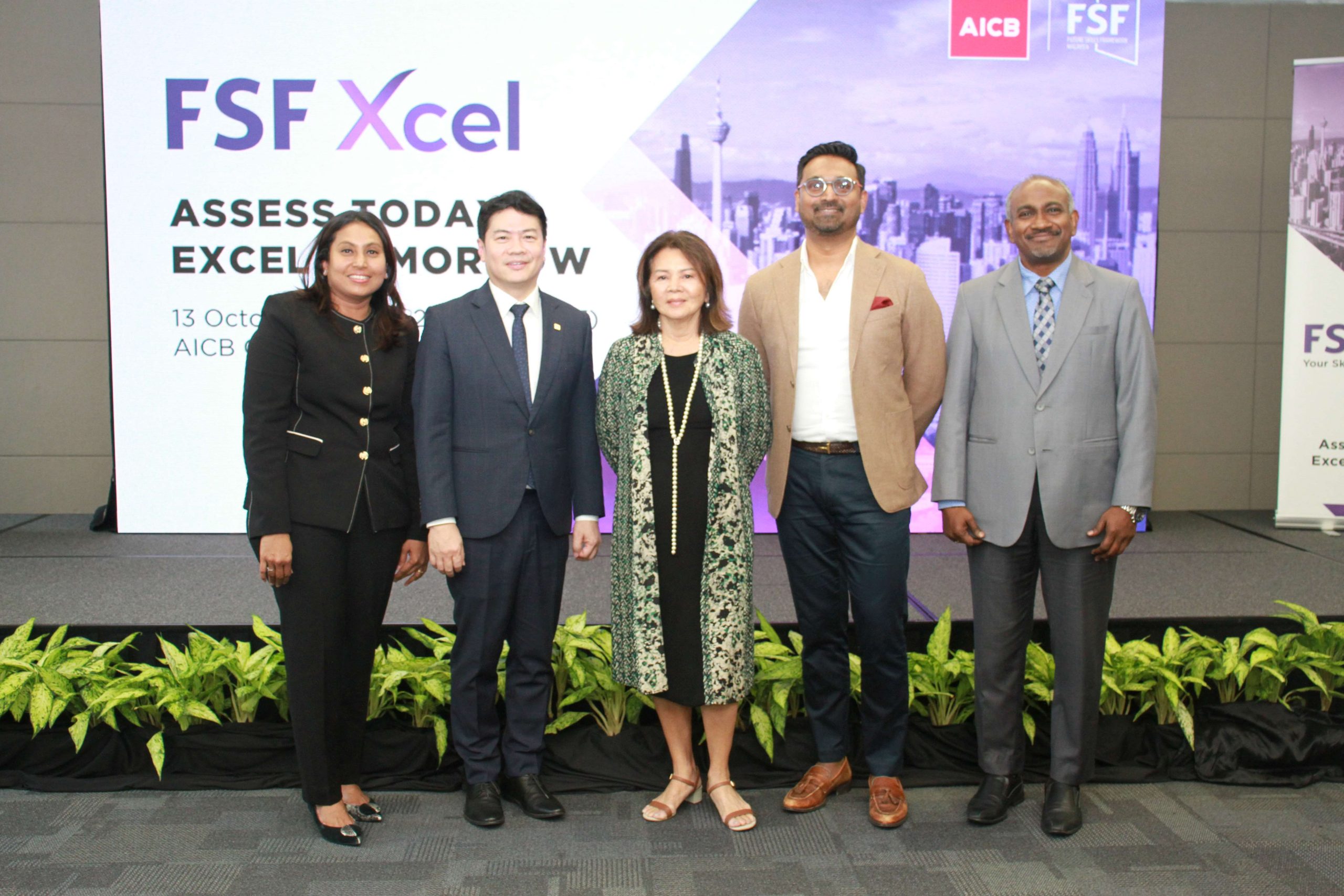
    The Asian Institute of Chartered Bankers (AICB) has introduced FSF Xcel, Malaysia’s first industry-wide digital skills assessment platform for the financial sector. The platform aims to benchmark workforce capabilities and accelerate upskilling across the industry, supporting Malaysia’s shift towards a more adaptive, sustainable, and future-ready financial ecosystem.

    FSF Xcel builds on the Future Skills Framework introduced in 2024 by translating the framework into structured, industry-validated assessments. These assessments allow financial institutions to identify skill gaps, map learning and career pathways, and strengthen talent strategies for the future. Covering 159 job roles and 157 critical skills, the platform evaluates both technical expertise and behavioural competencies. Developed in partnership with Accendo Technologies, a Malaysian AI-powered talent intelligence company, FSF Xcel combines global best practices with local insights to enhance Malaysia’s financial talent pipeline.

    The financial sector contributed an estimated 6.7 percent to Malaysia’s GDP in 2024 and employs nearly 167,000 professionals, making it a key driver of economic growth and stability. Aligned with Bank Negara Malaysia’s Financial Sector Blueprint 2022–2026, FSF Xcel supports the transition to a digitally fluent and innovation-driven workforce. The platform provides real-time analytics and a shared competency framework to guide workforce planning, benchmark capabilities, and advance professional development across the sector, reinforcing Malaysia’s ambition to build talent readiness for a digital economy.

    Edward Ling, Chief Executive of AICB, stated that FSF Xcel is more than a skills assessment platform, describing it as a catalyst for transformation. The platform equips employees and employers with data-driven insights to identify, measure, and strengthen capabilities, fostering a culture of continuous learning and professional excellence. YBhg. Datuk Dr Yvonne Chia, Chairperson of the MyMAHIR Future Skills Talent Council for the financial sector, highlighted the urgency of the initiative, noting that nearly 40 percent of today’s skill sets are expected to evolve or become obsolete by 2030. She emphasised that FSF Xcel enables financial institutions to respond with agility and reinforces Malaysia’s position as a regional hub for skilled and innovative financial professionals.

    Sharma Lachu, Founder and CEO of Accendo Technologies, expressed confidence that the partnership with AICB would drive the creation of an industry-wide Digital Talent Passport, allowing individuals and organisations to thrive amid continuous change. The initiative is informed by AICB’s 2025 Workforce Baseline Study, which gathered input from 99 financial institutions, achieving a 68 percent response rate. The study revealed strong demand for a standard digital assessment platform, with 96 percent of respondents interested in adopting such a tool to close skill gaps in line with the FSF. It also found that approximately 40,000 employees may see their roles evolve due to automation, highlighting the need for targeted upskilling and reskilling.

    The findings reflect global trends identified in the World Economic Forum’s Future of Jobs Report 2025, which predicts that 39 percent of current skill sets will become outdated by 2030 and points to skill gaps as a major barrier to business transformation in Malaysia. FSF Xcel is scheduled for progressive rollout across financial institutions starting in the fourth quarter of 2025, with AICB collaborating closely with Bank Negara Malaysia, Accendo Technologies, industry associations, and learning partners to ensure effective adoption and implementation.

  • Empowering Malaysia’s Workforce Through Innovative TVET Partnerships

    Empowering Malaysia’s Workforce Through Innovative TVET Partnerships

    As Malaysia strives to enhance its workforce capabilities and adapt to the digital age, the Ministry of Human Resources (MOHR) is spearheading a transformative initiative by partnering with leading technology provider Huawei Technologies (Malaysia) Sdn Bhd. This collaboration is set to revolutionize Technical and Vocational Education and Training (TVET) by integrating advanced technologies and fostering a skilled workforce ready for the challenges of tomorrow.

    The recent Memorandum of Understanding (MoU) signed between MOHR’s training arm, the Manpower Department (JTM), and Huawei Malaysia aims to create a high-tech ecosystem for TVET. This partnership will focus on introducing critical technological advancements, such as artificial intelligence (AI), 5G networks, cloud computing, and the Internet of Things (IoT), into Malaysia’s TVET institutions.

    As part of this initiative, the first TVET Huawei Learning Centre will be established at the Institut Latihan Perindustrian (ILP) Kuala Lumpur. This center is designed to deliver certified courses that empower students and industry professionals with practical knowledge in telecommunications technologies and hands-on experience with Huawei’s equipment.

    The program is set to train an initial batch of 2,000 participants, including industry engineers, new hires, and TVET educators. These trainees will benefit from a structured curriculum that combines theoretical instruction with practical training, ultimately earning valuable certifications that enhance their employability in the fast-paced ICT sector.

    Furthermore, this collaboration aims to establish additional TVET Huawei Learning Centres across other JTM Training Institutions, expanding the range of modules offered to include emerging technologies critical for the future workforce.

    Minister of Human Resources, YB Steven Sim Chee Keong, emphasized the government’s commitment to strengthening Malaysia’s skills training framework. The integration of Huawei’s global ICT expertise aligns with the National Technical and Vocational Education and Training (TVET) Policy 2030, which aims to prepare Malaysians with essential 21st-century skills in areas such as AI and digitalization.

    Huawei Malaysia’s CEO, Simon Sun, highlighted the importance of talent development as a cornerstone for future growth. The partnership not only aims to share technological expertise but also to cultivate a robust ecosystem for upskilling and reskilling, equipping students with skills in high demand as industries continue to evolve.

    In addition to training initiatives, Huawei Malaysia will also enhance the network infrastructure of selected JTM Training Institutions, starting with ILP Pasir Gudang. Planned upgrades include the creation of smart classrooms and campuses, incorporating high-speed 5G and Wi-Fi 7 technologies. This technological infusion will improve the learning environment, allowing for more interactive and flexible educational experiences.

    The establishment of data centres within these institutions will streamline training processes and optimize resources, fostering an environment conducive to smart education. These advancements will empower students with access to remote learning opportunities, hybrid teaching modes, and Huawei’s extensive online educational resources.

    This partnership represents a significant leap forward in Malaysia’s educational landscape, with the potential to reshape the skills training sector and enhance workforce readiness. The MoU was signed during the Malaysia-China Summit 2024, following discussions focused on advancing Malaysia’s digital transformation agenda.

    By integrating cutting-edge technology into TVET, Malaysia is poised to cultivate a new generation of skilled professionals equipped to navigate the complexities of the digital economy. This initiative not only addresses the immediate needs of the workforce but also lays the groundwork for sustainable economic growth and innovation in the years to come.