Tag: #FutureOfWork

  • PEOPLElogy Berhad and Pulsifi Collaborate to Accelerate AI-Driven Workforce Transformation

    PEOPLElogy Berhad and Pulsifi Collaborate to Accelerate AI-Driven Workforce Transformation

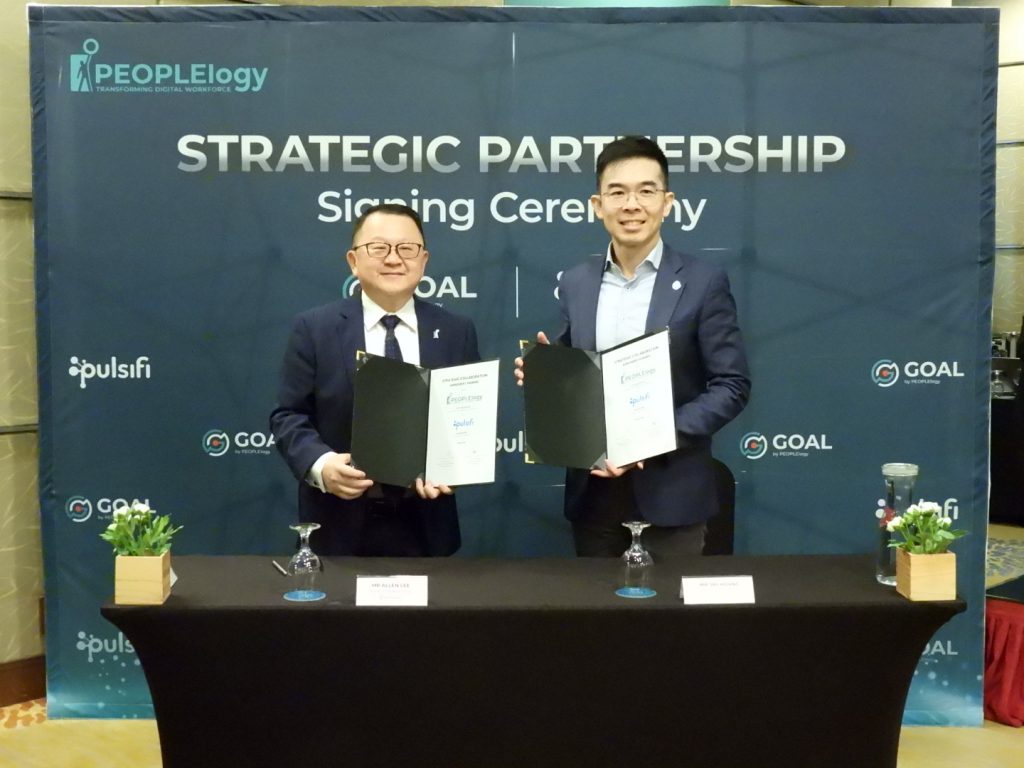
    PEOPLElogy Berhad (“PEOPLElogy” or “the Company”), Malaysia’s first public-listed Digital Workforce Transformation company, has formalised a strategic partnership with Pulsifi through a Memorandum of Understanding (MoU) aimed at accelerating AI-driven workforce transformation and advancing workforce intelligence in Malaysia.

    The collaboration will be integrated under GOAL by PEOPLElogy, positioning it as Malaysia’s first integrated AI-powered workforce intelligence ecosystem — a unified platform that seamlessly connects talent development, workforce analytics and organisational performance at scale.

    By combining PEOPLElogy’s end-to-end 6D framework with Pulsifi’s proprietary AI-powered talent intelligence platform, the partnership introduces a comprehensive and intelligence-driven solution that enables organisations to make more precise, data-backed decisions across the entire talent lifecycle, from talent acquisition and development to retention and succession planning for future workforce readiness.

    Through this collaboration, both parties aim to empower organisations with real-time workforce intelligence to better navigate and lead in the AI era, while delivering predictive talent insights that support a seamless talent journey. The initiative also seeks to strengthen workforce readiness in alignment with national digitalisation priorities and help organisations build agile, high-performing and future-ready teams.

    As industries continue to face rapid disruption driven by AI, the partnership addresses a growing need for integrated and intelligence-led workforce solutions. GOAL by PEOPLElogy is expected to serve as a central platform for organisations seeking to move beyond fragmented talent development approaches towards a more cohesive and insight-driven workforce strategy.

    Under the collaboration, PEOPLElogy and Pulsifi will jointly integrate AI-powered proprietary talent intelligence solutions, including advanced assessments for organisational and role fit, talent mapping, work values analysis, cognitive reasoning, High Potential Plus and Future Ready Skills frameworks, which will be managed by PEOPLElogy. The collaboration is designed to help organisations identify high-potential talent, strengthen workforce alignment and improve workforce transformation outcomes in an increasingly digital and AI-driven business environment.

    The partnership is also structured around a protected partner ecosystem model, enabling both organisations to deliver a unified and premium workforce transformation experience to clients while supporting sustainable long-term growth and seamless integration of advanced talent technologies without competing interests.

    Founder and Managing Director of PEOPLElogy Berhad, Mr. Allen Lee, said the collaboration represents more than just a technology partnership, but reflects a shared vision of empowering organisations with smarter, AI-driven workforce intelligence solutions that enable better talent decisions, stronger workforce readiness and sustainable organisational growth.

    He added that as industries evolve rapidly in the AI era, businesses must move beyond traditional training models and embrace data-driven talent transformation. According to him, the future workforce will require not only digital skills, but also deeper workforce intelligence capabilities to identify, develop and retain high-potential talent. By integrating Pulsifi’s AI-powered analytics with PEOPLElogy’s ecosystem and proprietary 6-Dimensions Transformation Model, the collaboration aims to help organisations build resilient and future-ready workforces capable of thriving in a rapidly changing economy.

    CEO and Co-Founder of Pulsifi, Mr. Jay Huang, said the company is excited to collaborate with PEOPLElogy in redefining how organisations approach talent development and workforce transformation. He noted that by combining AI-powered insights with PEOPLElogy’s strong industry reach and workforce development expertise, the partnership has the potential to create meaningful impact in helping organisations unlock human potential and prepare for the future of work in Malaysia and beyond.

    During the signing ceremony, attendees were introduced to live demonstrations of Pulsifi’s AI-powered talent intelligence platform, alongside discussions on workforce transformation, AI adoption and the future of talent development in Malaysia. The event also featured a fireside discussion involving leadership representatives from both organisations on navigating workforce challenges in the AI era.

    Looking ahead, PEOPLElogy expects demand for AI-driven workforce transformation and talent intelligence solutions to continue growing as organisations accelerate digital adoption and prioritise workforce readiness. Leveraging its integrated people development ecosystem, the company remains committed to supporting Malaysia’s talent transformation agenda while helping organisations build sustainable and future-ready workforce capabilities.

  • Smarter Hybrid Work: Jabra Launches Evolve3 Series and PanaCast Room Kit

    Smarter Hybrid Work: Jabra Launches Evolve3 Series and PanaCast Room Kit

    As the world continues to navigate ongoing economic pressures, including concerns around oil supply and rising fuel costs, many governments are encouraging businesses to adopt hybrid work arrangements as a way to support operational efficiency and reduce commuting demand. In Malaysia, the Government has introduced such measures for civil servants, including ministries, government agencies, and government-linked companies.

    This shift towards more flexible work models is further supported by a global Zoom survey, which found that 75% of employees believe their current remote or hybrid work tools require improvement, while 72% are calling for increased investment in new workplace technologies.

    In response to these evolving demands, Jabra, a global leader in professional audio and video solutions, continues to enhance its hybrid work portfolio. Designed to support everything from individual focus work to full-room collaboration, its latest innovations prioritise clear communication, mobility, and scalable deployment across organisations.

    Today, Jabra introduces two key additions to its hybrid work ecosystem: the Jabra Evolve3 headset series and the Jabra PanaCast Room Kit.

    The Jabra Evolve3 series represents a new generation of professional headsets designed to address ongoing challenges in virtual communication. According to Jabra’s Certification Study (2023), 83% of knowledge workers report that poor audio quality negatively affects online meetings, with call clarity identified as the most common issue in headset usage. Despite this, 46% of professionals still rely on consumer-grade headsets, which may not meet the requirements of professional-grade communication in terms of clarity, comfort, and compatibility.

    The Jabra Evolve3 series is purpose-built for hybrid professionals who move between office, home, and mobile environments. It is available in both over-the-ear (Evolve3 85) and on-the-ear (Evolve3 75) variants, featuring a discreet boomless design powered by next-generation audio intelligence.

    At the core of the series is Jabra ClearVoice technology, supported by deep neural network (DNN) models trained on more than 60 million real-world sentences. This allows the system to isolate the user’s voice from background noise without the need for a visible boom microphone. Adaptive Active Noise Cancellation (ANC) further enhances performance by adjusting dynamically to the user’s environment and headset fit, ensuring clearer audio during calls and media use.

    As workplace communication becomes increasingly mobile, voice interaction is also gaining importance. Research indicates that voice input can be up to three times faster than typing, making accurate speech capture essential for professionals working in dynamic or screen-free environments. The Evolve3 series is designed with this in mind, offering extended battery life and fast-charging capabilities to support full-day usage.

    Shared key features across both Jabra Evolve3 85 and Evolve3 75 include a boomless AI-enhanced multi-microphone system powered by Jabra ClearVoice, Adaptive ANC during calls, Spatial Sound for a more natural audio experience, up to 37 hours of battery life with 10-minute fast charging providing up to 10 hours of use, secure Bluetooth Low Energy connectivity with Google Fast Pair and no dongle requirement, UC certification for leading virtual meeting platforms, and configuration and updates via the Jabra Plus mobile app.

    The Evolve3 85 (over-ear) model is designed for maximum immersion and noise isolation, making it suitable for professionals working in louder environments. It offers up to 25 hours of call time or up to 120 hours of media playback (with ANC and busylight off), along with 10-minute fast charging for up to 10 hours of use. It also features a foldable design and compact carrying case for portability.

    The Evolve3 75 (on-ear) model provides a lighter and more breathable fit, ideal for hybrid workers who require greater situational awareness. It delivers up to 22 hours of talk time or up to 110 hours of media playback (with ANC and busylight off), along with the same 10-minute fast-charge capability for extended daily use. Its more compact form factor makes it suitable for frequent travel and mobility.

    Complementing its personal audio solutions, the Jabra PanaCast Room Kit extends intelligent collaboration into meeting rooms of all sizes. Designed for plug-and-play deployment and scalable configurations, the system delivers consistent video and audio performance for medium to large meeting spaces.

    The kit is available in configurations supporting one, three, or five cameras, allowing organisations to match coverage to room size and layout while maintaining a consistent user experience across locations. Built on Jabra’s panoramic video technology and multi-camera intelligence, the system automatically frames speakers and captures the entire room. Integrated audio ensures remote participants can clearly hear discussions from any position, supporting a more inclusive meeting experience.

    The Jabra PanaCast Room Kit includes the Jabra PanaCast 50 VBS, a video bar that supports extension audio and multi-camera setups, delivering 180-degree panoramic video with intelligent framing and edge AI features. It also includes the Jabra PanaCast SpeakerMic, an extension microphone that captures voices evenly across the room while providing intuitive meeting controls. In addition, the system features an expandable multi-camera setup powered by Huddly Crew technology, enabling intelligent speaker tracking and dynamic framing based on active speakers.

    Across Asia Pacific, organisations are increasingly investing in workplace technologies that balance flexibility with performance. According to the Jabra Knowledge Worker Study conducted with the London School of Economics, 60% of professionals expect voice to become the primary interface for workplace technology within the next three years. By integrating intelligent personal audio with scalable room-based video systems, Jabra aims to deliver a unified ecosystem designed for the evolving needs of hybrid teams.

    “From individual workspaces to full meeting rooms, organisations across APAC need collaboration technology that is reliable, adaptable, and built to scale,” said Melvin Phun, Country Manager at Jabra Malaysia. “With Jabra Evolve3 and the Jabra PanaCast Room Kit, we continue to strengthen our leadership in professional audio and video solutions for the next generation of work.”

    Jabra Evolve3 85, priced at MYR 3,000, is now available via Jabra’s official Shopee and Lazada stores. Jabra Evolve3 75, priced at MYR 2,300, is also available through the same channels. The Jabra PanaCast Room Kit, priced from MYR 35,000 to MYR 75,000, is expected to be available in Malaysia in Q2 2026.

  • PICO Introduces PICO OS 6 and Teases Upcoming Flagship “Project Swan”

    PICO Introduces PICO OS 6 and Teases Upcoming Flagship “Project Swan”

    Kuala Lumpur, March 2, 2026 – PICO has taken a significant step forward in redefining spatial computing with the official unveiling of PICO OS 6, alongside an early preview of its upcoming flagship XR hardware, Project Swan. More than just a routine upgrade, PICO OS 6 represents a complete reimagining of the spatial operating system—rebuilt from the ground up to address long-standing limitations in extended reality environments. At the heart of this transformation lies the PICO Spatial Engine, a unified rendering architecture that fundamentally changes how digital content is processed and displayed. By shifting rendering responsibilities from individual applications to the operating system level, PICO OS 6 enables 2D apps, 3D experiences, virtual environments, and the physical world to coexist seamlessly in a single, cohesive interface. This results in a fluid, responsive, and immersive user experience where digital and physical elements blend naturally without disruption.

    Building on this foundation, PICO OS 6 introduces a new era of spatial multitasking that redefines productivity within XR environments. Users can now interact with multiple layers of content simultaneously—collaborating with colleagues on complex 3D models represented by avatars, while maintaining access to browsers, documents, and notes that float intuitively within their real-world surroundings. This flexibility is supported by an adaptive input system that removes the need for rigid modes, allowing users to seamlessly switch between gesture controls, XR controllers, and traditional keyboard-and-mouse setups depending on their workflow. For enterprise users—particularly the more than 2,600 institutions already leveraging PICO solutions—this creates a stable, high-performance digital workspace tailored for professional collaboration and efficiency.

    Equally important is PICO’s commitment to openness, a principle that underpins the entire OS. PICO OS 6 supports a diverse ecosystem that includes Spatial apps, OpenXR, WebXR, Android apps, web applications, and PC VR streaming, treating each as an integral part of a unified system rather than isolated silos. This inclusive approach lowers barriers to entry for developers and ensures a more versatile experience for users. To further empower the developer community, PICO has introduced a comprehensive suite of tools, including the PICO Spatial SDK built on Kotlin, a new UI system with component-based APIs, and the PICO Emulator that enables rapid testing without the need for physical hardware. The open-source WebSpatial framework extends this vision even further by bringing familiar web technologies such as HTML, CSS, and React into the spatial computing space, enabling cross-platform, install-free applications that run seamlessly across multiple XR ecosystems.

    With deeper integration support for leading platforms such as Unity and Unreal Engine, developers can now build mixed reality experiences that coexist alongside traditional apps, unlocking new possibilities for multitasking—even during gaming. Altogether, PICO OS 6 represents a bold step toward a more unified, accessible, and powerful spatial computing future, setting a new benchmark for how immersive technologies can enhance productivity, creativity, and everyday digital interactions.

  • Base Maintenance Malaysia Celebrates First Batch of Locally Trained Aviation Technicians

    Base Maintenance Malaysia Celebrates First Batch of Locally Trained Aviation Technicians

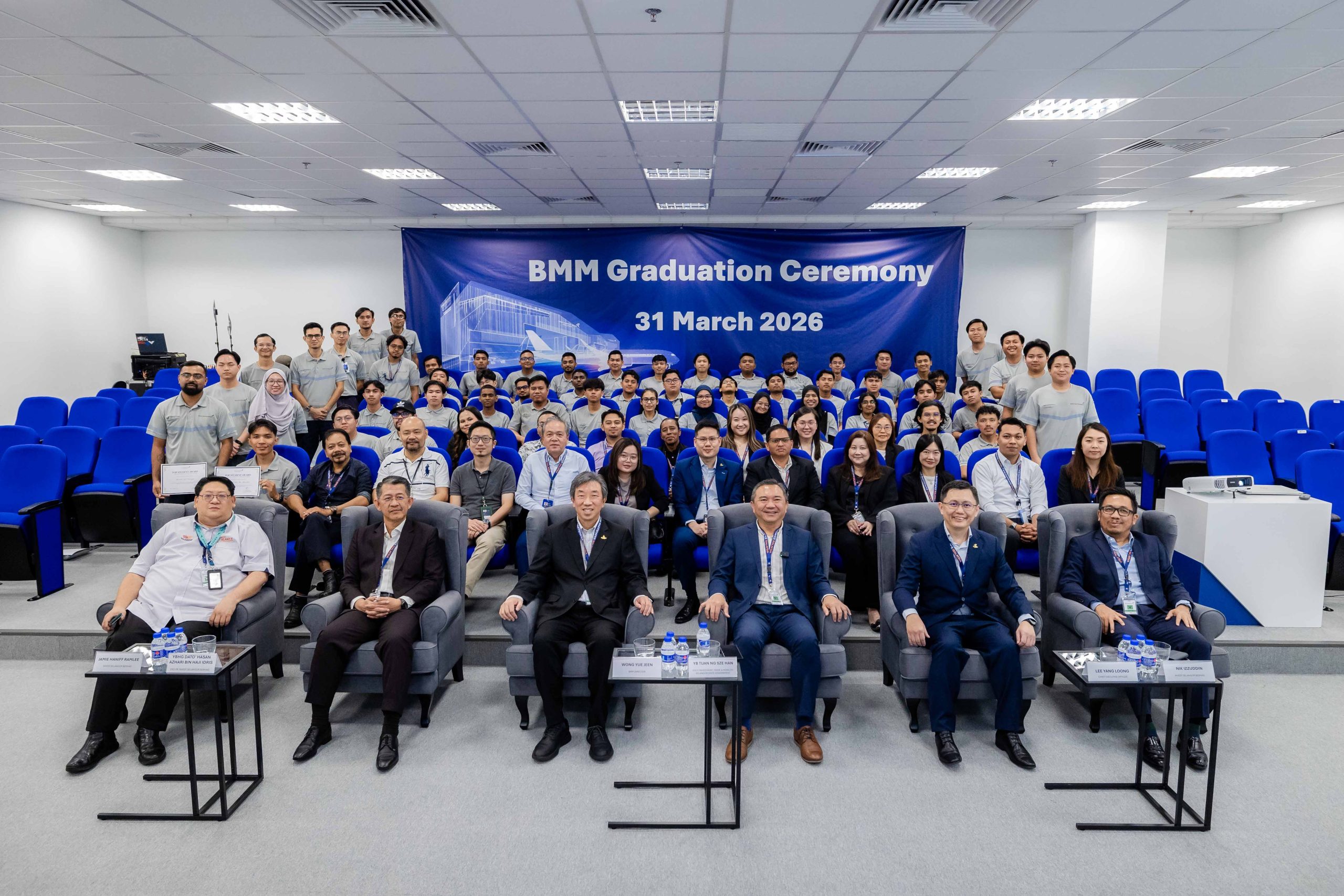
    Base Maintenance Malaysia (“BMM”), a wholly owned subsidiary of SIA Engineering Company Limited (“SIAEC”), has marked a significant milestone with the graduation of its first cohort of 55 trainee technicians. This achievement reflects the company’s strong commitment to nurturing skilled local talent while reinforcing Malaysia’s position in the growing aerospace maintenance, repair and overhaul (MRO) sector.

    The milestone comes at a crucial time, as the Asia-Pacific region is projected to dominate global aircraft fleet expansion and MRO demand in the coming years. With this surge, the need for qualified aviation technicians has intensified, placing pressure on Malaysia’s aerospace industry to accelerate the development of a highly skilled, homegrown workforce capable of meeting international standards.

    To address this demand, BMM introduced its structured Technician Trainee Programme, designed to strengthen the national talent pipeline while supporting Malaysia’s Technical and Vocational Education and Training (TVET) ecosystem. The programme equips trainees with both theoretical knowledge and hands-on experience, ensuring they graduate with industry-relevant skills. To date, more than 100 technicians have enrolled, demonstrating strong interest and confidence in the initiative.

    The graduation ceremony, officiated by Ng Sze Han, Selangor State Executive Councillor for Investment, Trade and Mobility, highlights the collaborative efforts between industry and government in building a sustainable talent pipeline. This initiative aligns closely with Malaysia’s ambitions under the Aerospace Industry Blueprint 2030, which aims to position the country as a leading regional hub for MRO services.

    Spanning 12 months, the programme integrates classroom-based learning with supervised practical training in controlled environments. Trainees are exposed to critical areas such as aircraft maintenance fundamentals, safety and regulatory compliance, maintenance procedures, human factors, aviation legislation, and aircraft systems and engine familiarisation. This comprehensive approach ensures graduates are well-prepared to transition into real-world maintenance operations.

    BMM has also forged strategic partnerships with leading aviation training institutions, including Universiti Kuala Lumpur Malaysian Institute of Aviation Technology, ADMAL Aviation College and APR Aviation Training Centre. Through these collaborations, students gain valuable exposure to actual aircraft maintenance environments while pursuing pathways towards becoming licensed aircraft engineers and technicians.

    According to BMM Chief Executive Officer Lee Yang Loong, the graduation of this inaugural cohort represents more than just a training milestone. It underscores the company’s long-term investment in developing Malaysian aerospace professionals capable of supporting the rapidly expanding global MRO landscape. As demand for maintenance capacity continues to rise, building a strong and sustainable local talent pipeline is not only a strategic priority but also a business necessity for the future of the industry.

  • Malaysia’s Emergence as a Digital Investment Hub Requires a Stronger Skilled Workforce

    Malaysia’s Emergence as a Digital Investment Hub Requires a Stronger Skilled Workforce

    Growing Momentum in Malaysia’s Digital Economy

    Malaysia is entering an important phase in its digital economic development, as global technology investors increasingly look to Southeast Asia as a strategic region for expansion. With its strong infrastructure, business-friendly policies, and strategic location within ASEAN, Malaysia is steadily positioning itself as an attractive destination for digital investments.

    From data centres and artificial intelligence to financial technology and digital services, the country is witnessing growing interest from international companies seeking to establish or expand their regional presence. This momentum reflects the broader transformation of Malaysia’s economy, which is rapidly embracing digitalisation across multiple industries.

    According to a report jointly published by Knight Frank Malaysia and the Malaysia Digital Economy Corporation (MDEC) in February 2026, Malaysia approved more than RM342 billion in digital investments between 2022 and 2025. These investments span several high-growth sectors including cloud infrastructure, global business services, artificial intelligence, and fintech, highlighting strong confidence in the country’s digital ecosystem.


    The Talent Challenge Behind Digital Growth

    While these figures reflect positive momentum for Malaysia’s digital ambitions, they also raise an important question — whether the country has sufficient skilled talent to support this rapid expansion.

    The same report estimates that these digital investments could generate more than 114,000 new jobs, with nearly 97 percent classified as knowledge-based roles. Many of these positions require specialised expertise in areas such as artificial intelligence, data analytics, cybersecurity, cloud computing, and digital operations.

    This signals a clear shift in workforce expectations. As industries evolve alongside digital technologies, future job roles will demand stronger technical competencies and digital literacy. Without a workforce equipped with these skills, sustaining long-term growth in the digital economy may become increasingly challenging.


    Competing in the Global Talent Race

    Across the region, countries are not only competing to attract digital investments but also striving to develop and retain highly skilled technology professionals. Nations such as Singapore, Vietnam, and India have made significant progress by strengthening digital education, investing in technology training programmes, and encouraging industry-academia collaboration.

    For Malaysia to remain competitive, workforce development strategies must continue evolving alongside technological advancements. This includes strengthening collaboration between government agencies, universities, industry players, and professional training institutions.

    Upskilling and reskilling initiatives will be critical in enabling both graduates and experienced professionals to adapt to emerging technologies and digital business models. Industry-relevant certifications, technology-focused training, and continuous learning programmes will play a key role in preparing Malaysians for future job opportunities.


    Digital Skills Are No Longer Optional

    The digital transformation taking place today extends far beyond the technology sector itself. Businesses across industries such as finance, logistics, manufacturing, retail, and hospitality are increasingly integrating artificial intelligence, automation, and digital tools into their operations.

    As a result, digital literacy is no longer a niche skill reserved for technology professionals. Instead, it is becoming a fundamental competency for the modern workforce. Employees across various sectors will need at least a foundational understanding of digital systems, data usage, and emerging technologies in order to remain relevant in an increasingly digitalised economy.


    Building a Sustainable Digital Future

    Malaysia stands at a pivotal moment in its economic transformation. With strong investor confidence, expanding digital infrastructure, and its strategic role within ASEAN, the country is well positioned to strengthen its status as a regional digital hub.

    However, infrastructure and investment alone will not determine success. The true strength of a digital economy lies in the people who can build, operate, and innovate within it.

    By prioritising talent development and equipping Malaysians with the necessary digital skills, the nation can ensure that current digital investments translate into sustainable economic growth, innovation, and long-term global competitiveness.

    Ultimately, Malaysia’s digital future will depend not just on technology, but on the readiness of its workforce to lead and shape the next phase of digital transformation.

    Written By;

    Ts. Shashi Muniandy is the Chief Operating Officer of Skill Wave Academy and an MBOT Certified Technologist involved in digital workforce development initiatives in Malaysia

  • Asia School of Business to Launch First-Ever AI-Driven Leadership Conference, Welcoming Top Global AI Experts to Malaysia

    Asia School of Business to Launch First-Ever AI-Driven Leadership Conference, Welcoming Top Global AI Experts to Malaysia

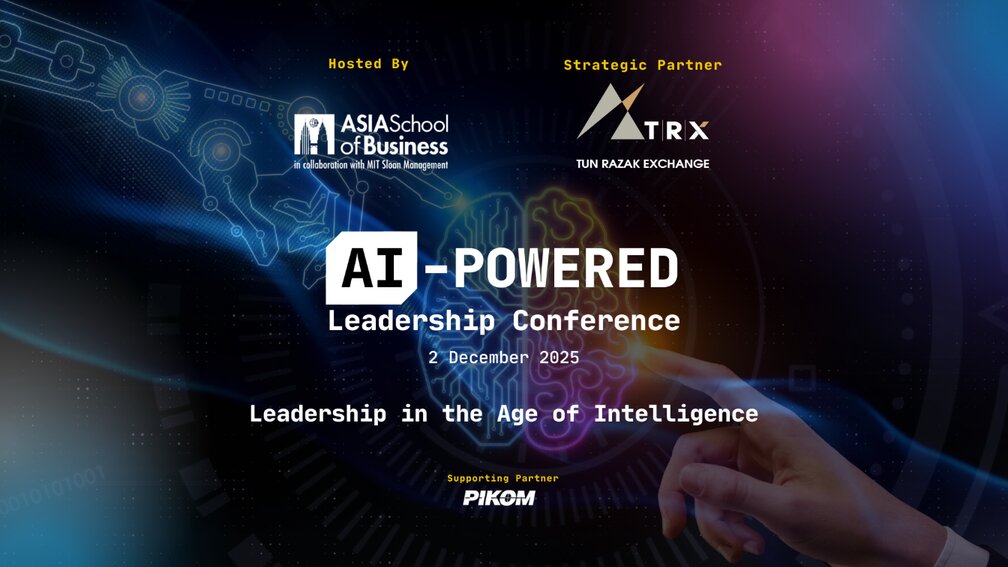
    The Asia School of Business (ASB) is set to host its inaugural AI-Powered Leadership Conference, a landmark one-day event aimed at exploring the future of leadership in an increasingly AI-driven world. Bringing together a distinguished lineup of global AI pioneers, CEOs, innovators, and policymakers, the conference promises to offer deep insights into how organisations can lead responsibly and competitively amid rapid technological transformation. Supported by strategic partner TRX City Sdn Bhd, the master developer of the International Financial Centre Tun Razak Exchange (TRX), the event will examine the impact of AI on industries, talent management, and strategic decision-making. The conference will be graced by YB Gobind Singh, Malaysia’s Minister of Digital, and will feature keynote sessions from internationally acclaimed experts, including Professor Sanjay Sarma, MIT Professor and Eminent Visiting Professor at ASB known for his pioneering work in technology; Professor De Kai, a leader in AI and language technologies; Brian A. Wong, former Alibaba executive and author of The Tao of Alibaba; and Professor Hiroshi Ishiguro, renowned for his groundbreaking contributions to interactive robotics and human-robot collaboration. ASB faculty members Professor Ong Shien Jin and Professor David Asirvatham will also present on organisational readiness and decision-making in the AI era. Attendees can look forward to interactive discussions, leadership-focused dialogues, and curated showcases highlighting emerging AI applications. The conference will revolve around three core themes: AI-driven leadership, cybersecurity in the age of AI, and responsible, human-centered adoption of AI. More information on registration and the agenda can be found at ASB’s official website.