Tag: #FintechMY

  • From Scale to Trust: Strengthening Malaysia’s Digital Payments EcosystemBy Tee Kean Kang, Chief Executive Officer of Paydibs

    Malaysia’s digital payments ecosystem is expanding at an unprecedented pace, but scale alone does not define strength. In 2025, the country recorded 18.4 billion e-payment transactions, reflecting a 25 per cent year-on-year increase, with each Malaysian conducting an average of 538 digital transactions. DuitNow QR volumes have also doubled to three billion, supported by close to three million merchant touchpoints nationwide.

    While these figures reflect strong adoption, they also raise a more pressing question for the industry: whether trust is keeping pace as digital transactions become increasingly embedded in daily life. Reported fraud losses reached RM2.8 billion in 2025, highlighting the growing risks within an increasingly digital ecosystem. In the first quarter of the year alone, online fraud cases rose to 12,110, with total losses amounting to RM573 million. Although digital payments continue to scale rapidly, these figures point to a parallel reality in which confidence in the system is being tested in real time. This marks a clear inflection point, where the focus must shift from driving adoption at scale to strengthening trust and assurance at every stage of the transaction journey.

    Trust in payments is often discussed in abstract terms, but for businesses on the ground it is grounded in three core elements: visibility, control, and protection. Visibility ensures merchants can track transactions in real time, control provides certainty over fund settlements and supports cash flow management, while protection offers reassurance that businesses are safeguarded when unexpected issues arise. When any of these elements are weakened, trust can quickly erode, particularly for smaller businesses operating on tight margins.

    In practice, most payment failures do not occur at scale but at the edges of the system, where processes are fragmented and operational gaps are more likely to appear. For micro, small and medium enterprises (MSMEs), a delayed settlement or disputed transaction is not a minor inconvenience but a disruption to daily operations.

    Bank Negara Malaysia has already recognised this shift in focus. The priority is no longer solely on expanding digital payments, but also on preserving trust within the ecosystem. Frameworks such as the Shared Electronic Fraud and Theft policy establish shared accountability between financial institutions and users, while infrastructure enhancements such as RENTAS+ and the adoption of ISO 20022 standards improve transparency and resilience across the payment system. However, regulation alone is not sufficient to build trust; it must be reinforced through consistent, real-world experiences at the merchant level.

    Malaysia’s 1.2 million MSMEs sit at the centre of this transition. Unlike large enterprises, they often operate without extensive financial systems or dedicated risk management teams. Their exposure is immediate, and their tolerance for disruption is low. For these businesses, trust is not defined by policy or technical standards, but by whether payments are received as expected, whether transactions are transparent, and whether digitalisation simplifies rather than complicates operations. This is where the industry must move beyond enabling access and focus on delivering assurance.

    From an operational perspective, addressing this gap requires rethinking the purpose of payment infrastructure. Direct connectivity to national payment rails is not merely a technical enhancement; it removes intermediary layers, enabling faster access to funds and greater visibility over cash flow. This is not just about speed, but about certainty, which is essential for business stability.

    Similarly, consolidating multiple payment methods into a single platform or device goes beyond convenience. It reduces fragmentation, lowers operational risk, and ensures consistency in transaction outcomes. Unified terminals that support QR, card, and alternative payment methods within a single controlled environment reflect this approach. These are deliberate design choices aligned with how merchants operate, rather than how payment systems have traditionally been structured.

    Trust must also extend beyond transactions to address broader business risks. Many MSMEs remain underinsured, often due to the complexity or perceived disconnect between traditional insurance products and day-to-day operations. Embedding protection directly into payment infrastructure provides a more practical solution, where coverage such as business interruption, liability, and asset protection becomes part of the tools merchants already use. By integrating these safeguards into the payment experience, barriers to adoption can be reduced while businesses are better protected against unforeseen disruptions. This reflects a broader shift in fintech, where value is created not only through functionality, but through relevance and integration into real business needs.

    Paydibs, for example, has partnered with Great Eastern General Insurance to embed business protection directly into its payment terminals. Coverage for fire and flood damage, cash-in-transit loss, employer liability, and business disruption is bundled with the terminal merchants already use to accept digital payments. The principle is clear: businesses should not have to choose between digital growth and operational protection, as both should be built in by design.

    Eighteen billion transactions in a single year is a significant milestone, and Malaysia has clearly demonstrated its ability to achieve digital payment scale. Bank Negara Malaysia’s priorities for 2026, which emphasise stronger fraud prevention, cross-sector collaboration, and inclusive adoption, further reinforce trust as a foundational pillar for continued progress.

    In this environment, differentiation will no longer be defined by transaction volume or processing speed alone. It will be shaped by the ability to deliver systems that are resilient, transparent, and purpose-built to support businesses through both growth and uncertainty. Digitalisation accelerates when businesses have confidence in the systems they rely on, and that confidence is earned through consistent performance, clear visibility, and meaningful protection.

  • PayNet Introduces Updated DuitNow QR Standee Look Across Malaysia

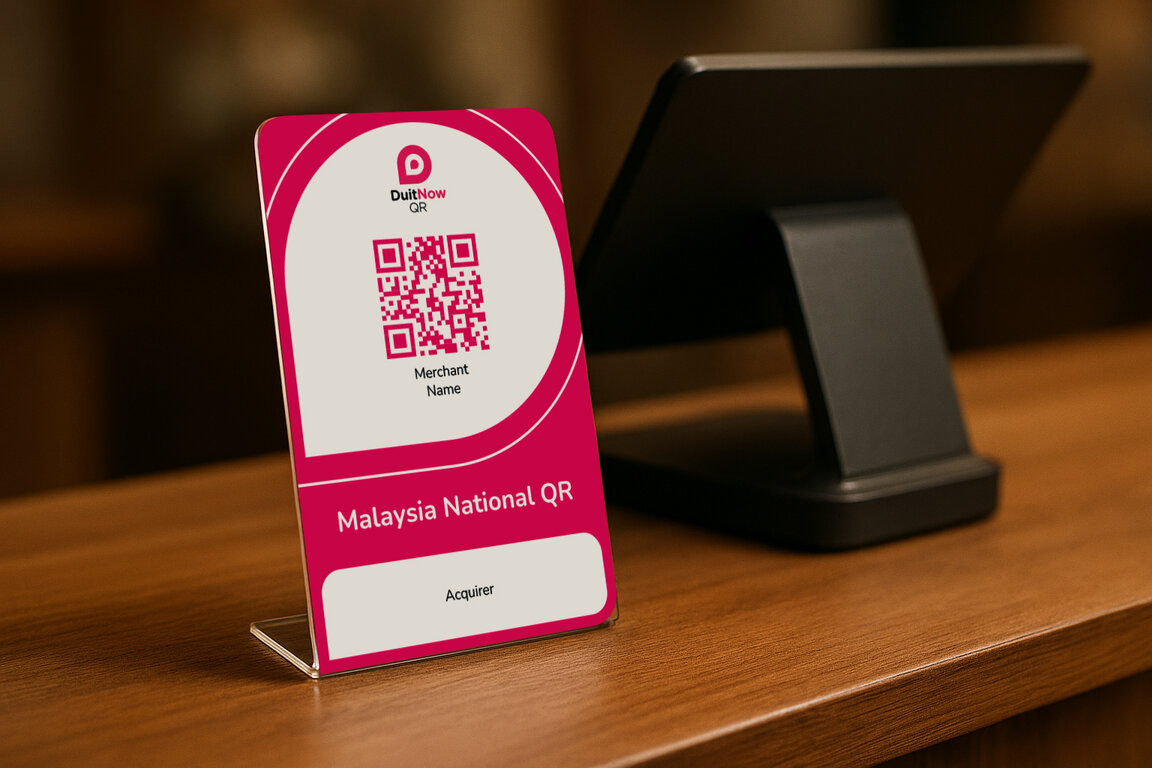
    PayNet Introduces Updated DuitNow QR Standee Look Across Malaysia

    Payments Network Malaysia Sdn. Bhd. (PayNet) has introduced a refreshed design for the DuitNow QR standee, marking a nationwide rollout aimed at improving the visibility and consistency of Malaysia’s national QR standard. The updated look ensures that DuitNow QR is now easier to spot at merchant locations, creating a more seamless and intuitive payment experience for both consumers and businesses. Importantly, this enhancement is purely visual — the functionality, security, and interoperability of DuitNow QR remain unchanged. Consumers can continue making payments as usual, while merchants can accept transactions with the same simplicity and reliability they are accustomed to.

    The visual refresh addresses longstanding inconsistencies caused by multiple standee designs previously issued by different banks and e-wallets. These variations often led to confusion at the point of sale. The newly standardized design resolves this by presenting a unified, clearer way of displaying DuitNow QR, firmly positioning it as Malaysia’s official QR payment method. The result is a cleaner, more uniform standee that reinforces consumer confidence and helps businesses present a professional, standardized payment touchpoint.

    Gary Yeoh, Chief Marketing Officer of PayNet, emphasized the importance of clarity as digital payments continue to embed themselves in Malaysians’ daily lives. “As digital payments become second nature for Malaysians, the trust and clarity of what people are scanning matters more than ever,” he said. “The refreshed DuitNow QR standee brings greater consistency and visibility across the country, ensuring consumers always know they are paying through Malaysia’s official and secure QR standard, while making it simpler for merchants to display and accept payments through just one QR code.”

    The rollout of the new standee began in October 2025, with early adopters such as RHB Bank, Bank Islam Malaysia Berhad, MBSB Bank, and Agrobank leading the transition among their merchant networks. A second wave—comprising CIMB Bank, Public Bank, Hong Leong Bank, AmBank, Bank Simpanan Nasional, and Bank Muamalat—will follow, with the rest of the ecosystem gradually coming on board. Merchants are encouraged to adopt the updated design as soon as their acquiring banks make it available to ensure smoother alignment across the payment landscape.

    This refreshed design underpins PayNet’s broader commitment to strengthening Malaysia’s cashless ecosystem. By making DuitNow QR more recognizable and consistent, the initiative reinforces its role as the nation’s single QR standard and supports the national agenda of driving an inclusive and progressive digital economy for all Malaysians.