Tag: #DigitalFinance

  • Razorpay Curlec Clinches Top Honour for Digital Customer Experience in Payments at 2026 Digital CX Awards

    Razorpay Curlec Clinches Top Honour for Digital Customer Experience in Payments at 2026 Digital CX Awards

    Malaysia-based payment gateway Razorpay Curlec has been named winner of the ‘Best PayTech for Digital Customer Experience (CX) – Payments’ at The Digital Banker’s Digital CX Awards 2026. The award recognises the company’s commitment to enhancing digital payment journeys through advanced technology and innovation.

    The Digital Banker, a globally trusted research and intelligence organisation, evaluates financial institutions based on their ability to transform customer experience. The Digital CX Awards are widely regarded as a benchmark for excellence in delivering seamless and innovative digital financial services.

    This year’s competition featured more than 1,600 entries from over 200 financial institutions globally. Entries were assessed based on innovation, engagement, personalisation, and overall user experience, including advancements in API systems, automation, and real-time engagement tools.

    Kevin Lee, Country Head and CEO of Razorpay Curlec, accepted the award in Singapore and acknowledged the team’s contribution to the company’s success. He reiterated the company’s goal of building inclusive financial infrastructure that supports businesses at every stage of growth.

    Razorpay Curlec offers a unified payment experience with multiple options including Tokenised Cards, Apple Pay, BNPL services, and installment plans across Visa and Mastercard. The platform is designed to simplify transactions while maximising conversion rates for merchants.

    Its payment system is powered by the Shield risk engine, which analyses billions of data points in real time to ensure secure and reliable transactions. The company is also testing agentic payment solutions in Malaysia to adapt to changing consumer trends.

    With the digital economy in Southeast Asia projected to reach US$234 billion by 2025, the demand for integrated financial solutions continues to grow. Razorpay Curlec now supports over one million businesses worldwide and more than 5,000 SMEs and enterprises in Malaysia.

    The company reports transaction success rates above 90 percent, alongside AI-driven improvements that have increased merchant revenue by up to 10 percent. It has processed over 11.5 million transactions, achieving 65 percent year-on-year growth.

  • The PayNet Fintech Hub Fuels the Next Phase of Malaysia’s Ecosystem Growth

    The PayNet Fintech Hub Fuels the Next Phase of Malaysia’s Ecosystem Growth

    Payments Network Malaysia Sdn Bhd (PayNet) is accelerating the growth of Malaysia’s fintech ecosystem through the PayNet Fintech Hub, a structured, impact-driven initiative designed to help local fintech startups build, test and scale innovative solutions. Launched in May 2025, the Hub has strengthened the visibility of Malaysian fintechs both locally and internationally by providing direct access to industry partners, capital support and hands-on mentorship, positioning it as a key enabler of sustainable fintech growth in the country.

    In less than a year, the PayNet Fintech Hub has delivered measurable impact to 50 fintech startups, supported by an extensive network of 50 ecosystem partners spanning banking, technology, investment and shared services. Collectively, participating fintechs have received more than RM5 million in value-added support, including RM3 million in cloud credits and over 450 hours of mentorship. These startups have also raised more than US$1 million in funding, with solutions that have the potential to benefit over eight million underserved Malaysians and approximately 800,000 micro, small and medium enterprises (MSMEs).

    According to PayNet Chief Marketing Officer Gary Yeoh, the Hub is designed to translate innovation into real-world outcomes. Through proof-of-concepts developed alongside industry partners, fintech solutions are already addressing everyday financial challenges, from smart contracts that improve trust and operational efficiency, to cashback programmes on essential items and buy now, pay later services tailored for convenience stores. These initiatives reflect the Hub’s focus on advancing financial inclusion for MSMEs while enhancing access to practical, consumer-centric financial services.

    The Hub has facilitated 11 collaboration opportunities involving 26 fintechs, including seven fintech-corporate pilots and four fintech-to-fintech partnerships. Among the initiatives supported through the RM1 million PayNet Credit Fund are Buzz’s optical character recognition-powered cashback engine developed with Touch ’n Go, as well as Fluid’s payment digitalization project in collaboration with a global fast-moving consumer goods brand. These pilots underscore the Hub’s role as a bridge between innovation and industry adoption.

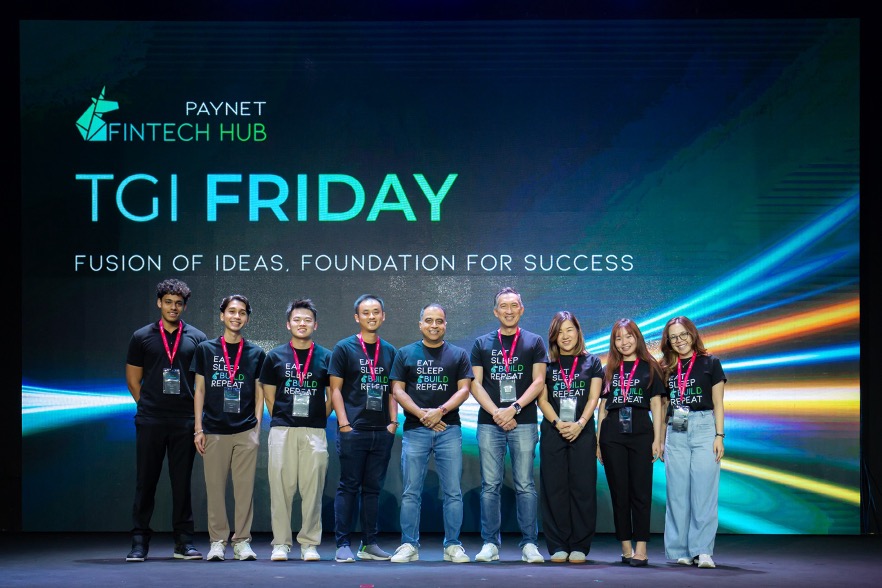
    Community engagement remains a cornerstone of the Hub’s strategy. Its flagship TGI Friday (TGIF) event held in October 2025 attracted more than 200 founders, investors, financial institutions and ecosystem partners, highlighting the growing momentum and collaborative spirit within Malaysia’s fintech landscape. Such platforms have reinforced the Hub’s position as a convenor for meaningful dialogue, partnership-building and ecosystem development.

    Operating across three core tracks—Community, Catalyst and Collaboration—the PayNet Fintech Hub supports startups at different stages of growth, from scaling and global exposure to real-world deployment. A major milestone in its evolution is the launch of the Catalyst phase on 1 December 2025 through a bespoke immersive programme at Imperial College London. Under the PayNet x Imperial Catalyst Programme, 10 Malaysian fintechs are currently participating in a first-of-its-kind, 10-week curriculum tailored specifically for Hub founders.

    The programme offers hands-on exposure to global best practices, market insights and mentorship, while ensuring relevance to Malaysia’s fintech, regulatory and banking environment. Participants completed a week-long series of curated lectures and mentorship sessions at Imperial’s London campus, followed by nine weeks of virtual sessions focused on translating global learnings into Malaysian use cases. The programme will culminate in a Demo Day in March 2026, marking a significant step in preparing Malaysian fintechs to scale and compete on the global stage.

    As a not-for-profit initiative under PayNet, which serves as the backbone of Malaysia’s national payments infrastructure, the Fintech Hub reflects PayNet’s broader mission to enable secure, efficient and inclusive financial services for the rakyat. By applying this purpose to the fintech ecosystem, the Hub aims to strengthen the national fintech pipeline while supporting Malaysia’s long-term goals in digital finance and financial inclusion.

    For more information on the PayNet Fintech Hub, please visit: https://fintechhub.paynet.my/ 

  • AICB Unveils FSF Xcel: Revolutionising Skills Assessment in Malaysia’s Financial Sector

    AICB Unveils FSF Xcel: Revolutionising Skills Assessment in Malaysia’s Financial Sector

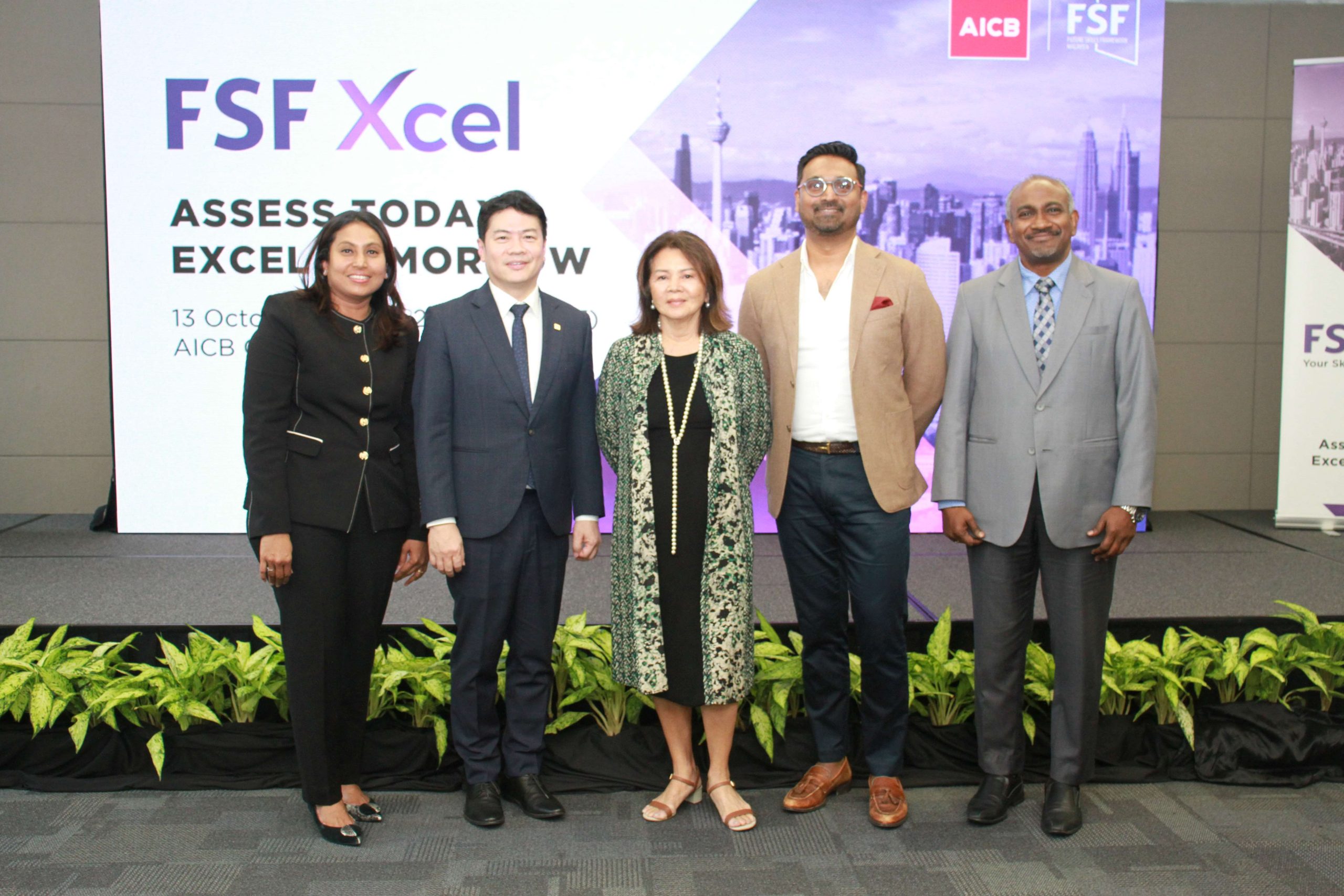
    The Asian Institute of Chartered Bankers (AICB) has introduced FSF Xcel, Malaysia’s first industry-wide digital skills assessment platform for the financial sector. The platform aims to benchmark workforce capabilities and accelerate upskilling across the industry, supporting Malaysia’s shift towards a more adaptive, sustainable, and future-ready financial ecosystem.

    FSF Xcel builds on the Future Skills Framework introduced in 2024 by translating the framework into structured, industry-validated assessments. These assessments allow financial institutions to identify skill gaps, map learning and career pathways, and strengthen talent strategies for the future. Covering 159 job roles and 157 critical skills, the platform evaluates both technical expertise and behavioural competencies. Developed in partnership with Accendo Technologies, a Malaysian AI-powered talent intelligence company, FSF Xcel combines global best practices with local insights to enhance Malaysia’s financial talent pipeline.

    The financial sector contributed an estimated 6.7 percent to Malaysia’s GDP in 2024 and employs nearly 167,000 professionals, making it a key driver of economic growth and stability. Aligned with Bank Negara Malaysia’s Financial Sector Blueprint 2022–2026, FSF Xcel supports the transition to a digitally fluent and innovation-driven workforce. The platform provides real-time analytics and a shared competency framework to guide workforce planning, benchmark capabilities, and advance professional development across the sector, reinforcing Malaysia’s ambition to build talent readiness for a digital economy.

    Edward Ling, Chief Executive of AICB, stated that FSF Xcel is more than a skills assessment platform, describing it as a catalyst for transformation. The platform equips employees and employers with data-driven insights to identify, measure, and strengthen capabilities, fostering a culture of continuous learning and professional excellence. YBhg. Datuk Dr Yvonne Chia, Chairperson of the MyMAHIR Future Skills Talent Council for the financial sector, highlighted the urgency of the initiative, noting that nearly 40 percent of today’s skill sets are expected to evolve or become obsolete by 2030. She emphasised that FSF Xcel enables financial institutions to respond with agility and reinforces Malaysia’s position as a regional hub for skilled and innovative financial professionals.

    Sharma Lachu, Founder and CEO of Accendo Technologies, expressed confidence that the partnership with AICB would drive the creation of an industry-wide Digital Talent Passport, allowing individuals and organisations to thrive amid continuous change. The initiative is informed by AICB’s 2025 Workforce Baseline Study, which gathered input from 99 financial institutions, achieving a 68 percent response rate. The study revealed strong demand for a standard digital assessment platform, with 96 percent of respondents interested in adopting such a tool to close skill gaps in line with the FSF. It also found that approximately 40,000 employees may see their roles evolve due to automation, highlighting the need for targeted upskilling and reskilling.

    The findings reflect global trends identified in the World Economic Forum’s Future of Jobs Report 2025, which predicts that 39 percent of current skill sets will become outdated by 2030 and points to skill gaps as a major barrier to business transformation in Malaysia. FSF Xcel is scheduled for progressive rollout across financial institutions starting in the fourth quarter of 2025, with AICB collaborating closely with Bank Negara Malaysia, Accendo Technologies, industry associations, and learning partners to ensure effective adoption and implementation.