
The creative economy is increasingly recognized as a defining economic model of the 21st century, and Malaysia is poised to benefit from strategic regional and international collaborations that aim to strengthen this sector. According to John Howkins, the creative economy drives innovation, cultural expression, and economic growth, and in Southeast Asia, the ASEAN Strategic Plan for Culture and Arts 2016–2025 has provided a framework to enhance supply, demand, and market efficiency in creative industries. As this plan concludes, insights from the British Council’s Regional Perception Poll, which surveyed over 4,100 respondents across ASEAN and Timor-Leste—including nearly 20% Malaysians—reveal both opportunities and ongoing challenges. While 60% of respondents view the creative economy as growing and 43% note its positive economic impact, 68% of creative professionals still struggle to access markets, highlighting the need for initiatives that support sustainable careers. Over half of Malaysian respondents also emphasized that local culture and traditional wisdom significantly shape creative products, strengthening identity and economic competitiveness.
The ASEAN-UK collaboration plays a pivotal role in addressing these challenges by connecting Malaysian creative professionals with global expertise and markets. Initiatives such as the Digital Craft Toolkit, developed with the Malaysian Handicraft Development Corporation (Kraftangan Malaysia) and Institut Kraf Negara, demonstrate how local heritage can be preserved while meeting contemporary market demands. Trade missions and exchanges, including participation in London Tech Week 2024, have linked Malaysian innovators with UK expertise to address barriers such as lack of market information. In 2025, programmes delivered with MOTAC, Sabah Creative Economy and Innovation Centre (SCENIC), and the Sarawak Ministry of Tourism, Creative Economy and Performing Arts have reached over 150 policymakers and creative practitioners, underscoring the value of consolidated support and connected solutions.
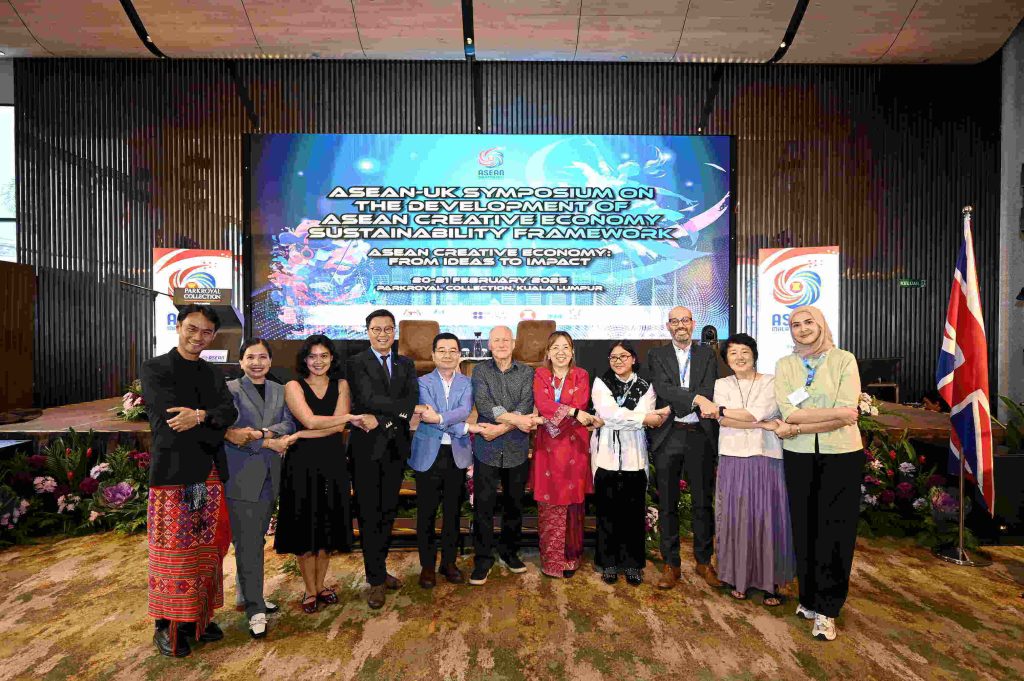
At the centre of these efforts is the ASEAN-UK Advancing Creative Economy Programme (ACE), co-funded by the UK Mission to ASEAN and the British Council, which aligns with the ASEAN Socio-Cultural Community Blueprint 2025 and the Master Plan on ASEAN Connectivity. By combining professional development, research, and knowledge exchange, the programme transforms insights into actionable outcomes, from hybrid policy trainings to music festival delegations, turning individual capability into sector-wide change. Malaysia, with its rich craft heritage, digital ambitions, and collaborative ecosystem, is uniquely positioned to leverage local culture as a competitive advantage, connecting authenticity to global markets. As ACE enters its second phase, it aims to train 250 creative professionals and policymakers by March 2026 and collaborate with universities to equip the next generation of creative talent with essential tools. By fostering a creative economy that is culturally rooted, globally connected, and digitally enabled, Malaysia and ASEAN can shape a vibrant, resilient, and commercially viable creative sector for the future.